Gallery
Openly licensed images from Wikimedia Commons, each credited to its source. Paintings of the Gurus are captioned as later artists' imaginings, because whether any portrait survives from a Guru Ji's lifetime is debated. See that debate.
Historic paintings
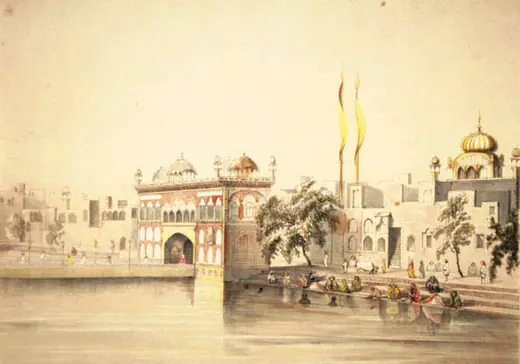
A 19th-century painting of the Akal Takht and Darshani Deori at the Harmandir Sahib complex, with Sikh flags. Its source is a personal blog.
Unknown, 19th century. Public domain. Source
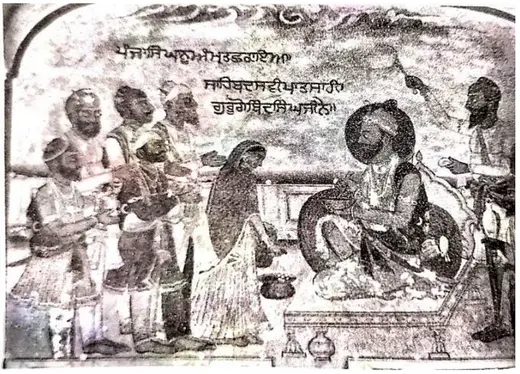
A mid-1800s fresco from the Akal Takht building that stood before 1984. It imagines Sri Guru Gobind Singh Ji and Mata Jito preparing amrit for the Panj Piare. Published by Kanwarjit Singh Kang in 1995.
Unknown, c. mid 19th century. Original Akal Takht building (no longer standing). Public domain. Source
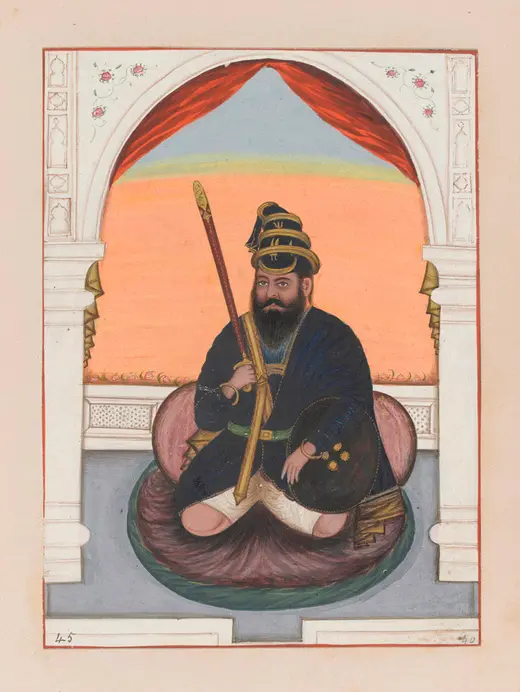
Akali Phula Singh by a Company artist, about 1865, long after his lifetime. From the album The Kingdom of the Punjab, its Rulers and Chiefs.
Unknown Company artist, c. 1865. Public domain. Source
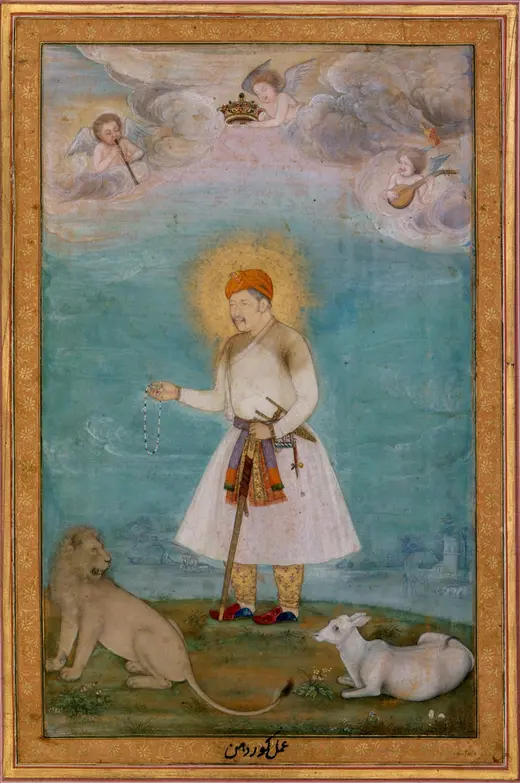
Akbar with a lion and a calf, by Govardhan, about 1630. It was painted some 25 years after Akbar died, so it is not a portrait from life.
Govardhan, About 1630. Metropolitan Museum of Art, New York. Public domain. Source
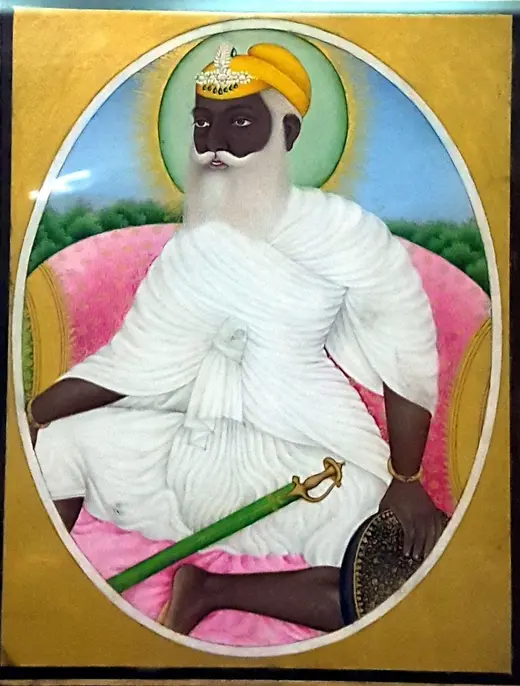
One of six portraits of Patiala rulers, in opaque watercolour and gold, made at Patiala about 1880. It was painted more than a century after Baba Ala Singh passed away in 1765, so it is an artist's imagining.
Unknown, About 1880. Himachal Pradesh State Museum, Shimla. Public domain. Source
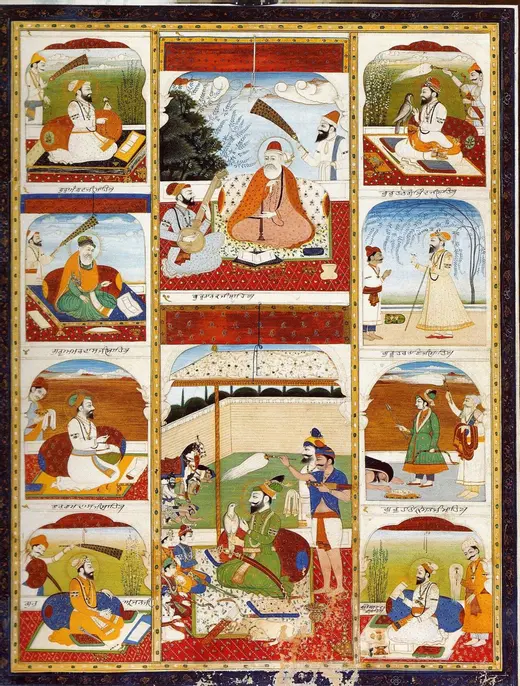
A later artist's imagining of the ten Gurus, from Sri Guru Nanak Dev Ji to Sri Guru Gobind Singh Ji, from the workshop of Purkhu of Kangra. No portrait from any Guru's lifetime is established.
Purkhu of Kangra, Early 19th century. Kapany Collection (as credited on Commons). Public domain. Source
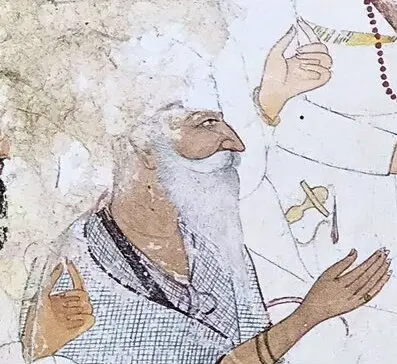
Jassa Singh Ramgarhia, a detail from a group painting of Sikh chiefs attributed to the workshop of Purkhu of Kangra. Commons gives 1760 or 1780 as possible dates.
Purkhu of Kangra, c. 1760 or 1780, uncertain. Public domain. Source
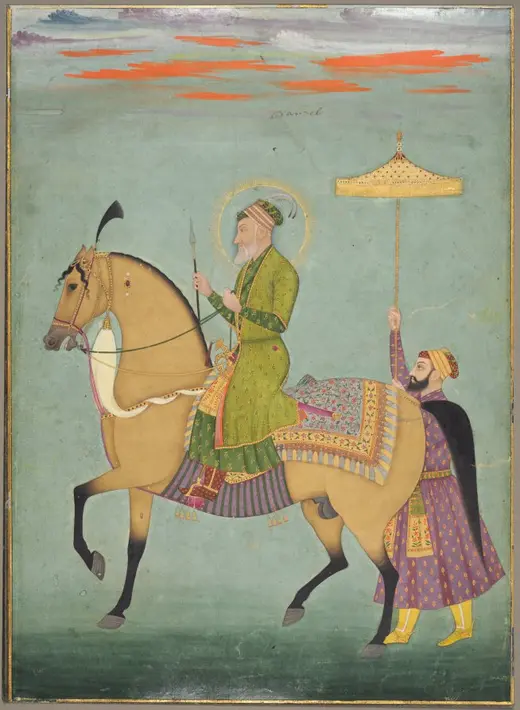
The Emperor Aurangzeb on horseback, by an unnamed artist, about 1690 to 1710.
Unknown, About 1690 to 1710. Cleveland Museum of Art. Public domain. Source
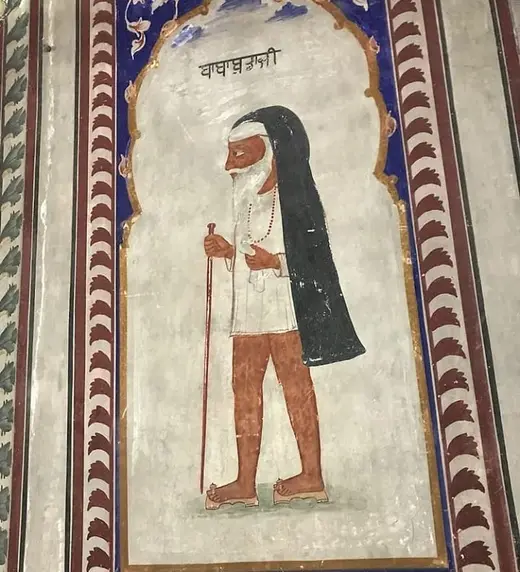
A later fresco of Baba Buddha at Gurdwara Baba Bir Singh, labelled in Gurmukhi. Probably 19th century.
Unknown, Probably 19th century. Gurdwara Baba Bir Singh (as stated on Commons). Public domain. Source
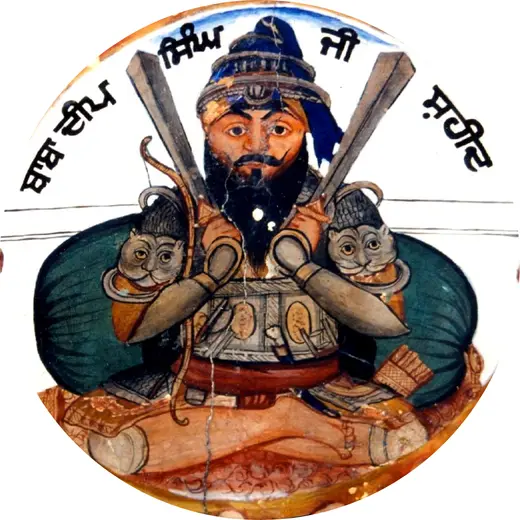
A later fresco of Baba Deep Singh at Gurdwara Baba Atal, Amritsar. Commons notes disagreement over whether the frescoes date from Sikh rule or the mid to late 1800s.
Gian Singh Naqqash, Jaimal Singh Naqqash, Mehtab Singh Naqqash and Hukum Singh, 19th century, disputed. Gurdwara Baba Atal, Amritsar. Public domain. Source
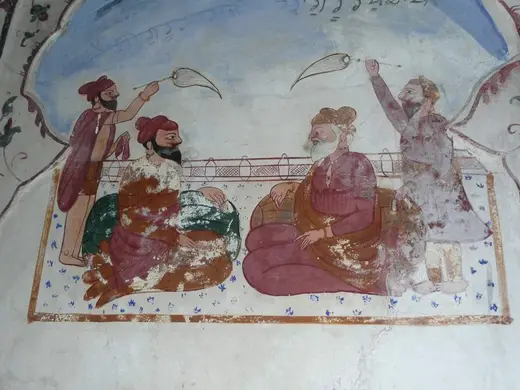
A wall painting at Gurdwara Dera Baba Banda Bahadur, Reasi, showing Banda Singh Bahadur and a boy read as his son. Probably 19th century, so an artist's imagining.
Unknown, Probably 19th century. Gurdwara Dera Baba Banda Bahadur, Reasi (as stated on Commons). Public domain. Source
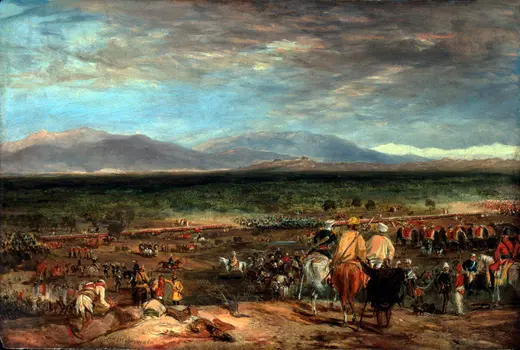
The Battle of Chillianwala, 13 January 1849. An oil painting on board of the same year by Lieutenant Charles Becher Young of the Bengal Engineers, a British officer of that time.
Charles Becher Young, 1849. National Army Museum, London. Public domain. Source
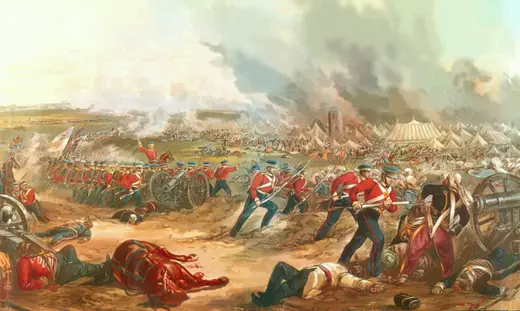
The second day at Ferozeshah, 22 December 1845. A British work of about 1847 by Henry Martens, from a sketch by Major G. F. White of the 31st Regiment. Commons suggests the unit shown may be the 62nd Regiment, which has not been confirmed.
Henry Martens, after G. F. White, c. 1847. Public domain. Source
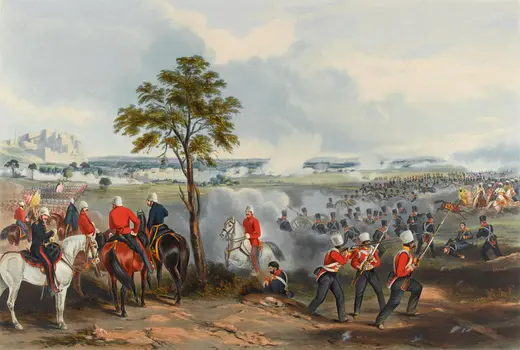
The Battle of Gujrat, 21 February 1849. A British aquatint by J. Harris after Henry Martens, published on 29 July 1850.
J. Harris after H. Martens, 1850. National Army Museum, London. Public domain. Source
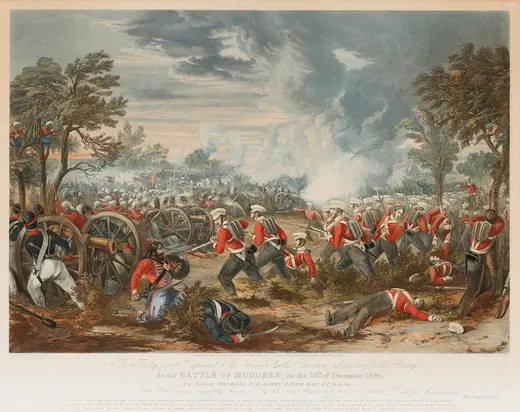
The Battle of Mudki, 18 December 1845. A British aquatint of 1848 by J. Harris after Henry Martens, from a sketch by G. F. White. It shows the battle as the British chose to remember it.
J. Harris after Henry Martens, 1848. Public domain. Source
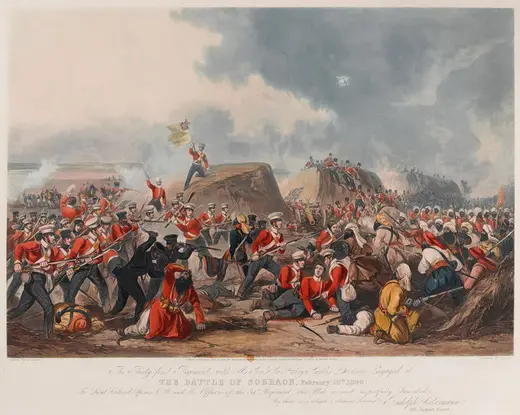
The Battle of Sobraon, 10 February 1846. A British aquatint by J. Harris after Henry Martens, published on 1 January 1848, from a sketch by Major G. F. White, whose 31st Regiment appears in it.
J. Harris after Henry Martens, after G. F. White, 1848. National Army Museum, London. Public domain. Source
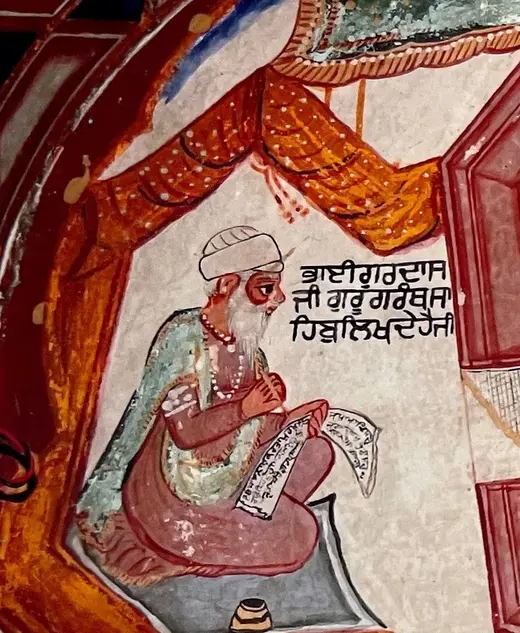
Bhai Gurdas, a detail from the mid-1800s fresco at Gurdwara Baba Bir Singh showing the compilation of the Adi Granth. An artist's imagining.
Unknown, c. mid 19th century. Gurdwara Baba Bir Singh (as stated on Commons). Public domain. Source
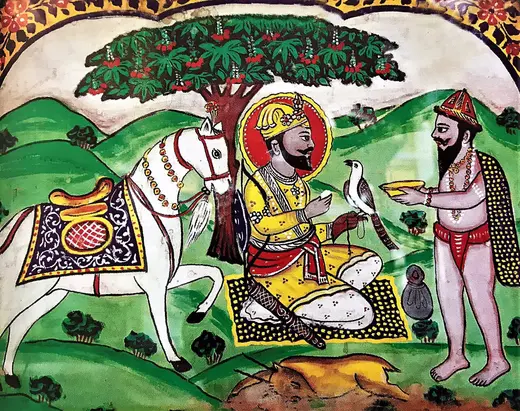
A fresco at Sri Khat Wari Darbar, Shikarpur, Sindh, imagining Bhai Kanhaiya meeting Sri Guru Gobind Singh Ji. Commons gives only a broad date range.
Unknown, 18th to early 20th century, uncertain. Sri Khat Wari Darbar, Shikarpur, Sindh. Public domain. Source
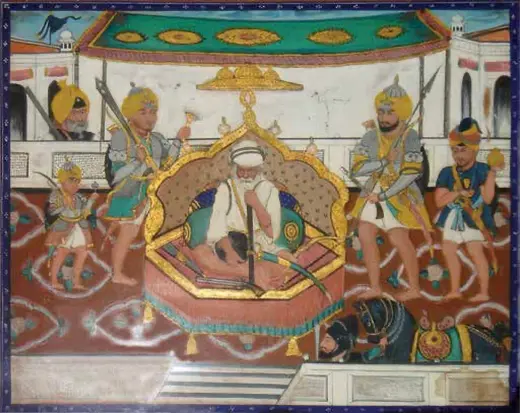
Bhai Maharaj Singh holding court, in a 19th-century painting reproduced in a Singapore Sikh publication. Its exact date and maker are not known.
Unknown, 19th century. Public domain. Source
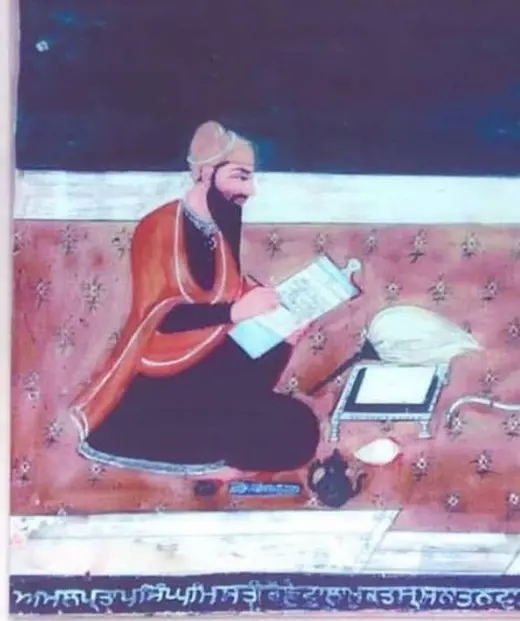
Bhai Mani Singh writing a manuscript, a detail from a painting which Commons places at Takht Damdama Sahib. An artist's imagining, with an uncertain date.
Unknown, 18th or 19th century, uncertain. Takht Damdama Sahib (as stated on Commons). Public domain. Source
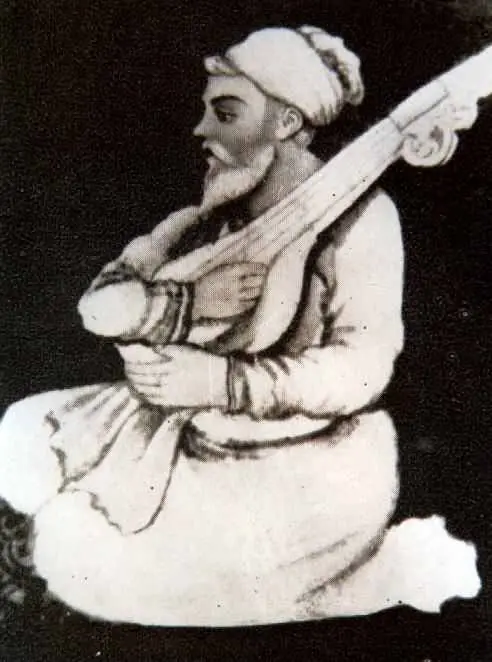
A later imagining of Bhai Mardana with his rabab, probably from the 19th or early 20th century. The source is thin, so the date is uncertain.
Unknown, Probably 19th or early 20th century. Public domain. Source
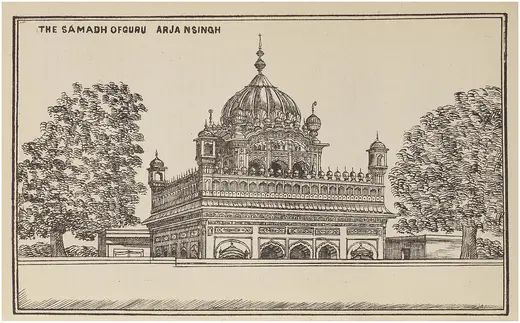
Gurdwara Dera Sahib, Lahore, marked as the samadh of Sri Guru Arjun Dev Ji. From Syad Muhammad Latif's book on Lahore, 1892.
Syad Muhammad Latif, 1892. Public domain. Source
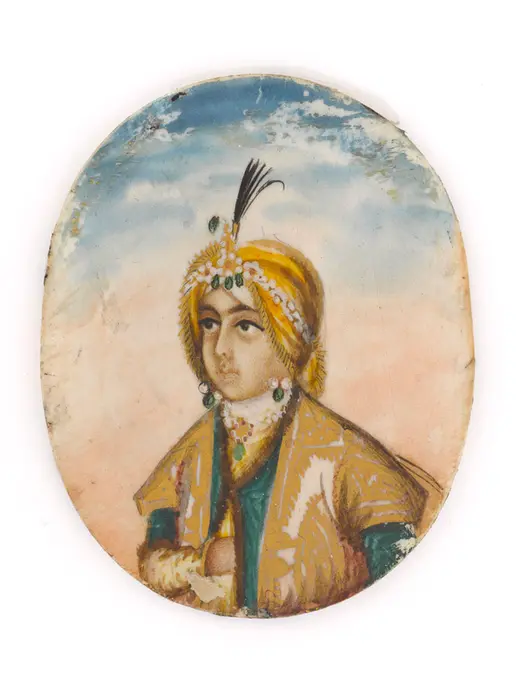
Maharaja Duleep Singh as a boy, a miniature on ivory by a Company artist at Lahore, 1845.
Unknown, 1845. National Army Museum, 1961-10-9-16 (as credited on Commons). Public domain. Source
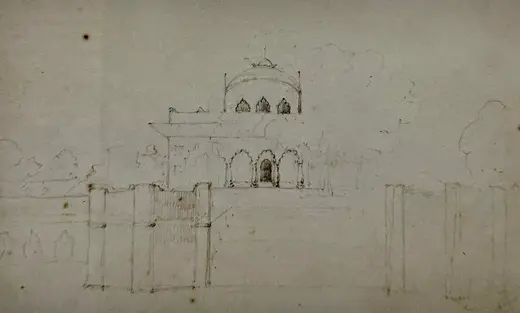
A sketch of about 1834 of the gurdwara at Fatehgarh Sahib, with the period title 'Shrine of the murdered infants of Gooroo Govind, Sirhind'. Commons calls it possibly one of the earliest sketches of a gurdwara.
Unknown, c. 1834. Public domain. Source
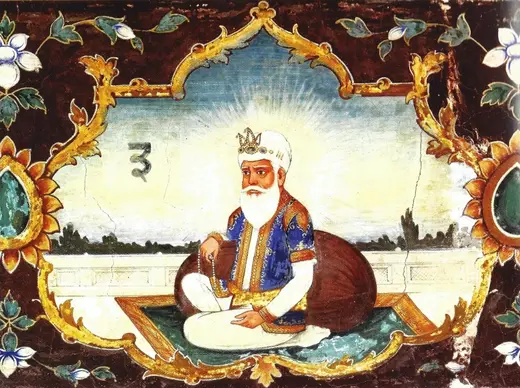
A later fresco of Sri Guru Amar Das Ji above the entrance to the Baoli Sahib, Goindwal, numbered with the Gurmukhi numeral three. Probably 19th century. No portrait from Guru Ji's lifetime is established.
Unknown, Probably 19th century. Baoli Sahib, Goindwal. Public domain. Source
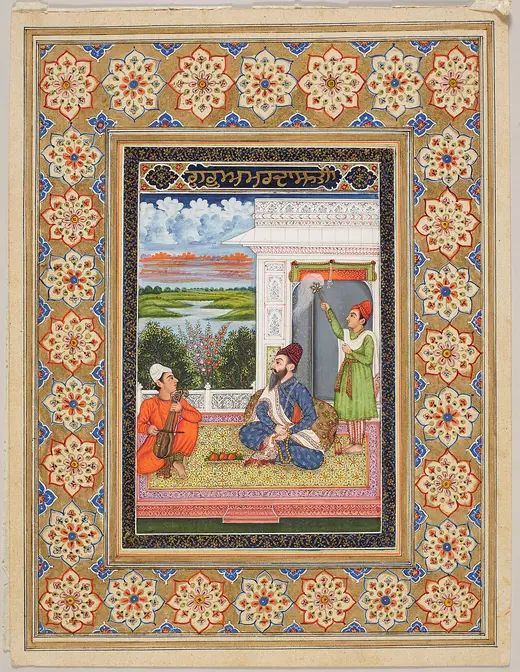
A later artist's imagining of Sri Guru Amar Das Ji, from a set of the first nine Gurus painted about 1800-1840. No portrait from Guru Ji's lifetime is established.
Unknown, c. 1800-1840. Royal Collection Trust, RCIN 925204 (as credited on Commons). Public domain. Source
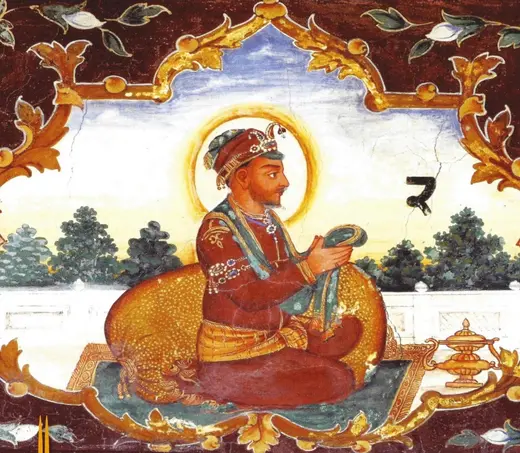
A later fresco of Sri Guru Angad Dev Ji above the entrance to the Baoli Sahib, Goindwal, numbered with the Gurmukhi numeral two. Probably 19th century. No portrait from Guru Ji's lifetime is established.
Unknown, Probably 19th century. Baoli Sahib, Goindwal. Public domain. Source
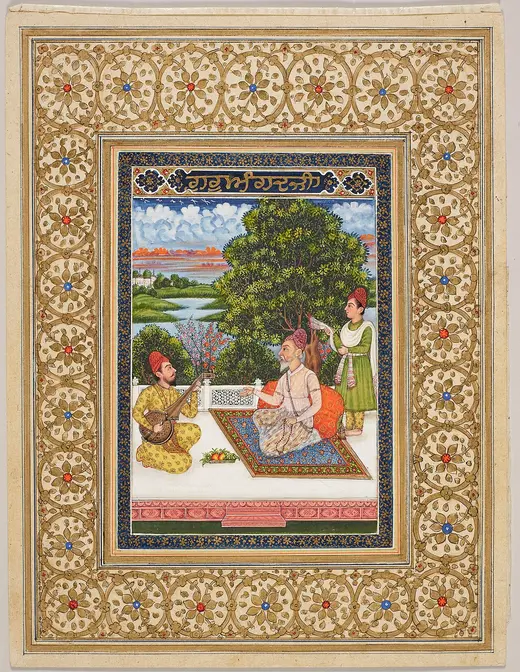
A later artist's imagining of Sri Guru Angad Dev Ji, from a set of the first nine Gurus painted about 1800-1840. No portrait from Guru Ji's lifetime is established.
Unknown, c. 1800-1840. Royal Collection Trust, RCIN 925203 (as credited on Commons).CC BY-SA 4.0. Source
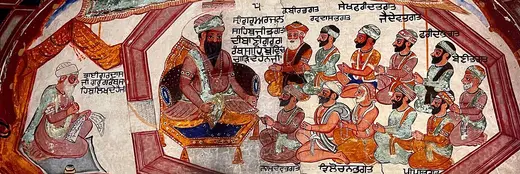
A mid-1800s fresco at Gurdwara Baba Bir Singh imagining Sri Guru Arjun Dev Ji compiling the Adi Granth with Bhai Gurdas, with the Bhagats present. The Bhagats lived in earlier centuries, so the gathering is symbolic.
Unknown, c. mid 19th century. Gurdwara Baba Bir Singh (as stated on Commons). Public domain. Source
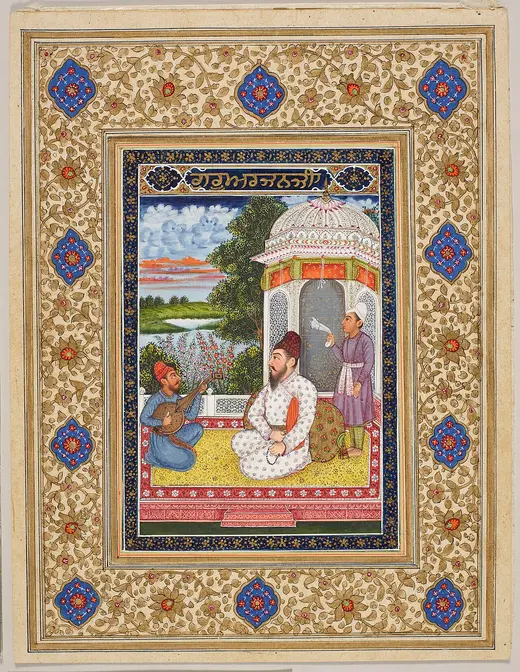
A later artist's imagining of Sri Guru Arjun Dev Ji, from a set of the first nine Gurus painted about 1800-1840. No portrait from Guru Ji's lifetime is established.
Unknown, c. 1800-1840. Royal Collection Trust, RCIN 925206 (as credited on Commons). Public domain. Source
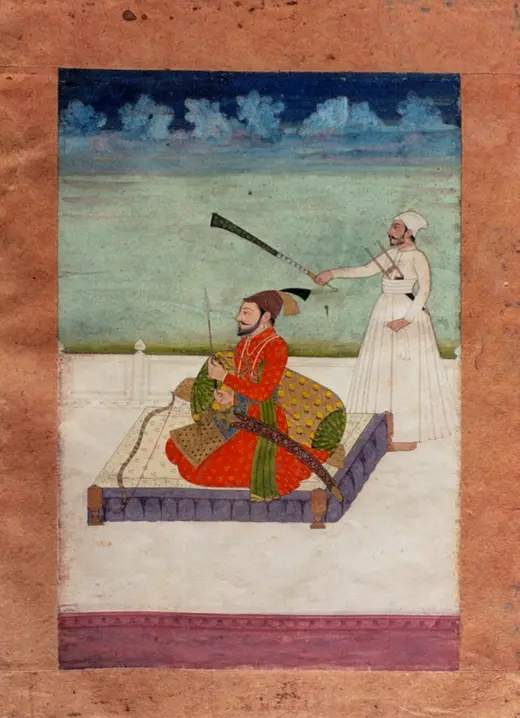
One of two paintings pasted into the Anandpur manuscript, showing Sri Guru Gobind Singh Ji enthroned with an attendant, dated to the 1690s or early 1700s. Mann thinks artists at Anandpur made it. That it is a true likeness is not established.
Unknown painter, 1690s or early 1700s, disputed. Private collection (per Mann, 2008). Public domain. Source
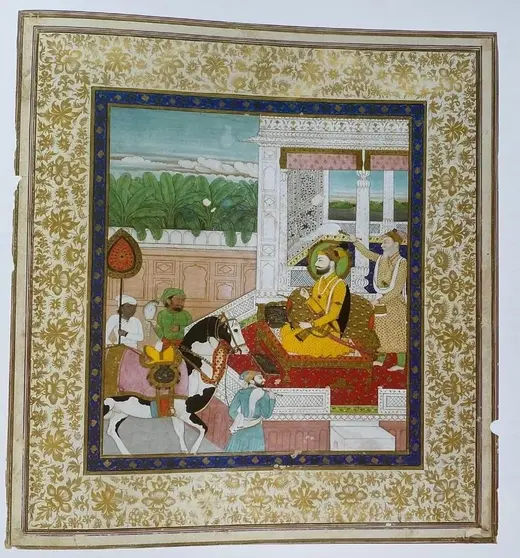
A later artist's imagining of Sri Guru Gobind Singh Ji, from the Pahari workshop of the family of Nainsukh of Guler, about 1815. No portrait from Guru Ji's lifetime is established.
family workshop of Seu-Nainsukh of Guler, c. 1815. Samrai Collection, London (as credited on Commons). Public domain. Source
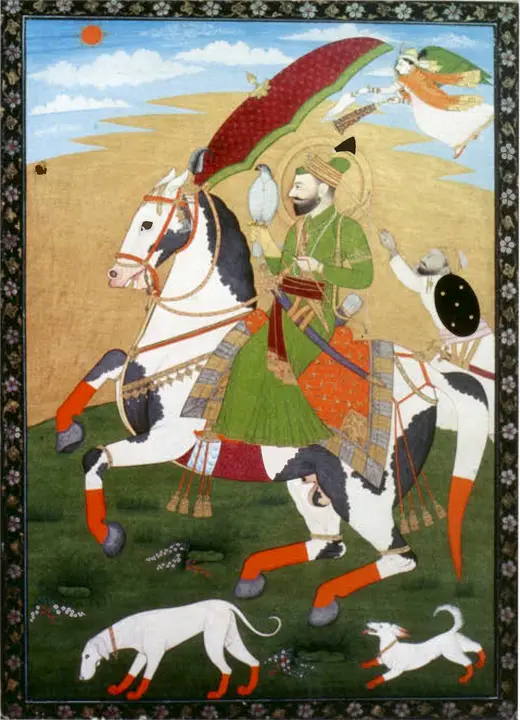
A later artist's imagining of Sri Guru Gobind Singh Ji on horseback, from the Guler-Kangra schools in the early 1800s. No portrait from Guru Ji's lifetime is established.
Unknown, Early 19th century. Collection of Gursharan and Elvira Sidhu (as credited on Commons). Public domain. Source
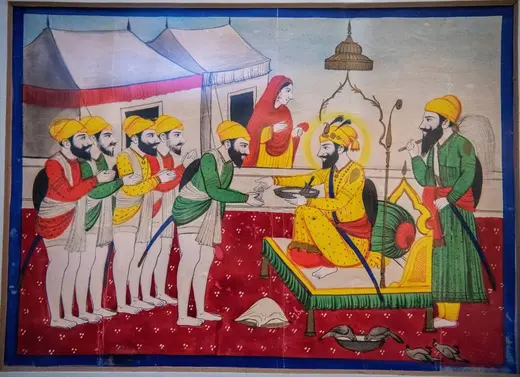
A later artist's imagining of the 1699 Khalsa ceremony at Anandpur. Commons says the attribution to Gian Singh Naqqash comes from his grandson.
Gian Singh Naqqash, Late 19th or early 20th century. Public domain. Source
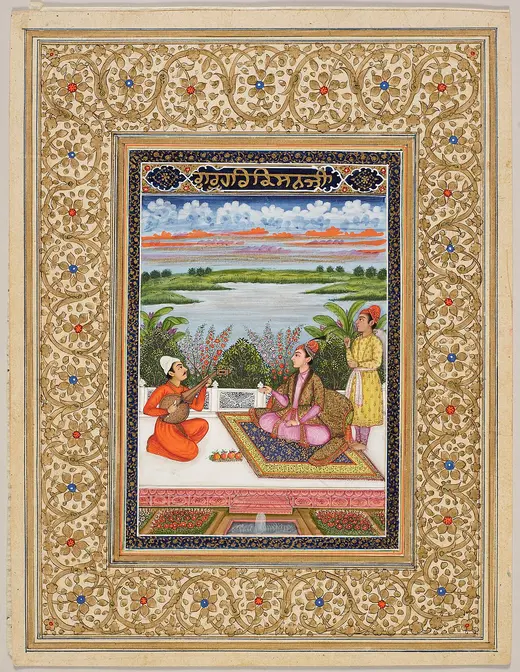
A later artist's imagining of Sri Guru Har Krishan Ji, from a set of the first nine Gurus painted about 1800-1840. No portrait from Guru Ji's lifetime is established.
Unknown, c. 1800-1840. Royal Collection Trust, RCIN 925209 (as credited on Commons). Public domain. Source
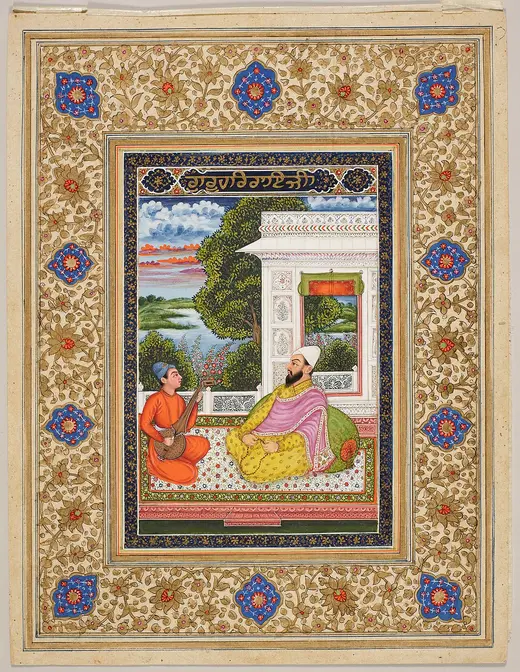
A later artist's imagining of Sri Guru Har Rai Ji, from a set of the first nine Gurus painted about 1800-1840. No portrait from Guru Ji's lifetime is established.
Unknown, c. 1800-1840. Royal Collection Trust, RCIN 925208 (as credited on Commons). Public domain. Source
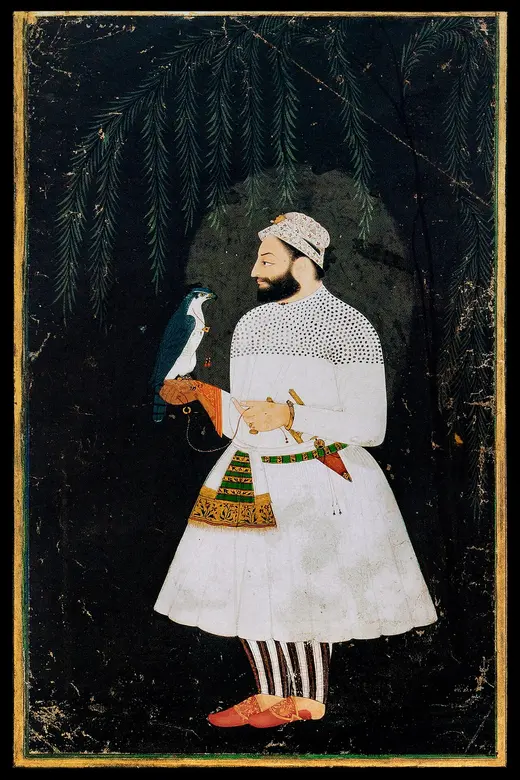
A painting of Sri Guru Hargobind Ji in a provincial Mughal style, dated to the mid 1600s, around or just after Guru Ji's lifetime. Commons calls it contemporary, but this is not established, so treat it as an artist's imagining.
Unknown, Mid 17th century. Seattle Art Museum, 44.44 (as credited on Commons). Public domain. Source
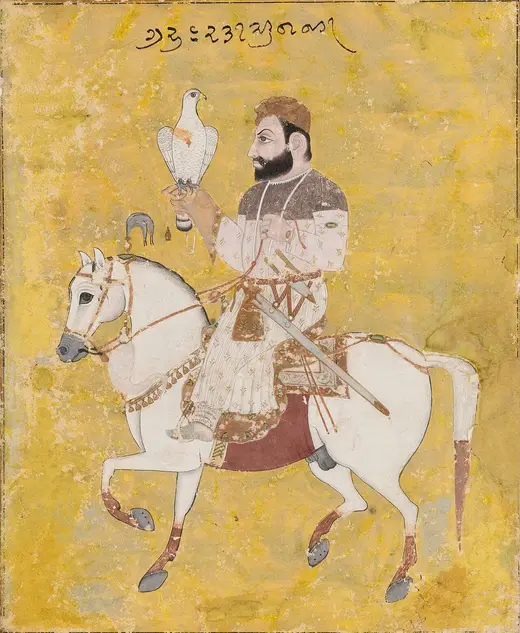
A later artist's imagining of Sri Guru Hargobind Ji on horseback, from Kishtwar in Jammu, about 1700, with an identifying inscription in Takri script. No portrait from Guru Ji's lifetime is established.
Unknown, c. 1700. Archer Collection, later sold at auction (as stated on Commons). Public domain. Source
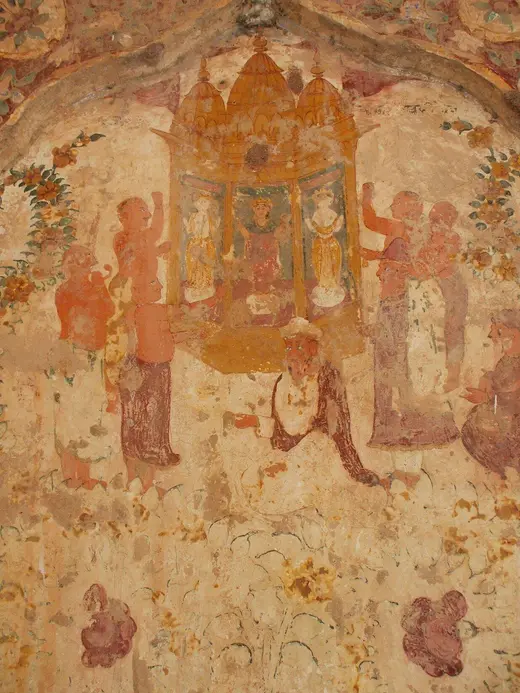
A later fresco at Gurdwara Baba Atal, Amritsar, which Commons reads as Sri Guru Nanak Dev Ji at a Hindu religious event, perhaps Puri. The identification is an inference from the figure of Bhai Bala.
Gian Singh Naqqash, Jaimal Singh Naqqash, Mehtab Singh Naqqash and Hukum Singh, 19th century. Gurdwara Baba Atal, Amritsar. Public domain. Source
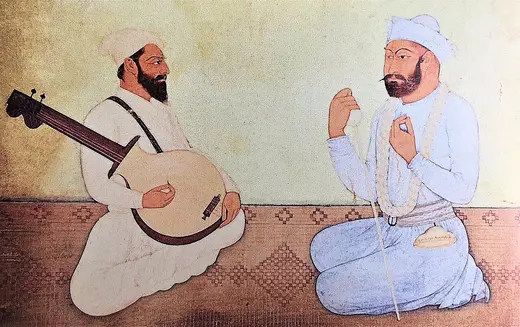
A later artist's imagining of Sri Guru Nanak Dev Ji with Bhai Mardana and his rabab, dated on Commons to about 1740. The source is a social media post, so treat the date with caution.
Unknown, c. 1740, weakly sourced. Bhai Suchet Singh Collection, Bhai Rupa (as credited on Commons). Public domain. Source
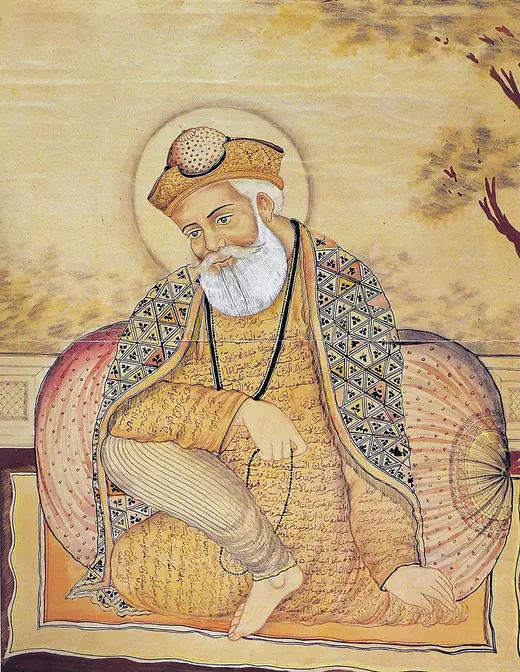
A later artist's imagining of Sri Guru Nanak Dev Ji in a robe with Arabic-script writing and Japji verses. The Sikh Museum site suggests the Chola Sahib may have inspired it.
Unknown, 19th century. Government Museum and Art Gallery, Chandigarh (as credited on the Sikh Museum site). Public domain. Source
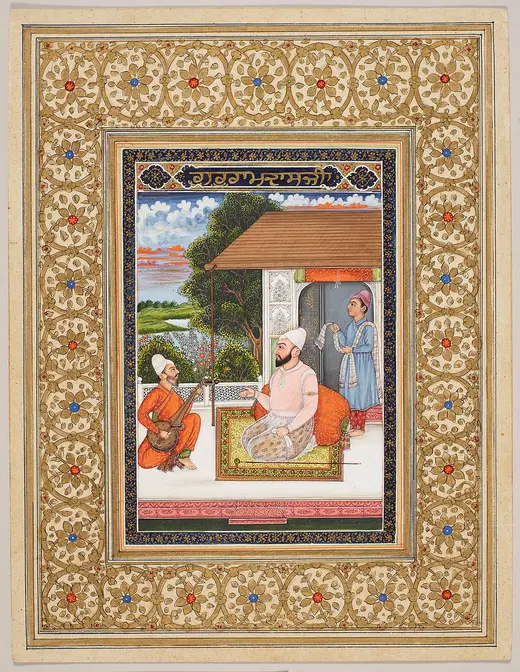
A later artist's imagining of Sri Guru Ram Das Ji, from a set of the first nine Gurus painted about 1800-1840. No portrait from Guru Ji's lifetime is established.
Unknown, c. 1800-1840. Royal Collection Trust, RCIN 925205 (as credited on Commons). Public domain. Source
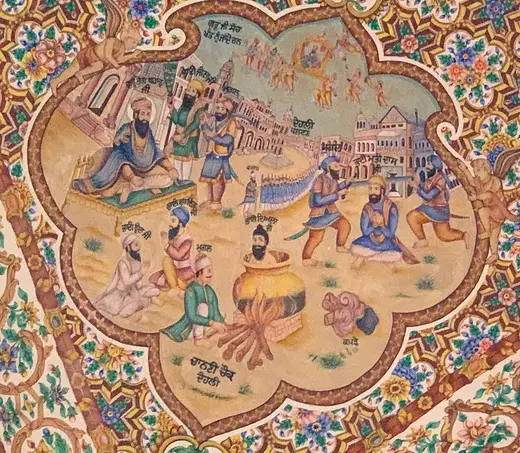
A later fresco at Gurdwara Baba Bakala showing the martyrdom of Bhai Dayala and Bhai Mati Das in the presence of Sri Guru Tegh Bahadur Ji. Credited on Commons to Jaimal Singh Naqqash and Mehtab Singh.
Jaimal Singh Naqqash and Mehtab Singh, Late 19th or early 20th century. Gurdwara Baba Bakala. Public domain. Source
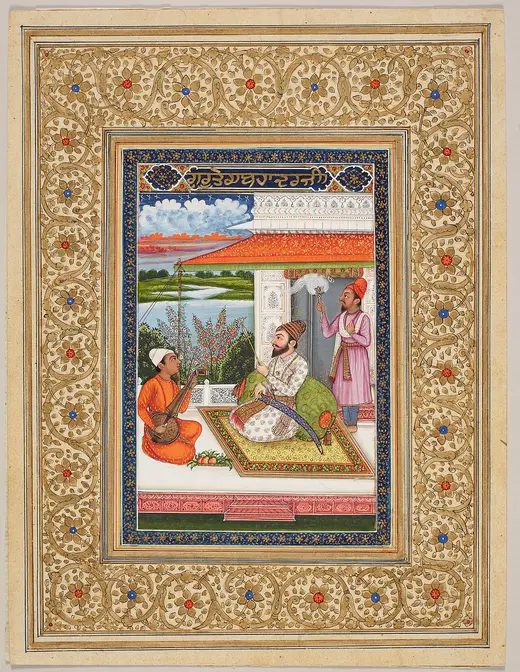
A later artist's imagining of Sri Guru Tegh Bahadur Ji, from a set of the first nine Gurus painted about 1800-1840. No portrait from Guru Ji's lifetime is established.
Unknown, c. 1800-1840. Royal Collection Trust, RCIN 925210 (as credited on Commons). Public domain. Source
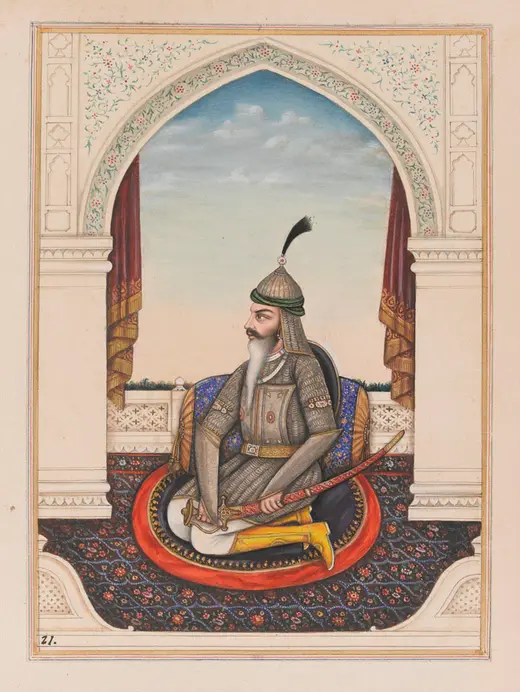
Hari Singh Nalwa by a Company artist, about 1865, nearly thirty years after he fell in battle in 1837. From the album The Kingdom of the Punjab.
Unknown Company artist, c. 1865. National Army Museum (as credited on Commons). Public domain. Source
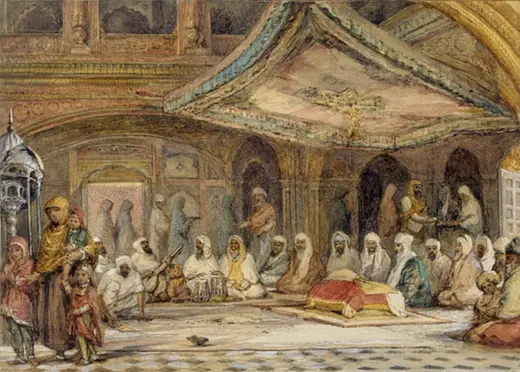
The interior of the Harmandir Sahib painted by William Carpenter, shown with a date of 1854 in the file name. Commons credits the V&A but gives no accession number.
William Carpenter (painter), c. 1854. Victoria and Albert Museum (as credited on Commons). Public domain. Source
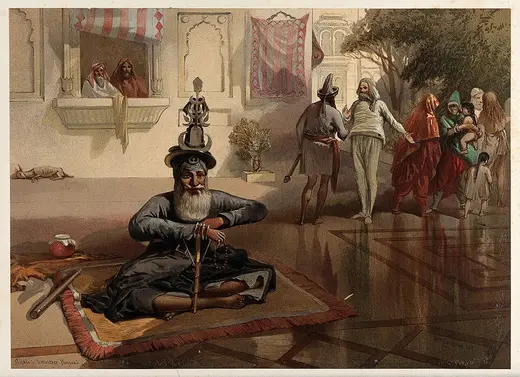
Akalis at the sacred pool in Amritsar, a chromolithograph after William Simpson. Commons gives both 1864 and about 1867.
William Simpson, c. 1864-1867. Wellcome Collection, 30292i. Public domain. Source
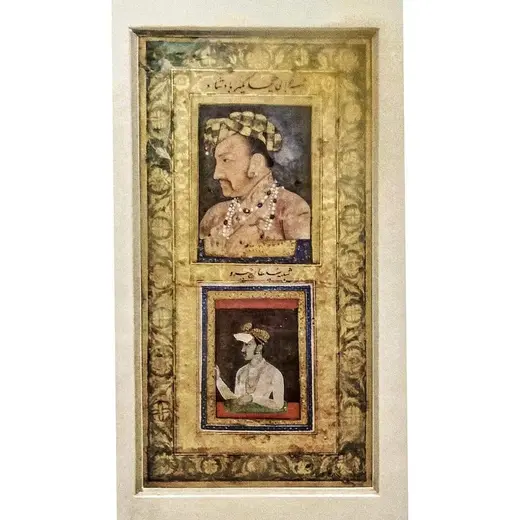
Miniature portraits labelled as Emperor Jahangir and his son Prince Khusrau, 17th century. The identification follows the description on Commons.
SpeakingArch (photograph); artist unknown, 17th century. Taj Museum, Agra.CC BY-SA 4.0. Source
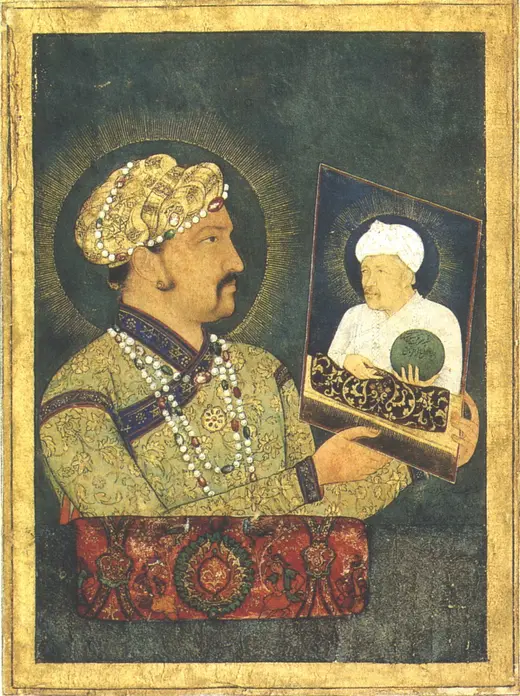
Jahangir gazing at a portrait of his father Akbar, a painting of about 1614 by Hashim and Abu al-Hasan, made in Jahangir's reign.
Hashim and Abu al-Hasan, About 1614. Musee Guimet, Paris. Public domain. Source
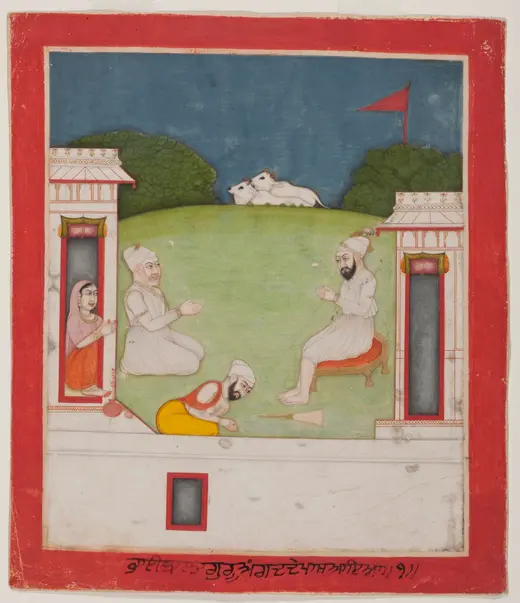
Bhai Bala reciting the life of Sri Guru Nanak Dev Ji before Sri Guru Angad Dev Ji, as the Bala tradition presents itself. A later artist's imagining, from the Unbound set of Janamsakhi paintings.
Unknown, c. 1775-1800. Asian Art Museum, San Francisco, 1998.58.1 (as credited on Commons). Public domain. Source
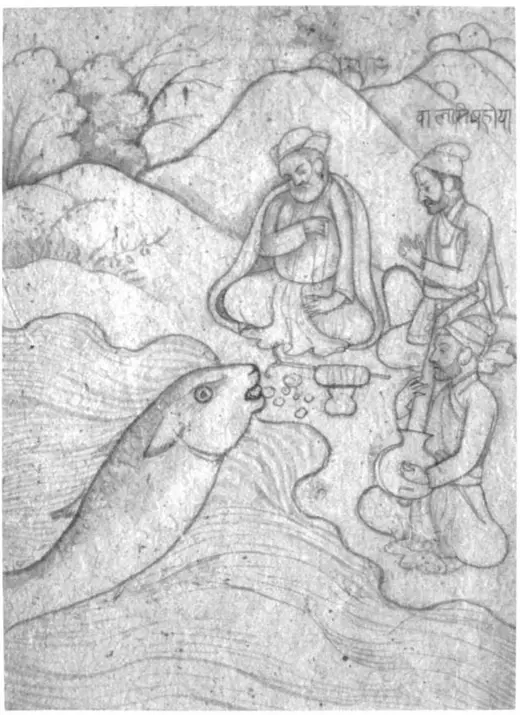
A later artist's imagining of a Janamsakhi story in which a great fish offers treasures of the sea to Sri Guru Nanak Dev Ji. A brush drawing from the Pahari workshop of the family of Nainsukh of Guler, late 1700s.
Unknown, c. 1775-1800. Government Museum and Art Gallery, Chandigarh (as credited on Commons). Public domain. Source
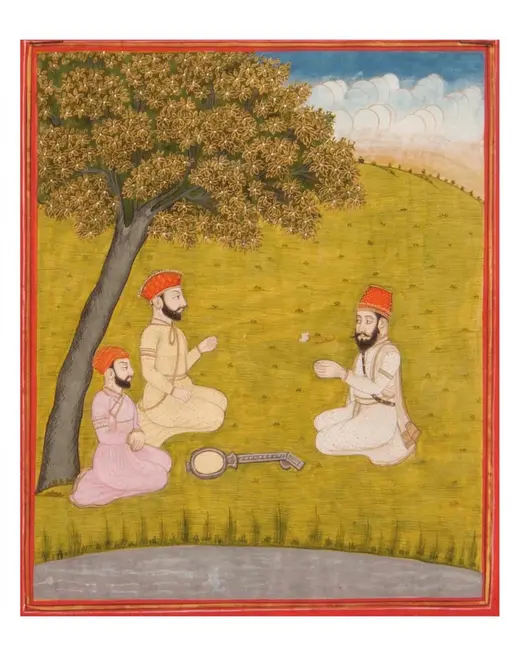
A later artist's imagining of Sri Guru Nanak Dev Ji and Bhai Mardana meeting Bhagat Kabir, from the Punjab Hills in the late 1700s. Whether such a meeting took place is not established.
Unknown, Late 18th century. Public domain. Source
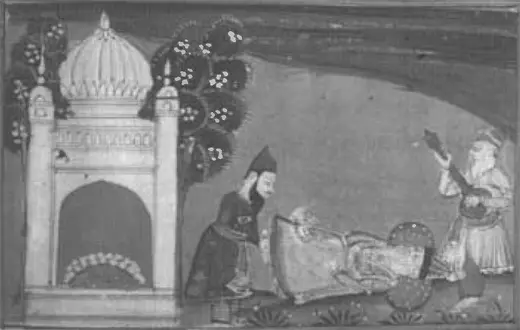
A later artist's imagining of the Janamsakhi story of Sri Guru Nanak Dev Ji lying with his feet towards Mecca. The date is uncertain. No portrait from Guru Ji's lifetime is established.
Unknown, 18th or 19th century, uncertain. Kapany Collection (as credited on Commons). Public domain. Source
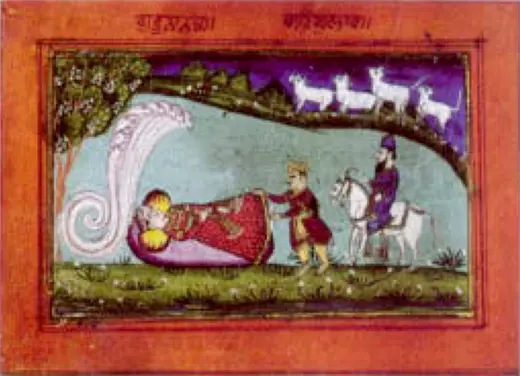
A later artist's imagining of Sri Guru Nanak Dev Ji with Rai Bular, from a Kashmiri Janamsakhi manuscript of about the early 1800s. No portrait from Guru Ji's lifetime is established.
Unknown, Early 19th century. Kapany Collection (as credited on Commons). Public domain. Source
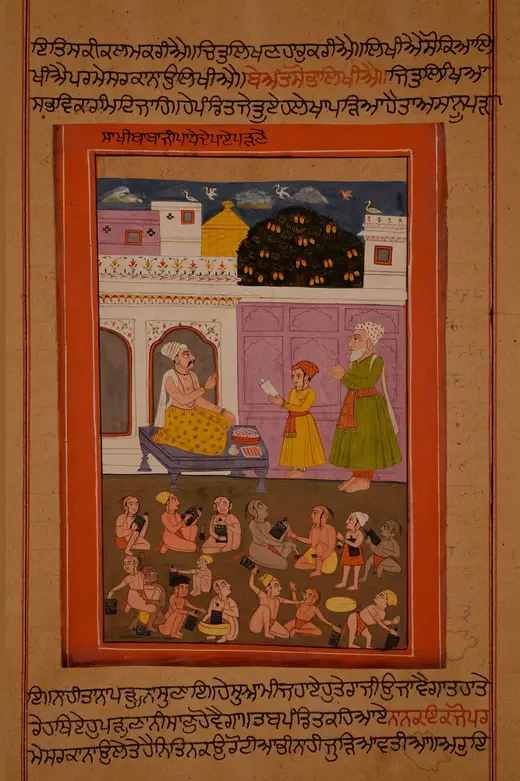
A later artist's imagining of Sri Guru Nanak Dev Ji at school with Pandit Gopal Das, from a Janamsakhi manuscript. Commons gives only a broad date range. No portrait from Guru Ji's lifetime is established.
Unknown, 17th to 19th century, uncertain. Government Museum and Art Gallery, Chandigarh (as credited on Commons). Public domain. Source
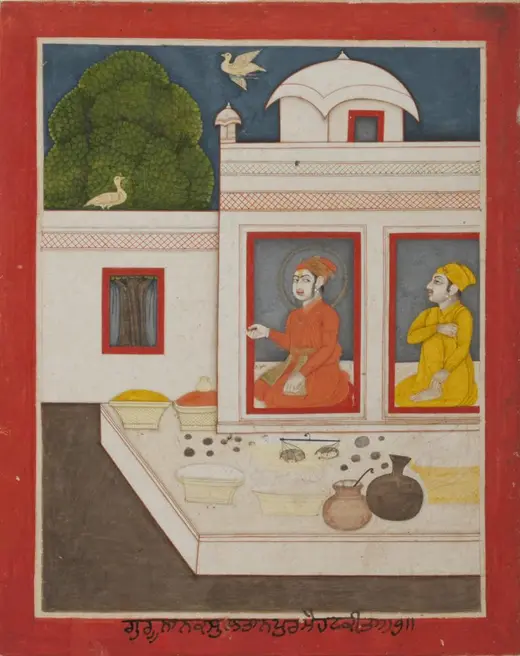
A later artist's imagining of Sri Guru Nanak Dev Ji in the provisions store at Sultanpur Lodhi, from a Janamsakhi set. Commons gives two dates, the later being 1800-1900.
Unknown, c. 1755-1800 or 19th century. Asian Art Museum, San Francisco, 1998.58.6 (as credited on Commons). Public domain. Source
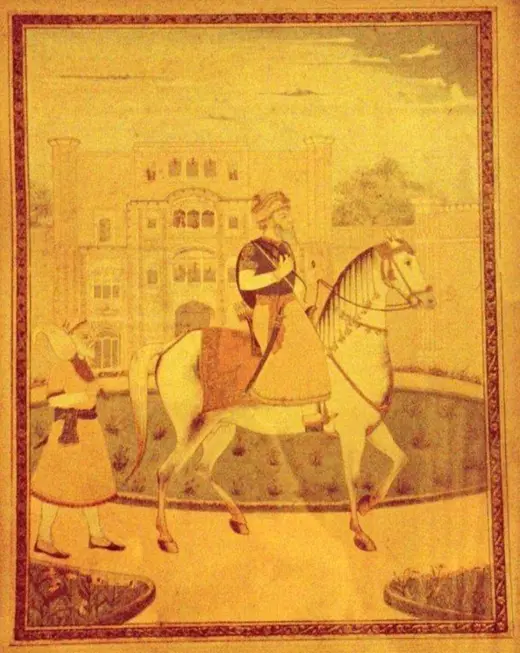
Jassa Singh Ahluwalia on horseback before his house, with an attendant, dated on Commons to the late 1700s. The source is a social media post, so treat the date with caution.
Unknown, Late 18th century, weakly sourced. Public domain. Source
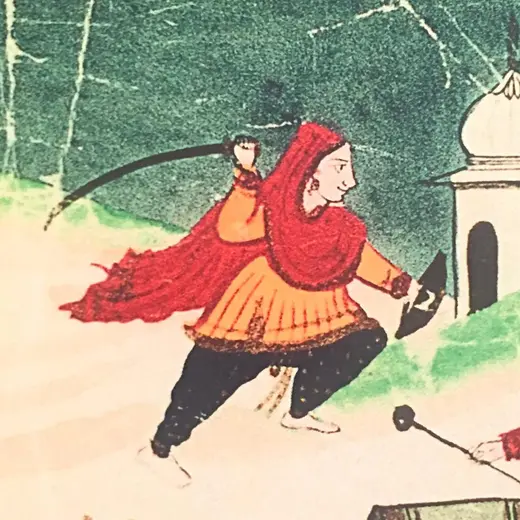
Mai Bhago in the battle of Muktsar, a detail from a late 1800s painting. An artist's imagining, made long after the event.
Unknown, Late 19th century. Government Museum and Art Gallery, Chandigarh (as credited on Commons). Public domain. Source
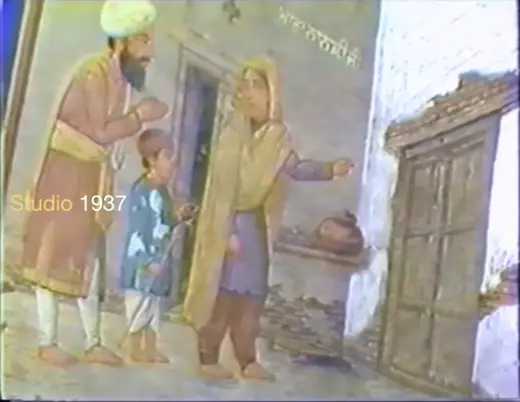
A later fresco at Gurdwara Baba Bakala of Bhai Makkhan Shah Lubana finding Sri Guru Tegh Bahadur Ji, taken from film footage. The uploader doubts that the original fresco survives.
Jaimal Singh Naqqash and Mehtab Singh, Late 19th or early 20th century. Public domain. Source
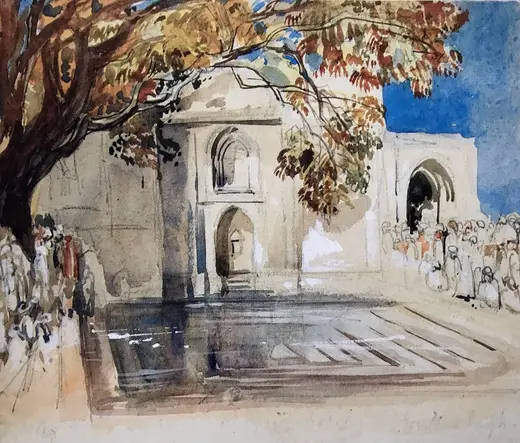
The pool at Panja Sahib, Hasan Abdal, in a watercolour by Charlotte Canning dated 3 March 1860.
Charlotte Canning, 3 March 1860. Public domain. Source
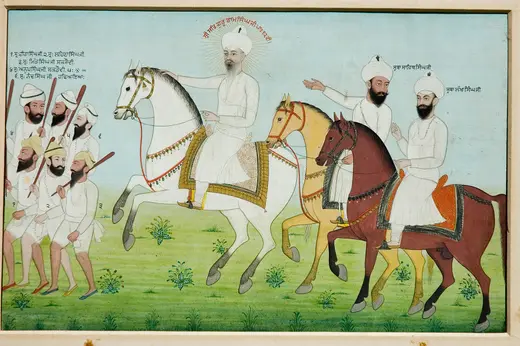
Baba Ram Singh with his subas, the governors he appointed. Its source titles it Sri Satguru Ram Singh Ji with his Subas. Commons dates it only to about the 19th century, and the artist is not known.
Unknown, About the 19th century, uncertain. Public domain. Source
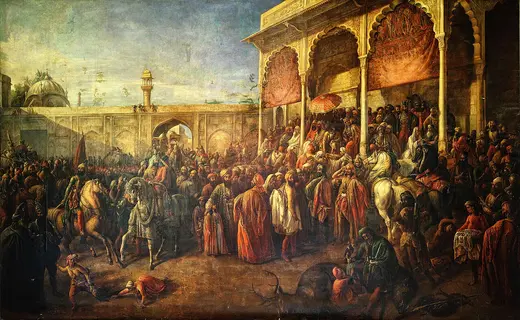
The Court of Lahore by August Schoefft, an oil of about the 1840s to 1855, based on drawings made at Lahore around 1841. Commons places it in the Princess Bamba Collection.
Ágoston Schoefft, c. 1841-1855. Princess Bamba Collection, Lahore Fort (as credited on Commons). Public domain. Source
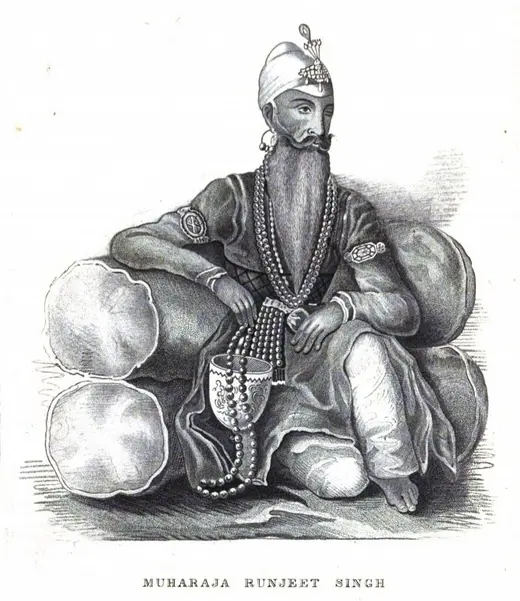
An engraving of Maharaja Ranjit Singh after a portrait attributed to Jivan Ram, from H.T. Prinsep's book of 1834. The file name says he wears the Koh-i-Noor, which was not independently checked.
Kasinath, sculptor, after an original work by Jivan Ram, 1834. Public domain. Source
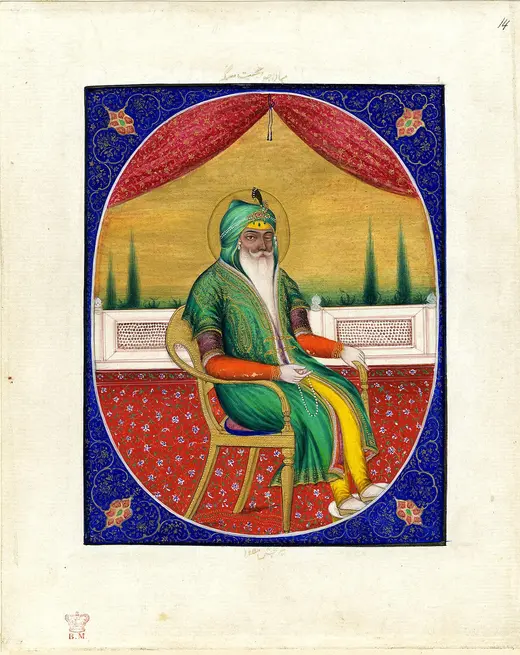
Maharaja Ranjit Singh on a terrace, an album leaf in gouache from about 1830, made during his lifetime and linked from Commons to the British Museum.
Unknown, c. 1830. British Museum, 1920,0917,0.227 (as credited on Commons). Public domain. Source
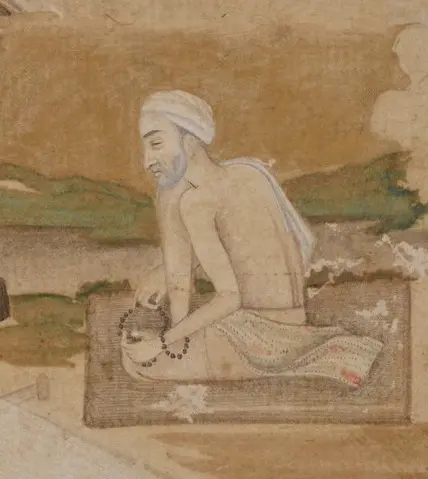
A detail showing Bhagat Ravidas beside Bhagat Kabir, from a Mughal painting dated 1625 and catalogued at the National Museum, New Delhi.
Unknown, 1625. National Museum, New Delhi, 79.444 (as credited on Commons). Public domain. Source
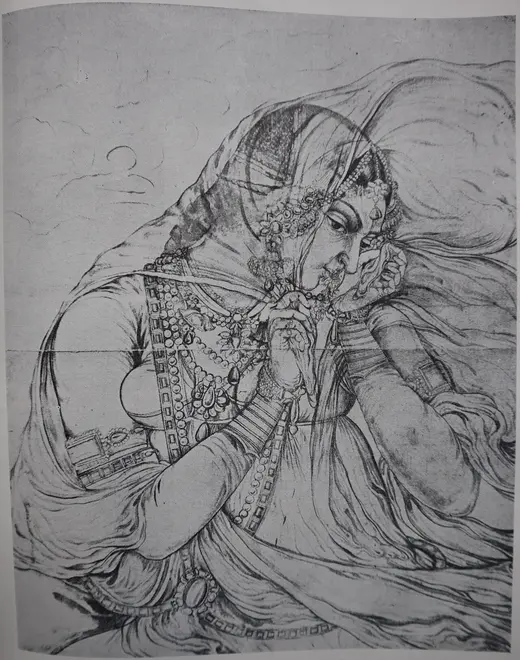
Sardarni Sada Kaur in a sketch credited to Kehar Singh, an artist of Maharaja Ranjit Singh's court. Published in 1983 by R.P. Srivastava from the Central Sikh Museum.
Kehar Singh, court artist of Maharaja Ranjit Singh, 19th century. Central Sikh Museum, Amritsar (as credited on Commons). Public domain. Source
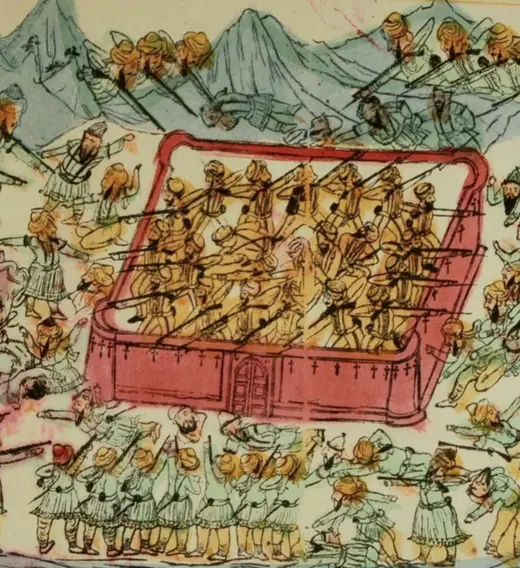
An imagined picture of the battle of Saragarhi of 12 September 1897, from a weak web source. Its date is uncertain.
Unknown, Late 19th or early 20th century, uncertain. Public domain. Source
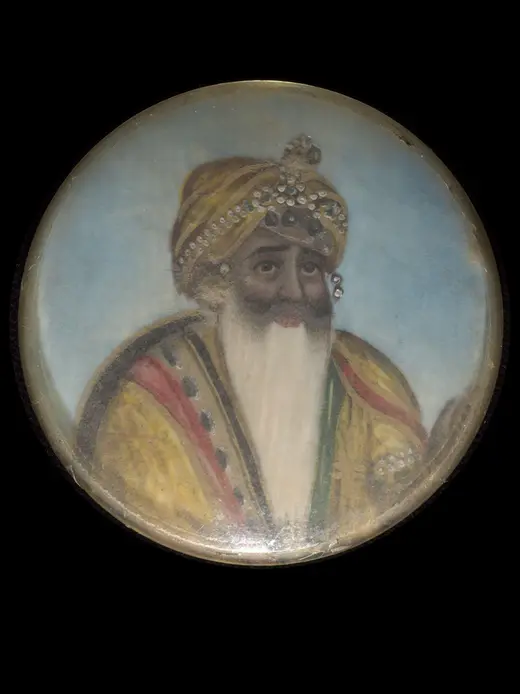
Sham Singh Atariwala in a yellow turban, painted on ivory at Lahore about 1850 to 1870. It was made after he fell at Sobraon in 1846, so it may not have been taken from life.
Unknown, About 1850 to 1870. Victoria and Albert Museum, London. Public domain. Source
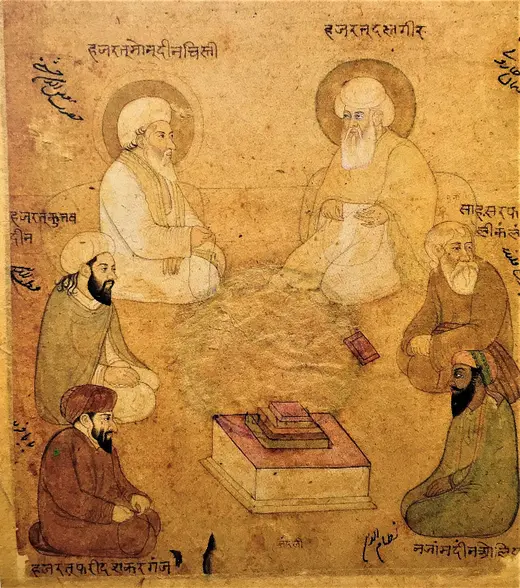
An imagined gathering of Sufi saints, including Baba Farid, in a Guler-style painting. Commons has no date for it. The saints lived at different times.
Unknown, Date not known. Public domain. Source
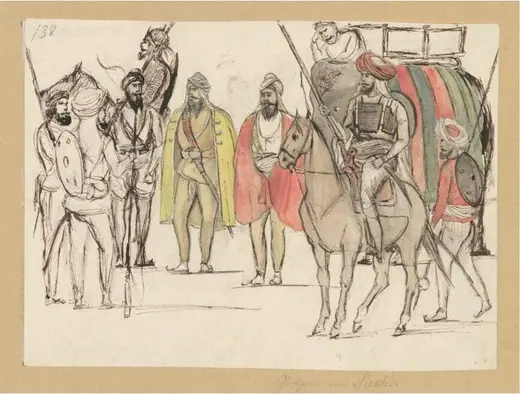
Sikh regular infantry and irregular cavalry of the Anglo-Sikh Wars, about 1850. The source and artist are not stated.
Unknown, c. 1850. Public domain. Source
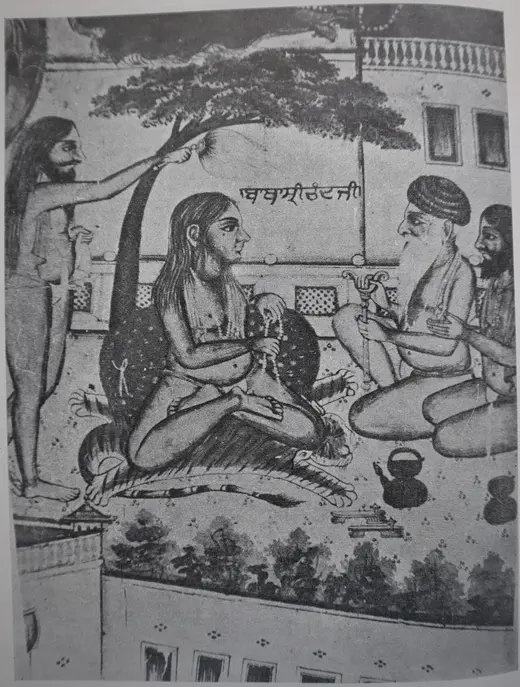
A fresco of Baba Sri Chand with followers at Akhara Bala Nand, Amritsar, an Udasi centre, about the 1870s. Published in 1983 by R.P. Srivastava. An artist's imagining.
Unknown, c. 1870s. Akhara Bala Nand, Amritsar. Public domain. Source
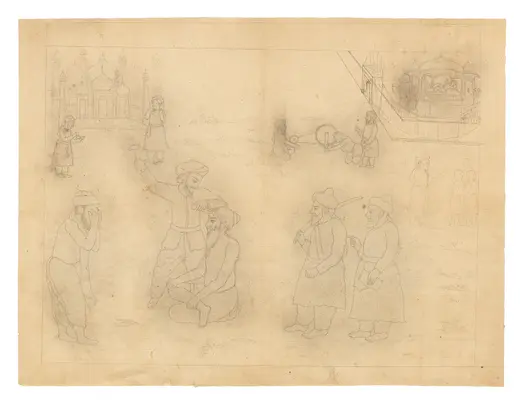
A large pencil drawing from the Punjab with some identifying inscriptions in Persian. It shows the removal of Bhai Taru Singh's scalp in the foreground and the martyrdom of Mehtab Singh in the background. It was made long after 1745, so it is an artist's imagining.
Unknown, 19th century. Public domain. Source
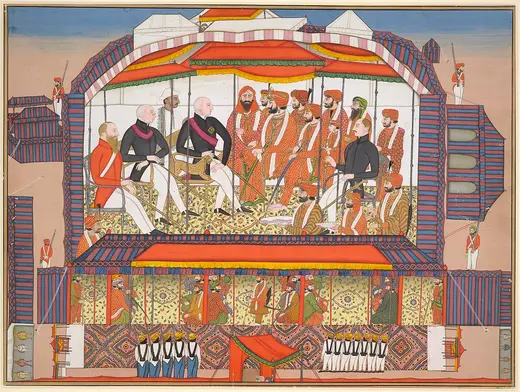
Signing the Treaty of Bhairowal, 26 December 1846, with the boy Maharaja Duleep Singh, in a gouache of about 1846-1847. Commons links it to the British Museum.
Unknown, c. 1846-1847. British Museum, 1948,1009,0.109 (as credited on Commons). Public domain. Source


Manuscripts
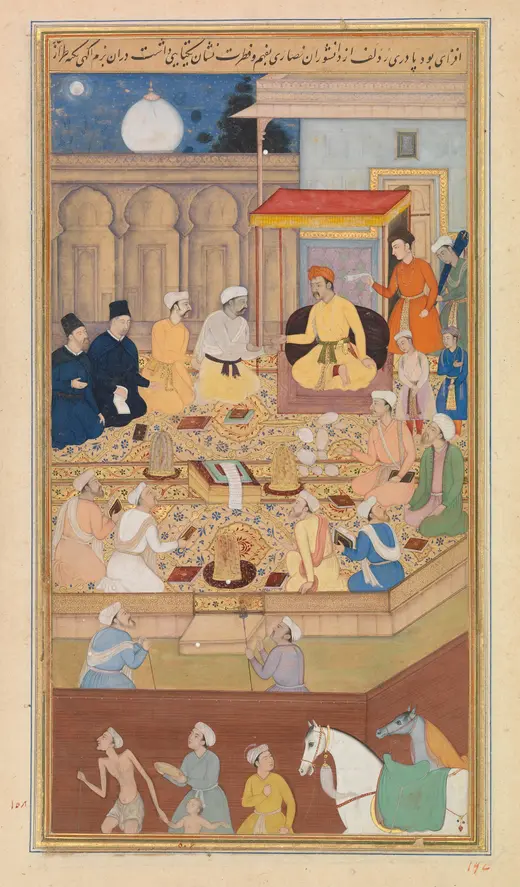
Akbar and the Jesuits, from an Akbarnama manuscript of about 1600 to 1603, painted by Narsingh in the emperor's lifetime. It illustrates his interest in debate between faiths.
Narsingh, About 1600 to 1603. Chester Beatty Library, Dublin, In 03.263b. Public domain. Source
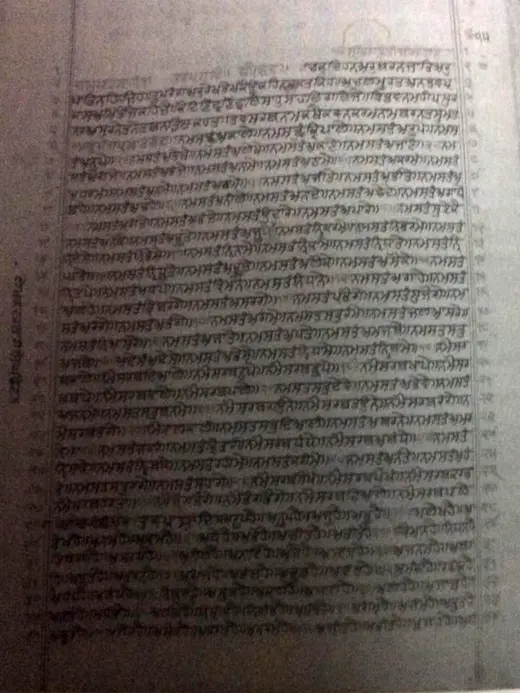
The opening of the Jap in the Anandpur manuscript. Commons gives 1695-1696 or 1698, while Mann says it is undated but from the 1690s.
Unknown scribes (Commons credits Sri Guru Gobind Singh Ji), 1690s, undated. Private collection (per Mann, 2008). Public domain. Source
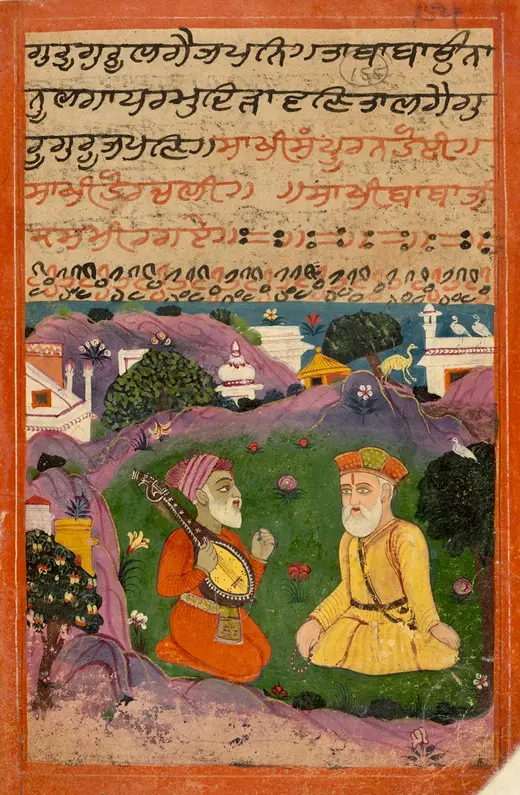
Illustrated page. From the B-40 Janamsakhi of 1733, written by Daya Ram Abrol and painted by Alam Chand. It is one of 57 paintings in a manuscript made long after Sri Guru Nanak Dev Ji's time, so the figure is an artist's imagining.
Alam Chand, painter. Image: Ms Sarah Welch, 1733. British Library, MS Panj B40.CC BY-SA 4.0. Source
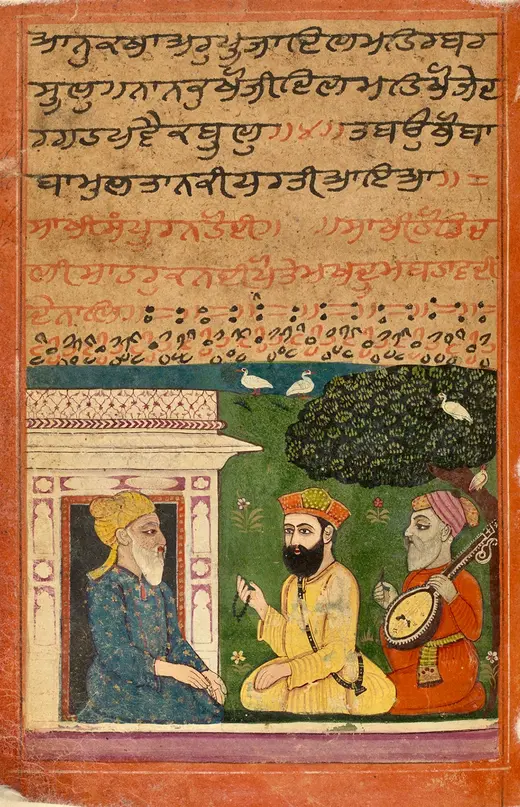
Illustrated page. From the B-40 Janamsakhi of 1733, written by Daya Ram Abrol and painted by Alam Chand. It is one of 57 paintings in a manuscript made long after Sri Guru Nanak Dev Ji's time, so the figure is an artist's imagining.
Alam Chand, painter. Image: Ms Sarah Welch, 1733. British Library, MS Panj B40.CC BY-SA 4.0. Source
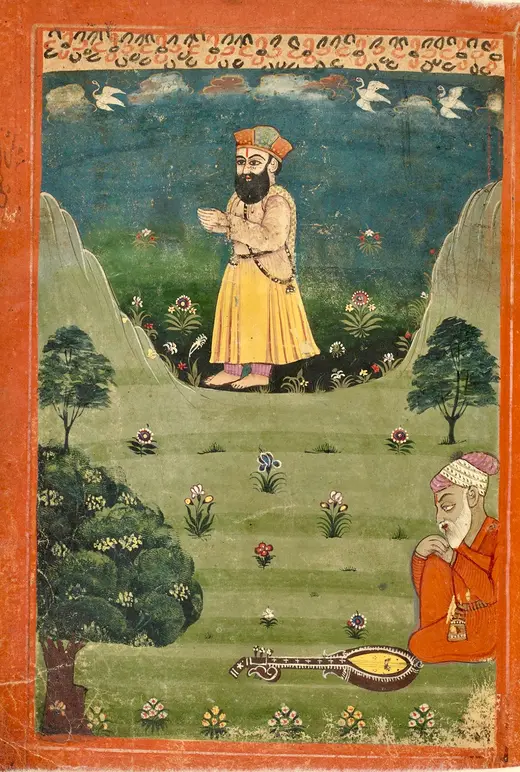
Illustrated page. From the B-40 Janamsakhi of 1733, written by Daya Ram Abrol and painted by Alam Chand. It is one of 57 paintings in a manuscript made long after Sri Guru Nanak Dev Ji's time, so the figure is an artist's imagining.
Alam Chand, painter. Image: Ms Sarah Welch, 1733. British Library, MS Panj B40.CC BY-SA 4.0. Source
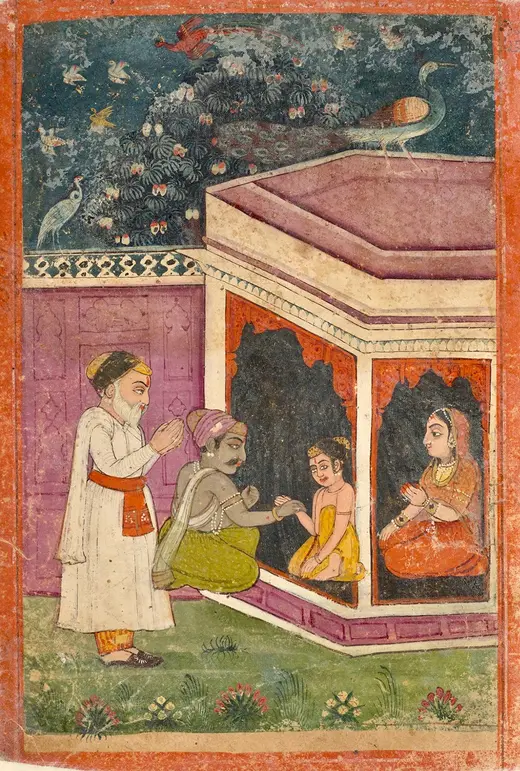
Illustrated page. From the B-40 Janamsakhi of 1733, written by Daya Ram Abrol and painted by Alam Chand. It is one of 57 paintings in a manuscript made long after Sri Guru Nanak Dev Ji's time, so the figure is an artist's imagining.
Alam Chand, painter. Image: Ms Sarah Welch, 1733. British Library, MS Panj B40.CC BY-SA 4.0. Source
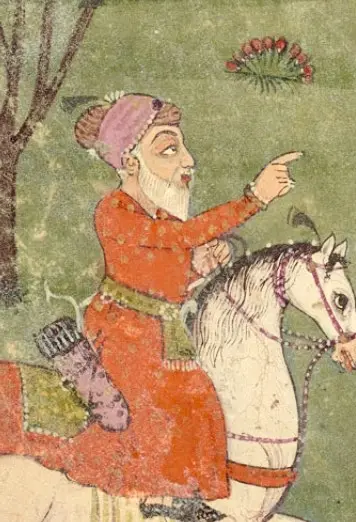
Detail said on Commons to show Rai Bular Bhatti, from the B-40 Janamsakhi of 1733. The identification comes from the file's title and was not checked against the manuscript.
Alam Chand, painter. Image: Ms Sarah Welch, 1733. British Library, MS Panj B40.CC BY-SA 4.0. Source
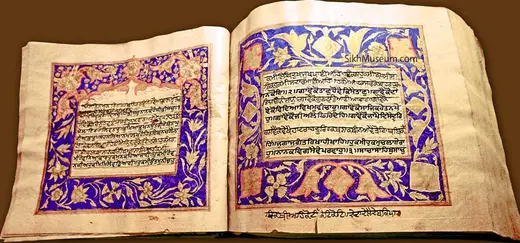
Pages from a manuscript of Sri Guru Granth Sahib Ji attributed to Baba Deep Singh, about 1715-1730, credited by the Sikh Museum site to Gurdwara Chhevin Padshahi, Punjab.
Attributed to Baba Deep Singh, c. 1715-1730. Gurdwara Chhevin Padshahi, Punjab (per the Sikh Museum site). Public domain. Source
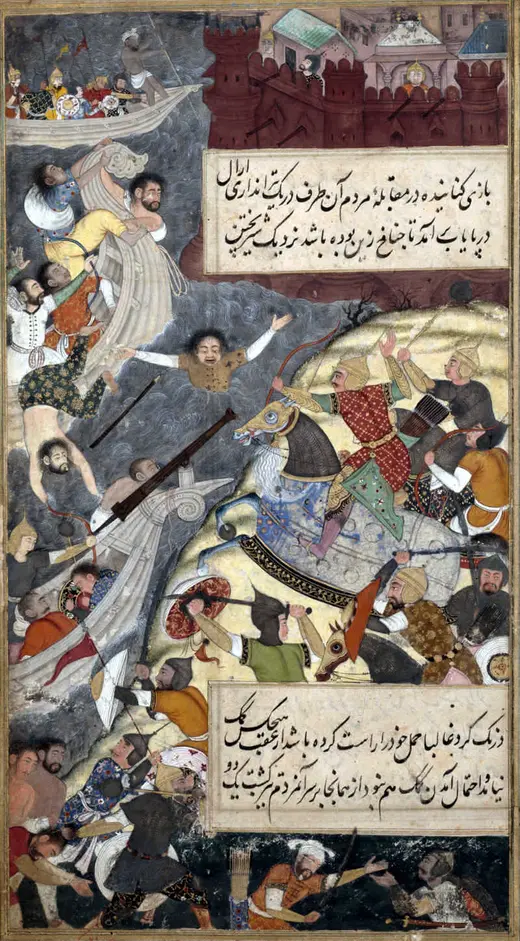
Babur crossing the Indus, a painting commissioned by Emperor Akbar about 1589. It was made some sixty years after Babur died, so it is an artist's imagining.
Unknown, About 1589. Aga Khan Museum. Public domain. Source
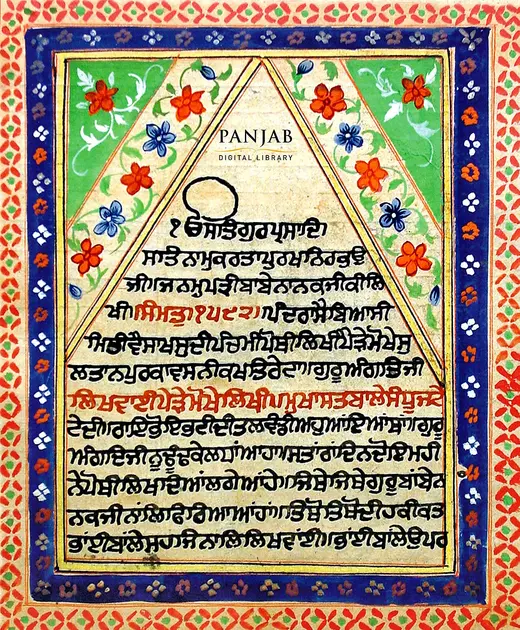
Decorated opening page of a Bhai Bala Janamsakhi manuscript. Commons credits the Government Museum, Chandigarh, and gives only a broad date range.
Unknown, 17th to 19th century, uncertain. Government Museum and Art Gallery, Chandigarh (as credited on Commons). Public domain. Source
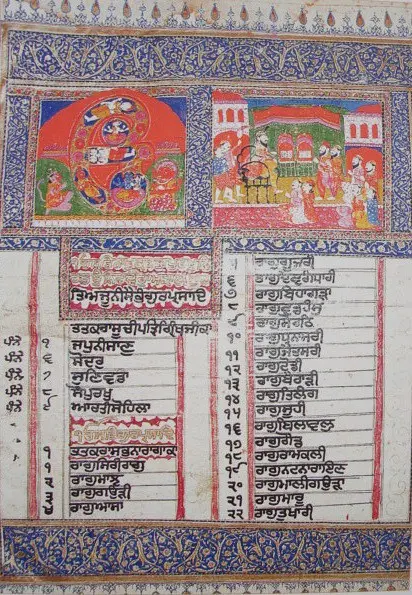
A folio labelled on Commons as from the Bhai Banno manuscript, via Flickr. Commons dates it to the early 1600s, but the date of the volume is disputed and this image could not be checked against it.
Unknown, Disputed: 1604, 1642 or 1699. Public domain. Source
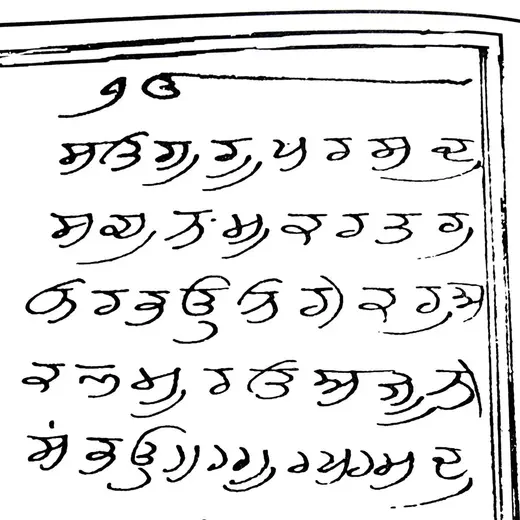
A page labelled on Commons as the Colebrooke Janamsakhi, the Puratan manuscript in London. Commons gives 1634, but the manuscript itself is undated and scholars disagree.
Unknown, Undated. 1634 on Commons. British Library, MS Panj B6. Public domain. Source
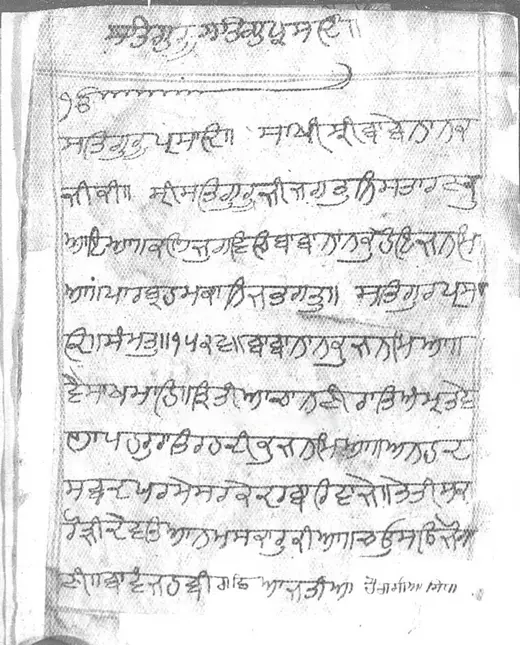
An early form of the Mul Mantar, labelled on Commons as from the Ahiapur Wali volume of the Goindwal Pothis, about 1570-1572. The source link is informal. The Encyclopaedia of Sikhism calls this the Darapur or Yahyapur volume.
Sahansar Ram, scribe, per the Encyclopaedia of Sikhism, c. 1570-1572. Public domain. Source
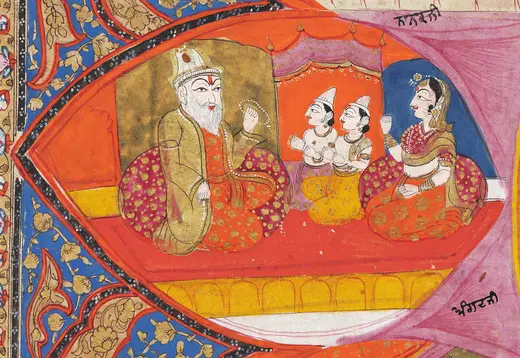
Sri Guru Angad Dev Ji with Mata Khivi and their sons Baba Dasu and Baba Dattu, as identified on Commons. From a manuscript of about 1839 to 1843, nearly three centuries after their time, so the figures are an artist's imagining.
Miha Singh, illustrator; Misar Prakash, scribe, About 1839 to 1843. Public domain. Source
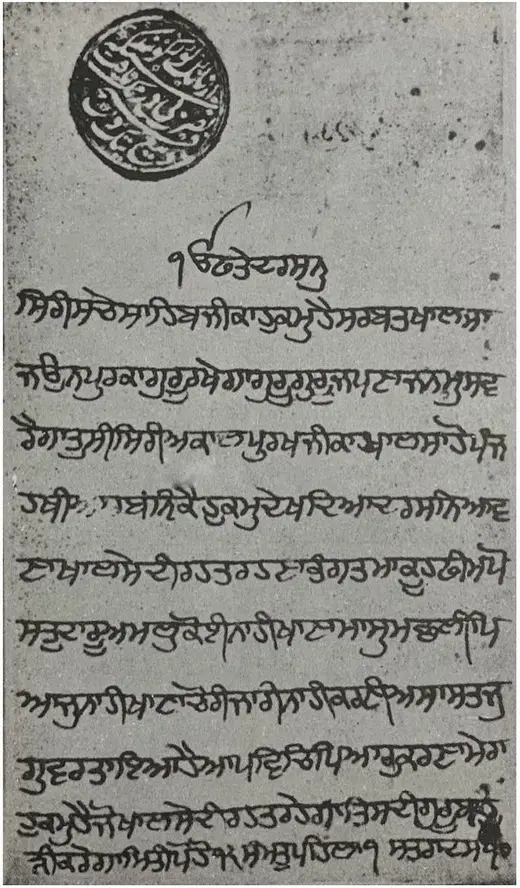
A hukamnama of Banda Singh Bahadur to the congregation of Jaunpur, dated 12 December 1710 (12 Poh 1769 Bk). It asks them to join his campaign.
Banda Singh Bahadur, 12 December 1710. Public domain. Source
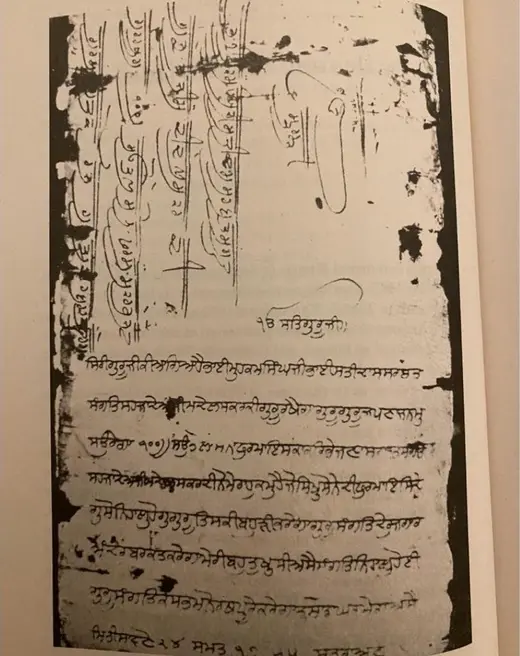
A hukamnama of Sri Guru Gobind Singh Ji dated 24 July 1698. The date comes from Commons, whose source is a social media post.
Sri Guru Gobind Singh Ji and his scribe, 24 July 1698. Public domain. Source
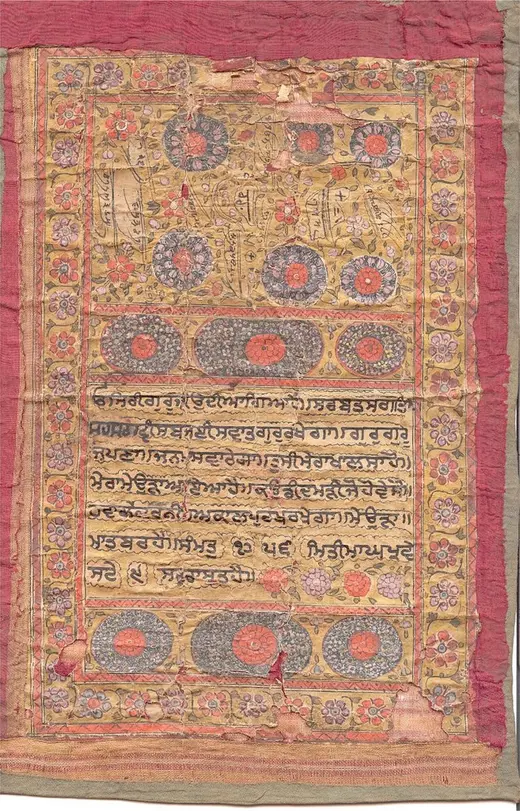
An illuminated hukamnama of Sri Guru Gobind Singh Ji of 1699 (Samat 1756), published by Gurinder Singh Mann in 2008 from a family collection in the United States.
Sri Guru Gobind Singh Ji and his scribe, 1699. Private collection, USA (per Mann, 2008). Public domain. Source
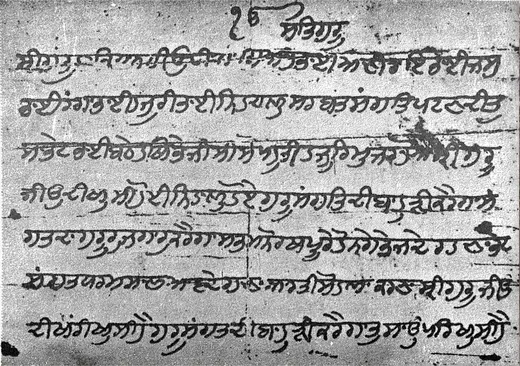
A hukamnama of Sri Guru Har Krishan Ji to the congregation of Pakpattan, dated on Commons to about 1661-1664. Its description comes from a social media page.
Sri Guru Har Krishan Ji and his scribe, c. 1661-1664. Public domain. Source
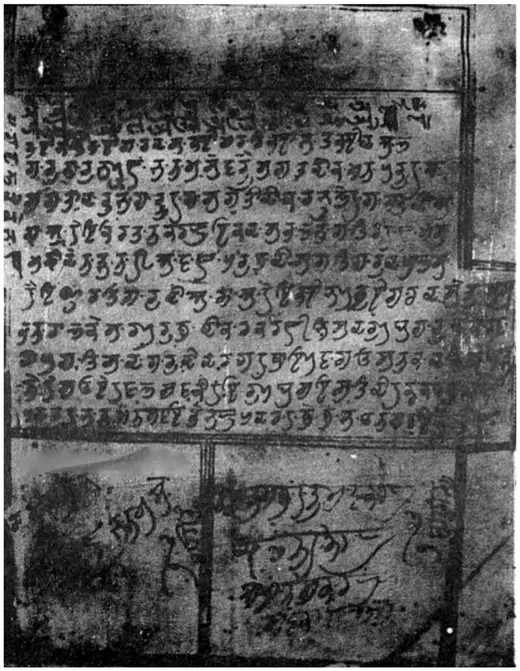
A hukamnama of Sri Guru Hargobind Ji to the eastern congregations, kept according to Commons at Takht Harmandir Sahib, Patna. The source is a social media post.
Sri Guru Hargobind Ji, 17th century. Takht Harmandir Sahib, Patna (as stated on Commons). Public domain. Source
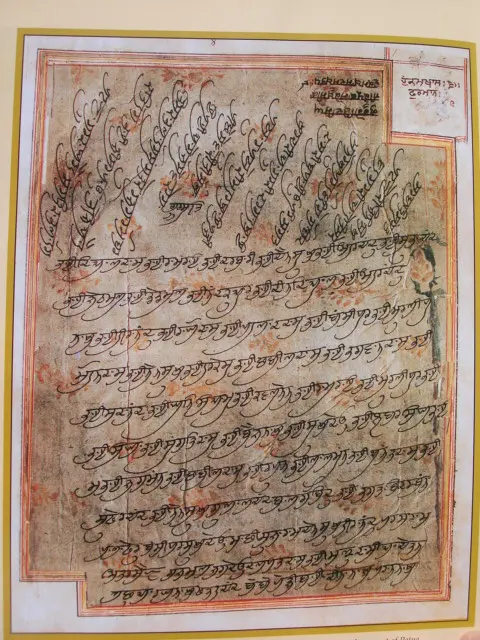
A hukamnama of Sri Guru Tegh Bahadur Ji said to have been sent to Patna when Guru Ji's son was born, and kept at Takht Harmandir Sahib. The source is a Flickr post.
Sri Guru Tegh Bahadur Ji and his scribe, c. 1666-1667. Takht Harmandir Sahib, Patna (as stated on Commons). Public domain. Source
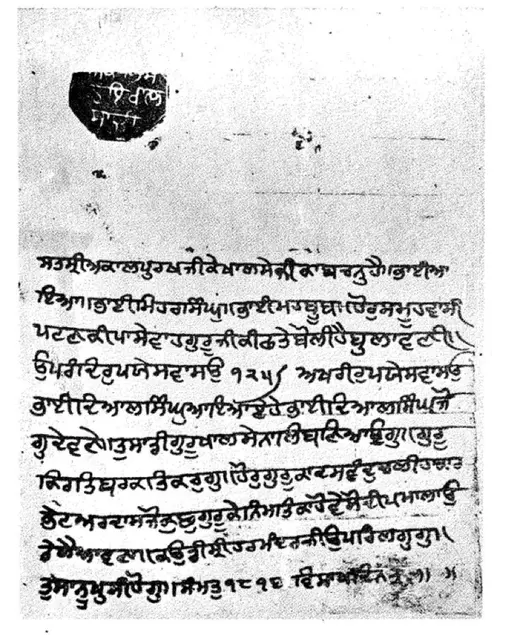
A letter issued in the name of the Khalsa on 12 April 1759 to two Sikhs of Patna, asking for donations to rebuild the Harmandir Sahib after the attack of 1757. Details come from Commons.
Sikh Khalsa [Guru Khalsa], 12 April 1759. Public domain. Source
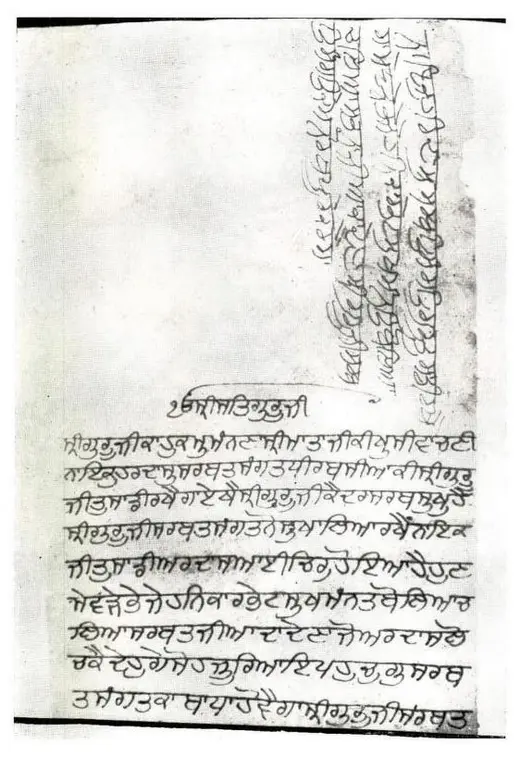
A letter issued in the name of Mata Gujri, reproduced in a 1967 book by Trilochan Singh. Mann (2008) also notes a hukamnama under her name. Its date is not given exactly.
Mata Gujri and her officiated scribe, 17th or early 18th century. Public domain. Source
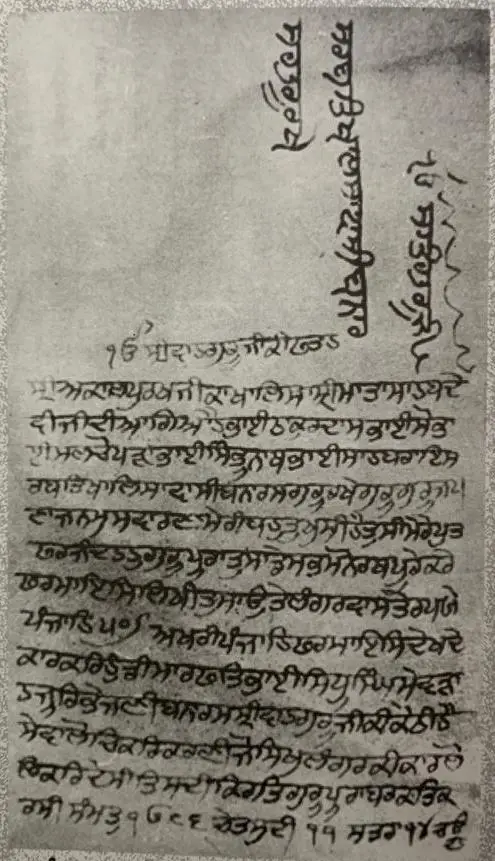
A hukamnama of Mata Sahib Devan dated 19 March 1730, to Sikhs of Varanasi. The Encyclopaedia of Sikhism gives 1726 to 1734 as the range for her letters. The source is a blog.
Mata Sahib Devan and her scribe, 19 March 1730. Public domain. Source
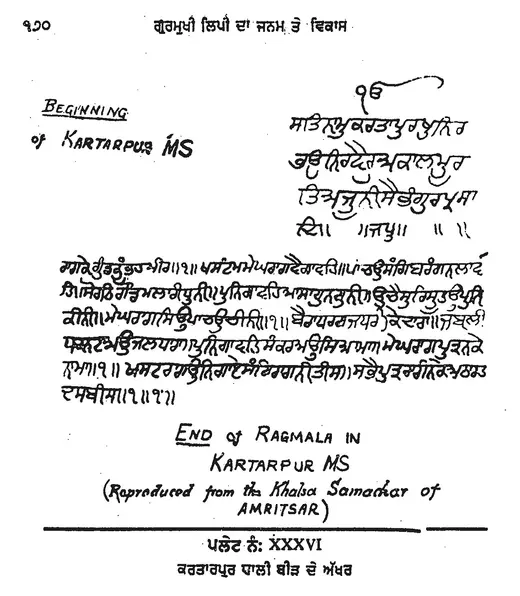
The Mul Mantar and end of the Ragamala from the Kartarpur manuscript, as reproduced by G.B. Singh in a book of 1950.
Reproduced by G.B. Singh (Gurbaksh Singh, 1877–1950) from the Khalsa Samadar of Amritsar, c. 1604. Reproduced 1950. Sodhi family, Kartarpur. Public domain. Source
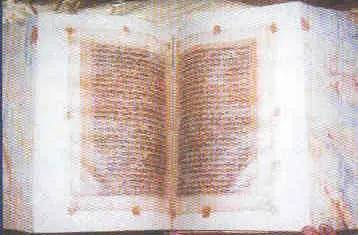
A small photograph of the Kartarpur manuscript. Commons gives no photographer. Access to this volume has been restricted, so few images exist.
Bhai Gurdas, scribe, under Sri Guru Arjun Dev Ji, c. 1604. Sodhi family, Kartarpur. Public domain. Source
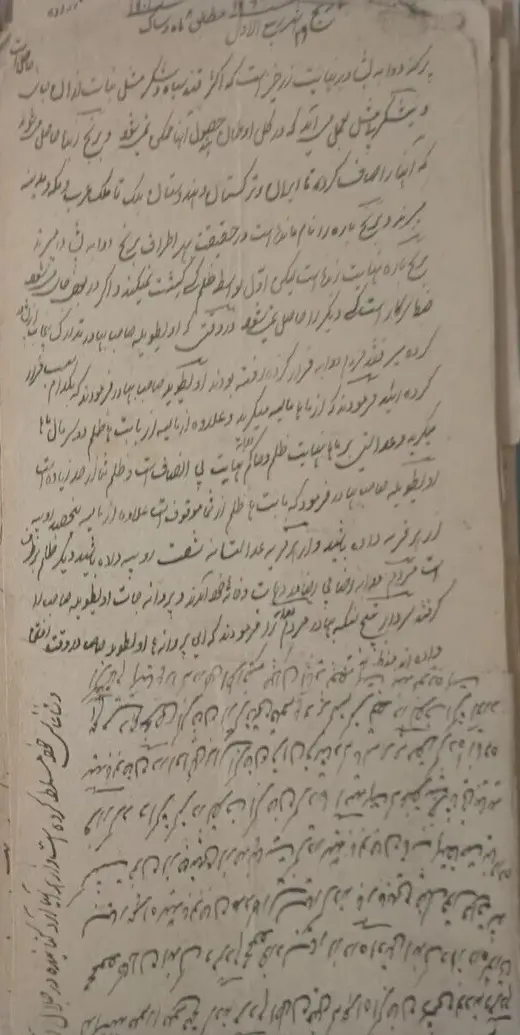
A folio labelled as a Khalsa Darbar record of about 1843-1844, recording Sikh military activity. Its link to the catalogued series in Lahore was not checked.
Scribe of the Sikh Empire's administration, c. 1843-1844. Public domain. Source
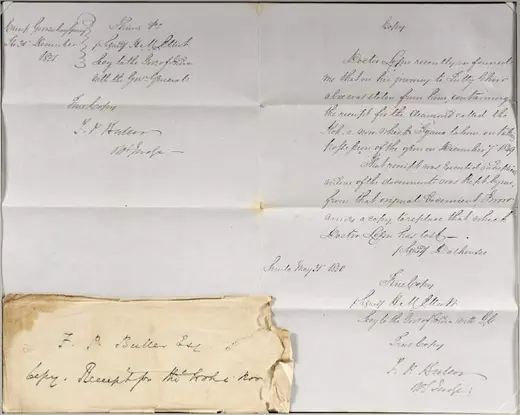
A 'true copy' receipt of 1851 recording the transfer of the Koh-i-Noor, said to have been made for Sir John Login and now in the Toor Collection.
Unknown, 1851. Toor Collection (as credited on Commons). Public domain. Source
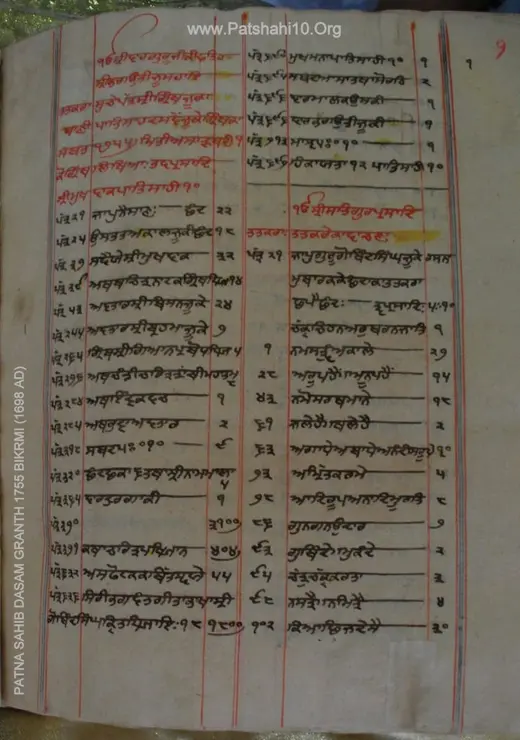
A page of the Patna manuscript of the Dasam Granth, traditionally dated 1698. Mann questions whether this volume is from 1698 or a later copy.
Unknown scribes (Commons credits Sri Guru Gobind Singh Ji), 1698 by tradition. Takht Harmandir Sahib, Patna. Public domain. Source
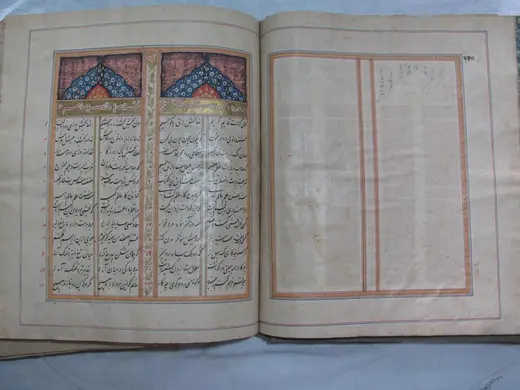
The opening of the Zafarnama in an illuminated Dasam Granth manuscript dated 1765, known on Internet Archive as the Patna Missal manuscript. Its origin was not independently checked.
Patna Missal (faction of Sikhs), 1765. Public domain. Source
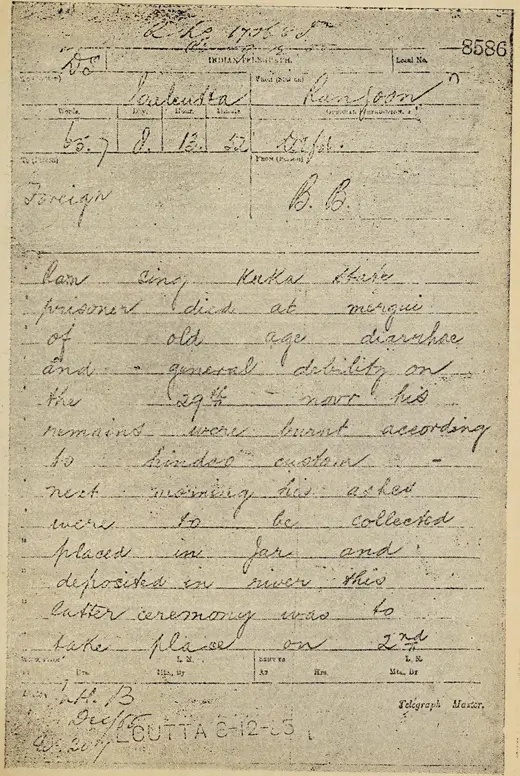
A government telegram of 8 December 1885 from Rangoon to Calcutta, reporting that the state prisoner Baba Ram Singh had passed away at Mergui on 29 November. It is held by the National Archives of India. Many of his followers did not accept this report.
Government of British Burma, 1885. National Archives of India. Public domain. Source
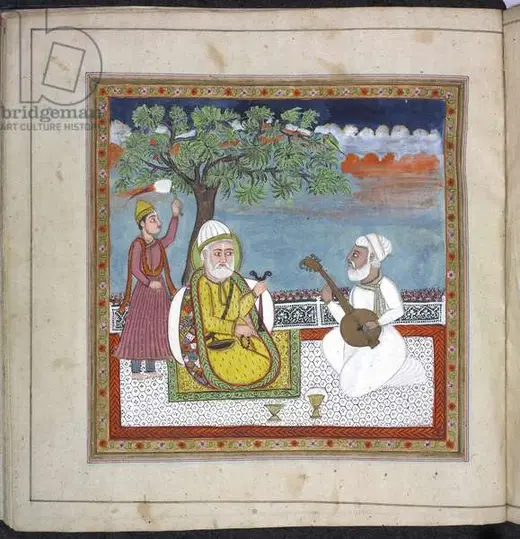
A folio credited to Rani Jindan's prayer book of 1828-30, held according to Commons by the British Library. No shelfmark was confirmed.
Unknown, c. 1828-1830. British Library (as credited on Commons). Public domain. Source
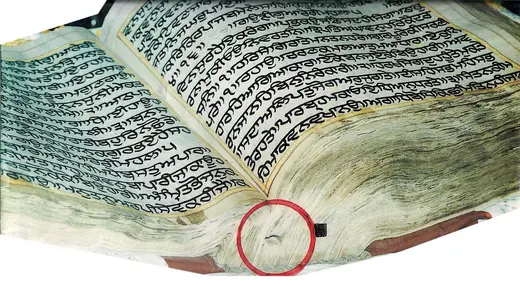
A handwritten copy of Sri Guru Granth Sahib Ji said to have been struck by a bullet in June 1984, during Operation Blue Star. The source is a Flickr post and the claim is not independently confirmed.
Unknown, Photographed after 1984. Public domain. Source
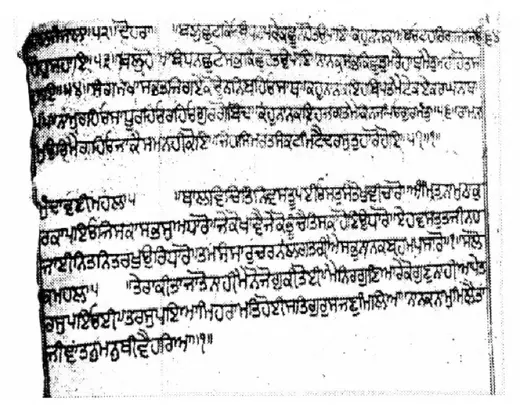
A page from a manuscript said to have been reduced to ashes in June 1984 with the Sikh Reference Library. The claim comes from a website and a 1991 book, and the fate of the collection is disputed.
Unknown, Manuscript undated. Public domain. Source
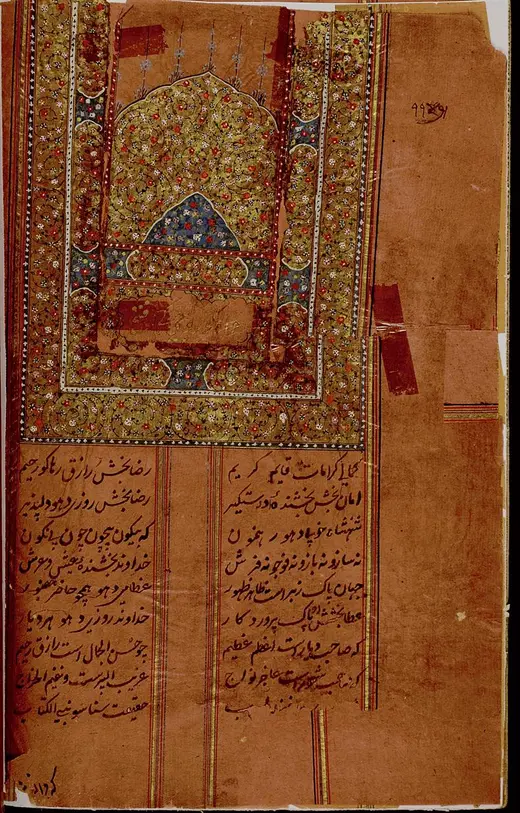
The opening of a copy of the Zafarnama said to have been prepared by Bhai Daya Singh. That attribution is a claim. The original letter has not been located.
Unknown, Early 18th century, as claimed. Public domain. Source


Historic photographs
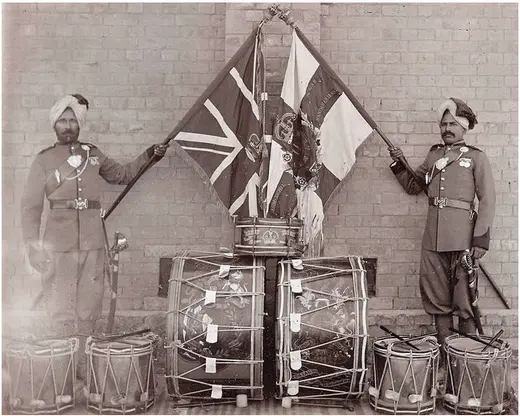
Soldiers of the 52nd Sikhs at Kohat in 1905, from a web collection of old Indian photographs.
Unknown, 1905. Public domain. Source
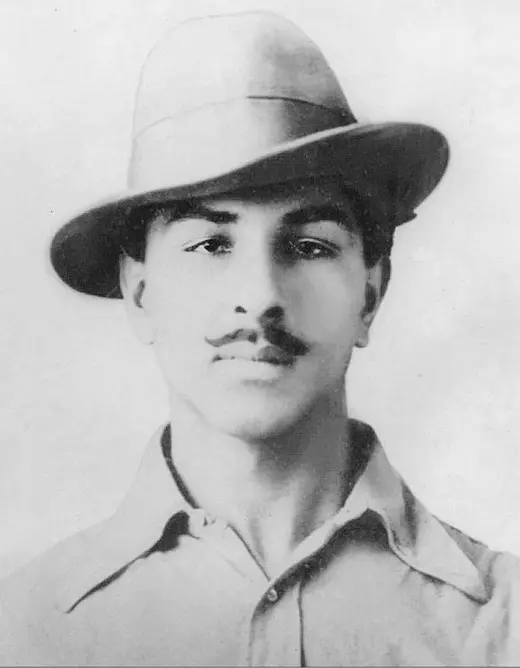
Bhagat Singh in April 1929, aged 21. Commons credits the photograph to Ramnath Photographers of Delhi.
Ramnath Photographers, Delhi (as credited on Commons), April 1929. Public domain. Source
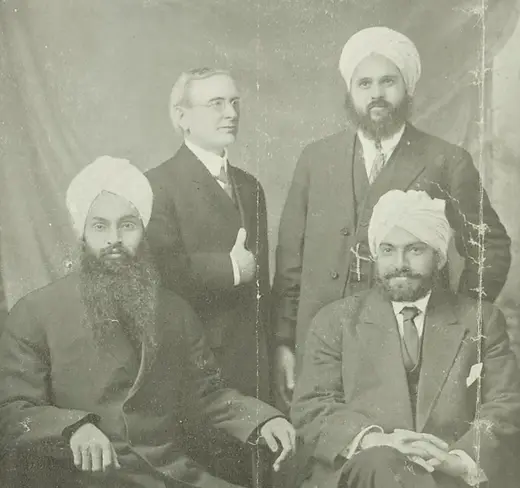
A Canadian Courier article of 1911-1912 titled 'Pleading for their Wives and Children'. Commons gives no further detail, so read the page itself for its content.
Unknown, 1911-1912. Public domain. Source
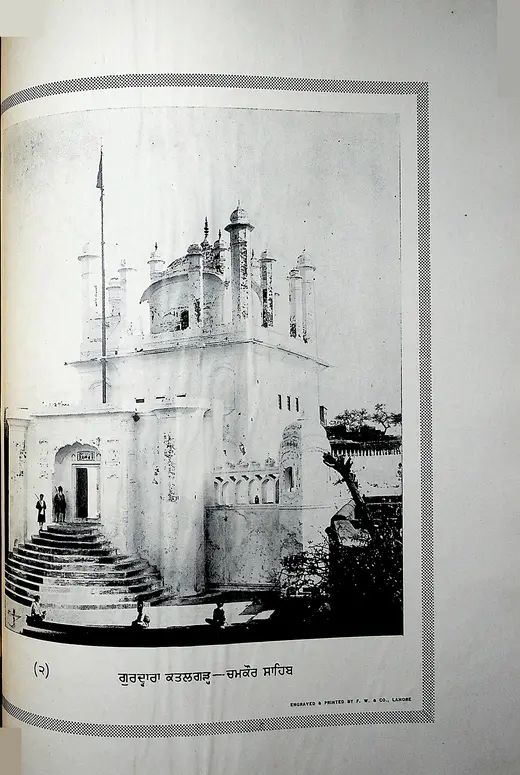
Gurdwara Katalgarh Sahib at Chamkaur Sahib, printed in the Mahan Kosh of 1930.
Kahn Singh Nabha (publisher), Before 1930. Public domain. Source
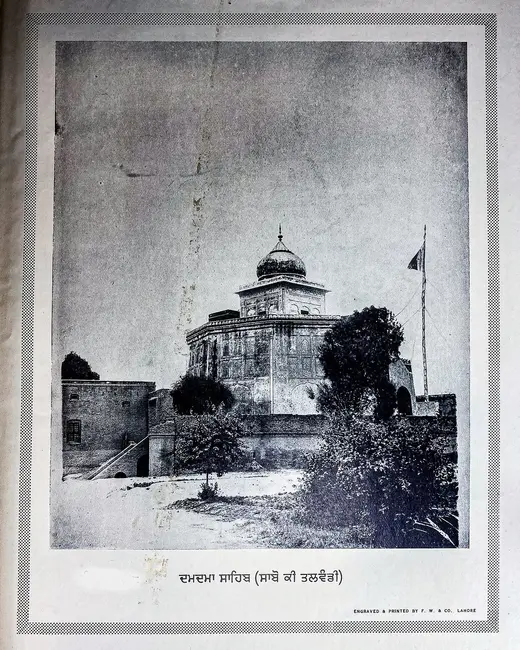
Damdama Sahib at Talwandi Sabo in the 1920s, photographed for Kahn Singh Nabha's Mahan Kosh of 1930.
Photographed by Kahn Singh Nabha, engraved and printed by F.W. & Co., Lahore., c. 1920s. Public domain. Source
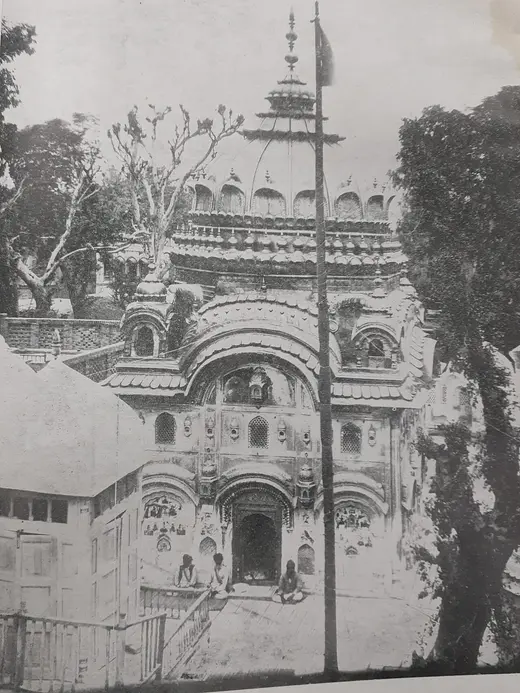
Gurdwara Dera Baba Nanak, printed in the Mahan Kosh of 1930. Commons says the photograph probably dates from the 1920s.
Kahn Singh Nabha, c. 1920s. Public domain. Source
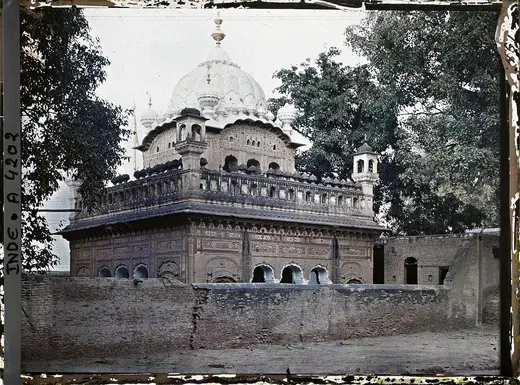
An autochrome by Stéphane Passet from 1914, labelled a Sikh temple in Lahore. Commons identifies it as Gurdwara Dera Sahib and rejects a rival identification as Gurdwara Bhai Banno at Mangat.
Stéphane Passet, c. 1914. Albert-Kahn collections (as credited on Commons). Public domain. Source
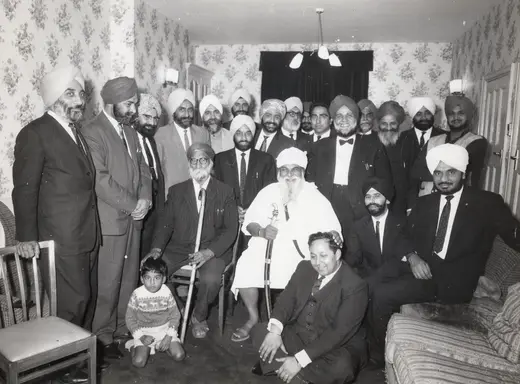
Sant Fateh Singh in Southall, London, in 1967. From the Amarjit Chandan collection, as credited on Commons.
Sukant78 (uploader); Amarjit Chandan collection, 1967.CC0. Source
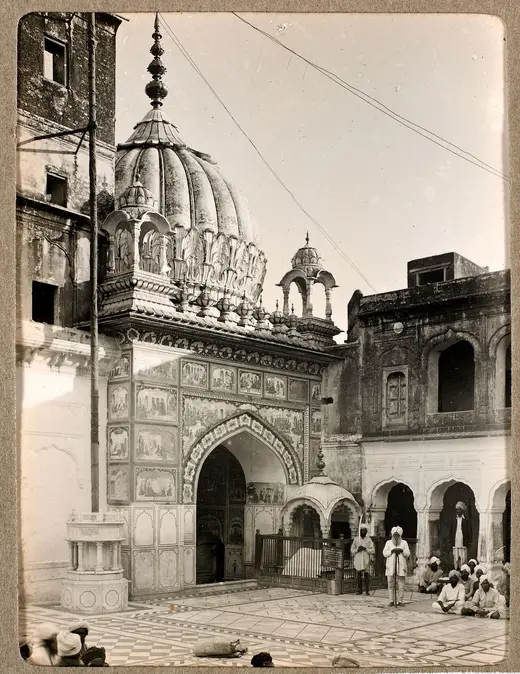
The Baoli Sahib at Goindwal, photographed by Aurel Stein in 1931. Commons links to British Library Photo 392/37/(11).
Aurel Stein, c. 1931. British Library, Photo 392/37/(11) (as credited on Commons). Public domain. Source
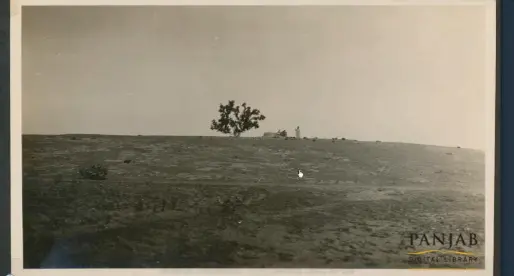
The site of Banda Singh Bahadur's last battle and capture at Gurdas Nangal, photographed by Dhanna Singh Chahal in 1934.
Dhanna Singh Chahal 'Patialvi', 1934. Public domain. Source
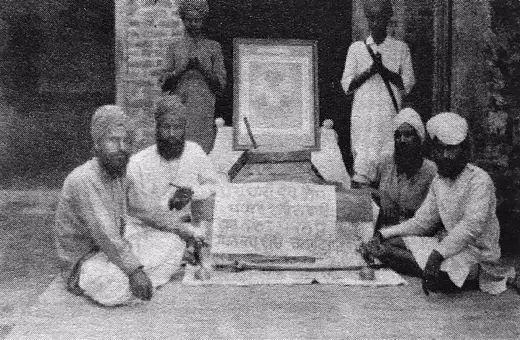
The hand-millstone revered as the one Sri Guru Nanak Dev Ji was made to turn, at Gurdwara Chakki Sahib, a related site in Eminabad. Photographed by Dhanna Singh Chahal 'Patialvi' on 4 October 1932. This does not show Gurdwara Rori Sahib itself.
Dhanna Singh Chahal 'Patialvi', 1932. Public domain. Source
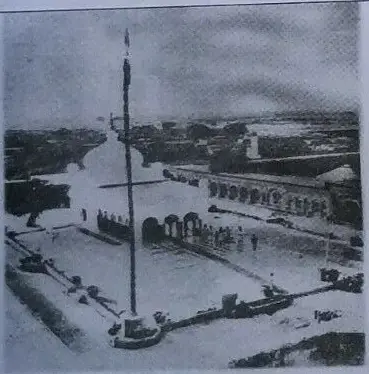
Gurdwara Janam Asthan as printed in Bhai Kahn Singh Nabha's Mahan Kosh of 1930. Commons dates the photograph to about the 1920s.
Published by Kahn Singh Nabha, c. 1920s. Public domain. Source
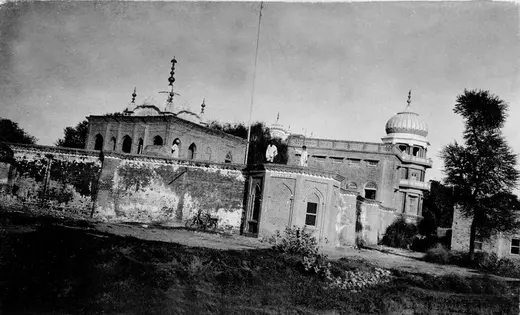
Gurdwara Sachcha Sauda, also called Khara Sauda, at Chuhar Kana in Sheikhupura district. Photographed by Dhanna Singh Chahal 'Patialvi' on 21 October 1933.
Dhanna Singh Chahal 'Patialvi', 1933. Panjab Digital Library (as credited on Commons). Public domain. Source
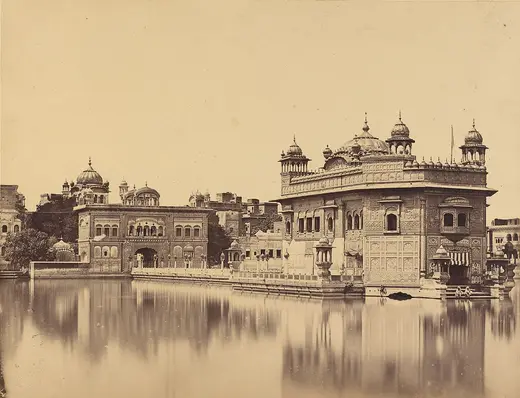
The Harmandir Sahib photographed by Felice Beato in 1858-1859, one of the earliest photographs of the gurdwara in this set.
Felice Beato, 1858-1859. J. Paul Getty Museum, 2007.26.209.9.CC0. Source
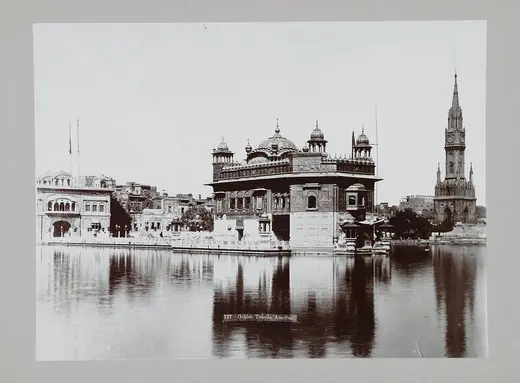
The Harmandir Sahib photographed by an unknown photographer around the turn of the 20th century.
Unknown photographer, c. 1895-1915. Rijksmuseum, RP-F-00-5347-19.CC0. Source
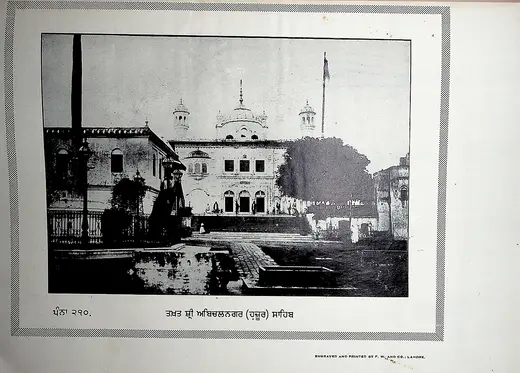
Takht Hazur Sahib at Nanded, given on Commons as about 1880 and printed in the Mahan Kosh of 1930.
Unknown, c. 1880, approximate. Public domain. Source
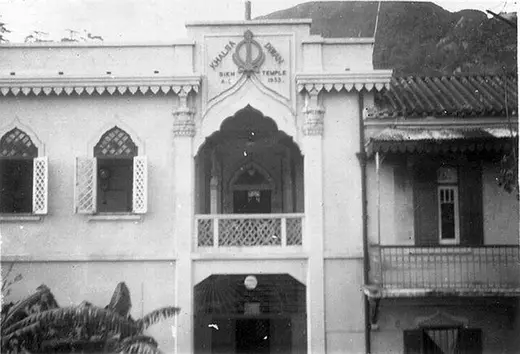
The Khalsa Diwan Sikh Temple in Hong Kong about 1935. Commons says bombing destroyed this building in 1945.
Unknown, c. 1935. Public domain. Source
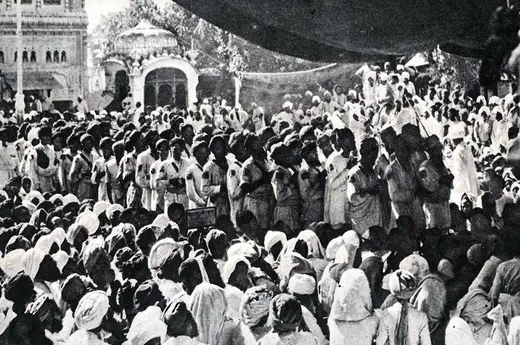
A Shahidi Jatha at the Akal Takht. Commons dates it to August-September 1923, the first months of the Jaito agitation.
Unknown, c. 1923. Public domain. Source
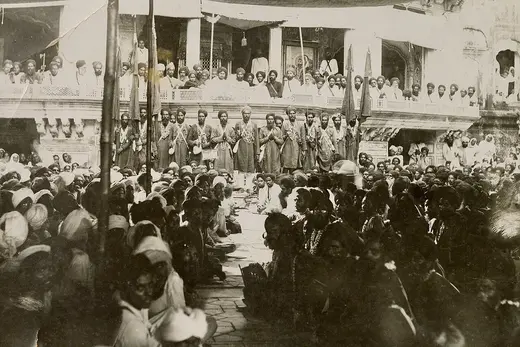
The 12th Shahidi Jatha of the Jaito Morcha at the Akal Takht about 1924, led by Sucha Singh of Moga and Kanwar Singh. A silver print by Sewa Singh and Jawahar Singh.
Sewa Singh and Jawahar Singh, c. 1924. Public domain. Source
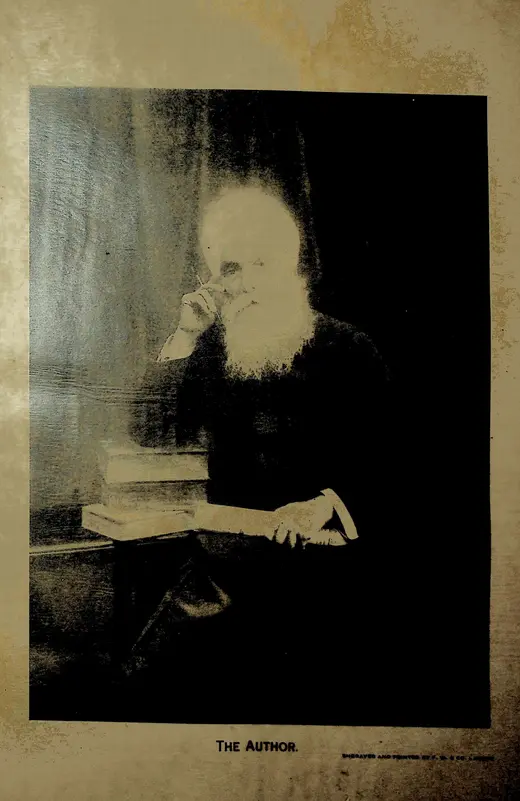
Bhai Kahn Singh Nabha, as printed in the first volume of the first edition of his Mahan Kosh in 1930.
Unknown photographer, Before 1930. Public domain. Source
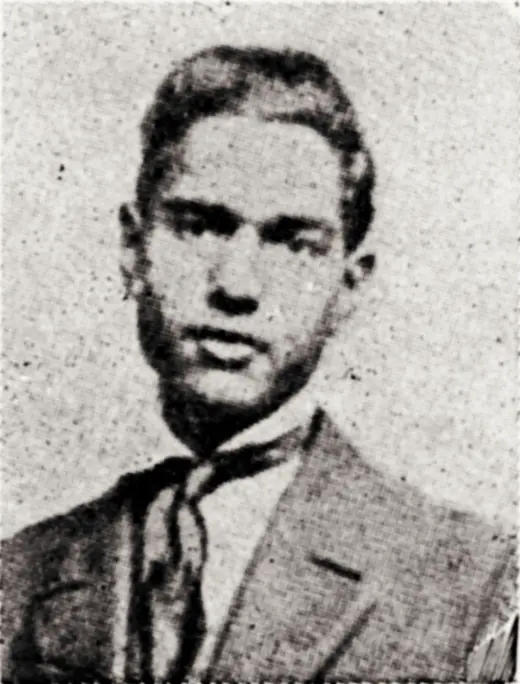
Portrait of Kartar Singh Sarabha, credited on Commons to the Punjab State Archives. Its date has not been confirmed.
Unknown, Before 1915 if from life; not confirmed. Punjab State Archives (as credited on Commons). Public domain. Source
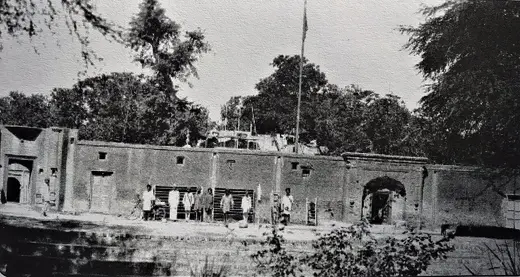
Gurdwara Darbar Sahib, Kartarpur, under construction, photographed by Dhanna Singh Chahal on 6 May 1933.
Dhanna Singh Chahal 'Patialvi', 6 May 1933. Public domain. Source
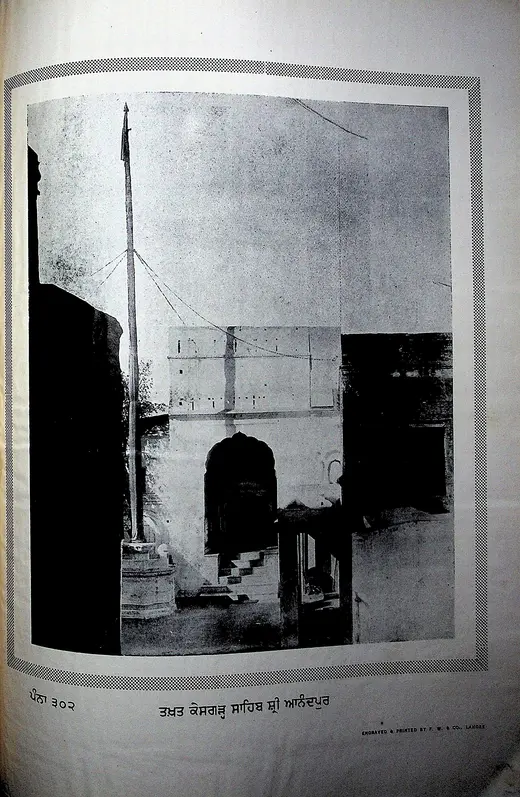
Takht Kesgarh Sahib in its earlier form, printed in the Mahan Kosh of 1930. Commons says this building was replaced from 1938. The Encyclopaedia of Sikhism dates the present complex to 1936-44.
Unknown, c. 1899-1930. Public domain. Source
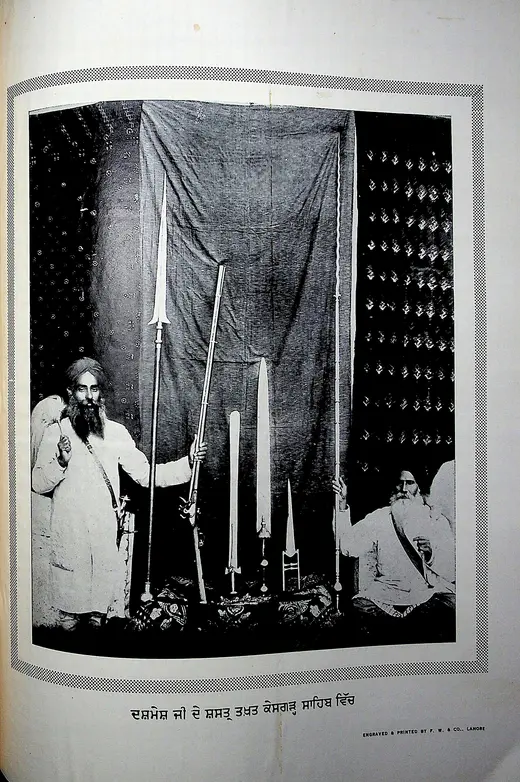
Weapons displayed at Takht Kesgarh Sahib as relics of Sri Guru Gobind Singh Ji, printed in Kahn Singh Nabha's Mahan Kosh of 1930. Commons names them as a spear, a musket, a khanda, a saif, a katar and a nagni.
Kahn Singh Nabha, Before 1930. Takht Kesgarh Sahib. Public domain. Source
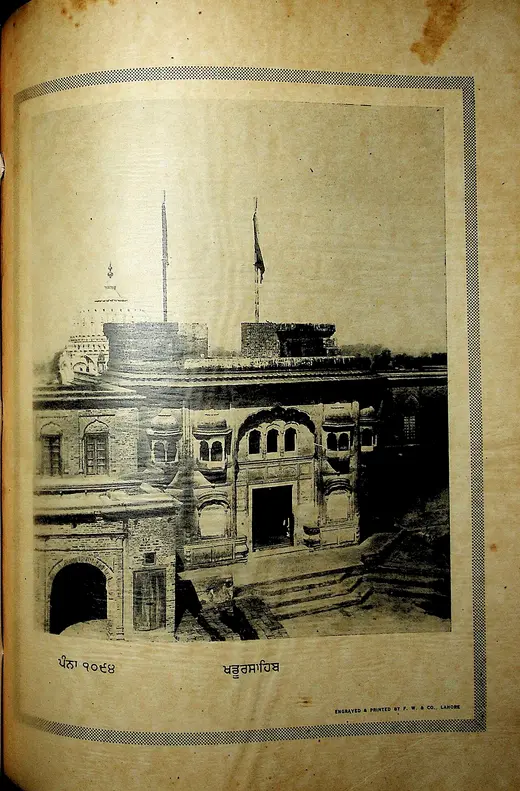
Gurdwara Sri Darbar Sahib at Khadur Sahib, printed in the Mahan Kosh of 1930. Commons says it was possibly photographed in 1924.
Kahn Singh Nabha (publisher), Before 1930. Public domain. Source
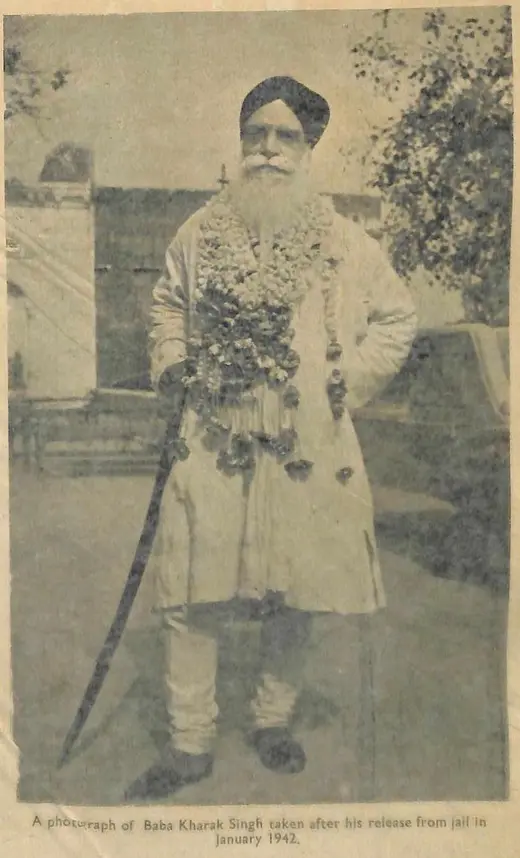
Baba Kharak Singh after his release from jail in January 1942. Published in a commemoration volume for his 86th birthday in 1954.
Unknown photographer, January 1942. Public domain. Source
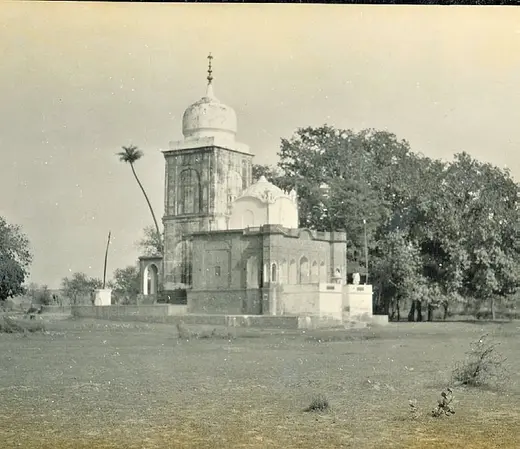
Gurdwara Patalpuri Sahib at Kiratpur Sahib, photographed by Dhanna Singh Chahal in May 1934.
Dhanna Singh Chahal 'Patialvi', May 1934. Public domain. Source
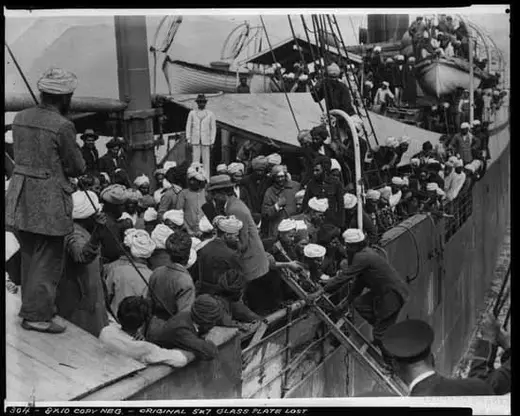
The crowded deck of the Komagata Maru at Vancouver in 1914, with Gurdit Singh in front, photographed by Leonard Frank.
Leonard Frank, 1914. Vancouver Public Library (as credited on Commons). Public domain. Source
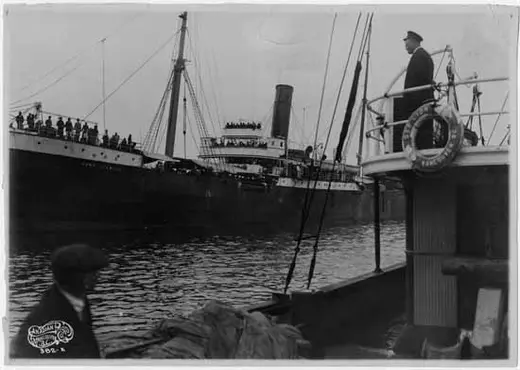
The Komagata Maru seen from the tugboat Sea Lion at Vancouver in 1914, credited on Commons to the Canadian Photo Company.
Canadian Photo Company, 1914. Public domain. Source
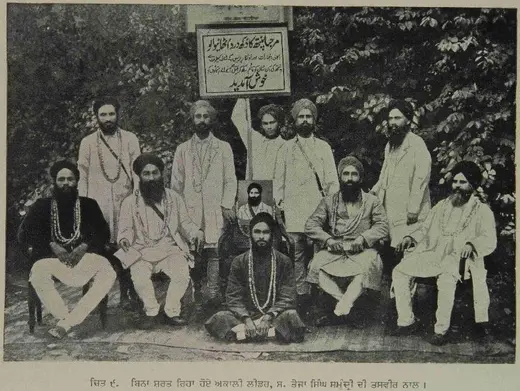
Master Tara Singh with other Akali leaders after release from jail in 1926, with a portrait of Teja Singh Samundri on a chair at the centre.
Unknown, c. September 1926. Public domain. Source
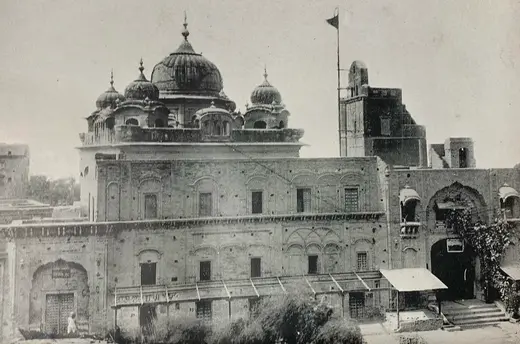
Gurdwara Sri Darbar Sahib at Sri Muktsar Sahib, about 1923-1924. The photographer may have been Kahn Singh Nabha.
Unknown (possibly Kahn Singh Nabha in the 1924 first edition of his magnum opus 'Gur Shabad Ratanakar Mahankosh'), c. 1923-1924. Public domain. Source
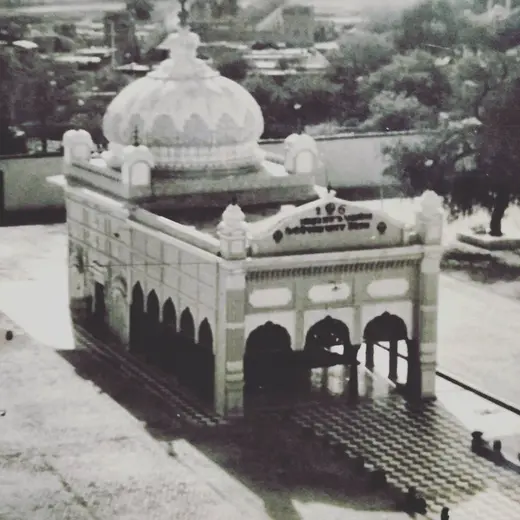
Gurdwara Janam Asthan at Nankana Sahib before Partition. The date is broad and the source is a social media post.
Unknown, Before 1947. Public domain. Source
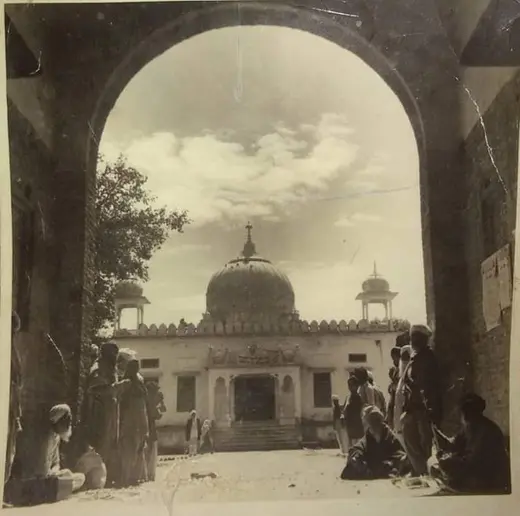
Gurdwara Paonta Sahib about 1944, in the former Sirmaur State.
Unknown, c. 1944. Public domain. Source
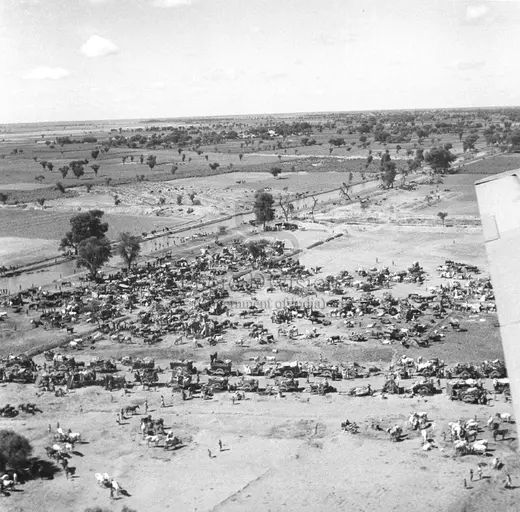
Refugees from West Punjab moving towards India near Baloke Head in September 1947. Credited to the Government of India's Photo Division.
Photo Division, Govt. of India, September 1947. Public domain. Source
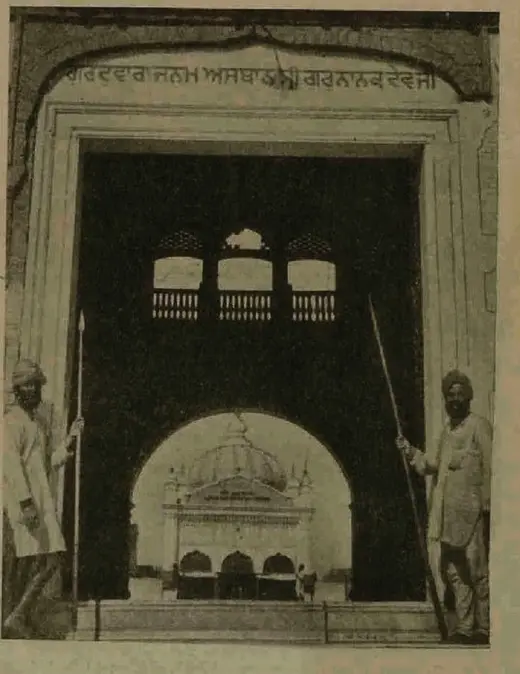
Two Sikh volunteers guarding the gateway of Gurdwara Janam Asthan, Nankana Sahib, in a photograph captioned 'The Last Sikhs of Nankana Sahib, October 1947', from a 1948 report.
Unknown, c. October 1947. Public domain. Source
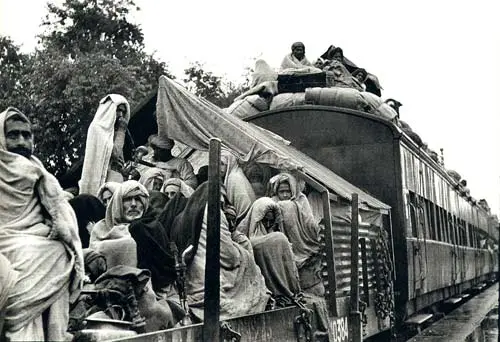
A crowded refugee train in Punjab, 1947. The source is a web page, and the image's history is not documented.
Unknown, 1947. Public domain. Source
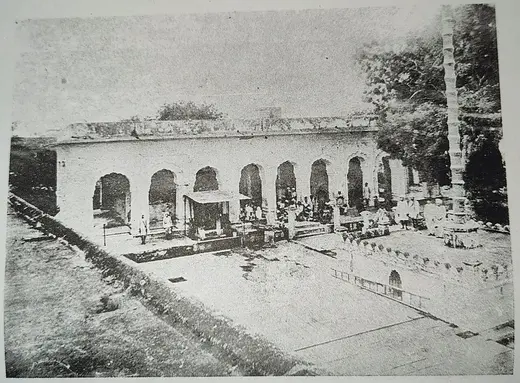
Takht Harmandir Sahib, Patna, before the 1934 earthquake damaged it. Printed in the Mahan Kosh of 1930.
Unknown, Before 1930. Public domain. Source
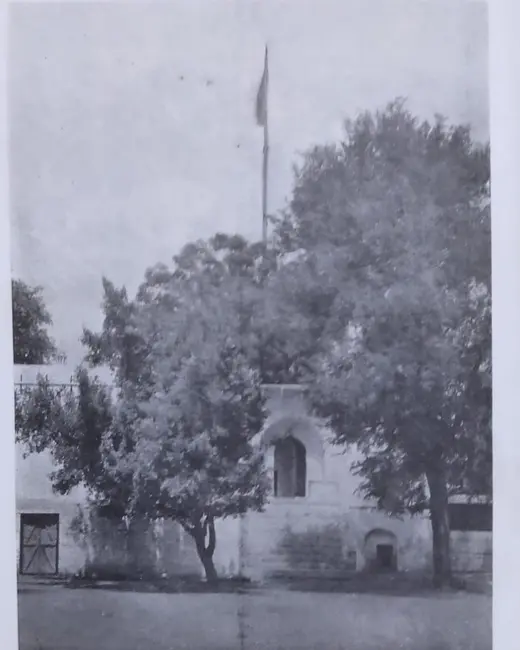
Gurdwara Rakab Ganj Sahib, Delhi, in the 1920s. The Encyclopaedia of Sikhism says the present building was started in 1960.
Unknown, c. 1920s. Public domain. Source
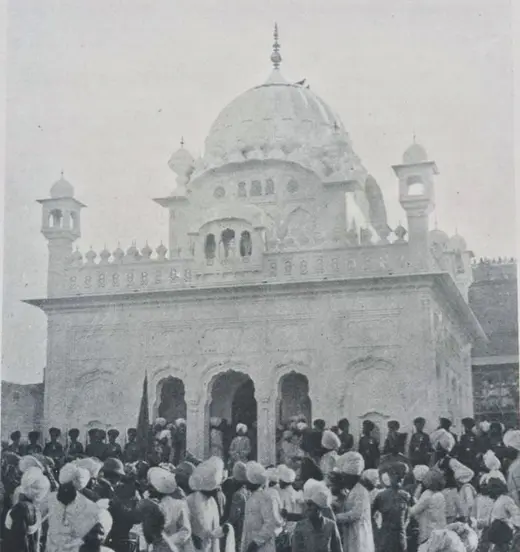
The unveiling of the Saragarhi Memorial Gurdwara at Amritsar in April 1902. Commons credits the design to Bhai Ram Singh of the Mayo School, Lahore.
Unknown photographer, 1902-04. Public domain. Source
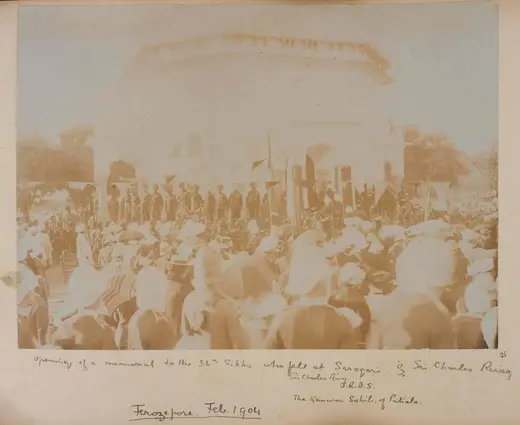
The opening of the memorial to the men of the 36th Sikhs who fell at Saragarhi, at Ferozepur in February 1904. It is now known as the Saragarhi Memorial Gurdwara.
Unknown photographer, 1904-02. British Library, Photo 355/2(125). Public domain. Source
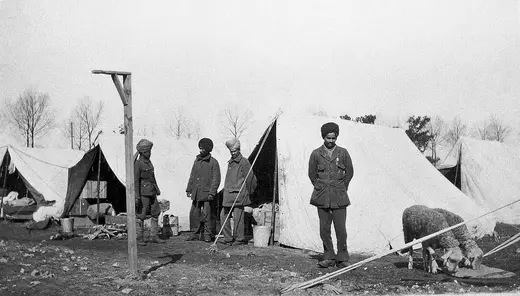
Sikh soldiers encamped on the Western Front around 1918, from the papers of Sister Knocker.
Unknown, c. 1918. Wellcome Collection, GC/258/11.CC BY 4.0. Source
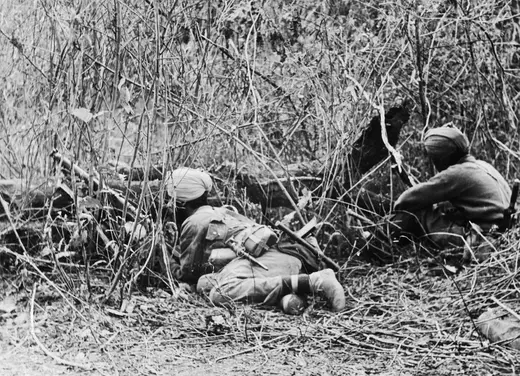
Sikh soldiers of the 7th Indian Division at an observation post in the Ngakyeduak Pass area of Burma, during the fighting that followed the Japanese offensive of 6 February 1944. Taken by No. 9 Army Film and Photographic Unit.
No. 9 Army Film and Photographic Unit, 1944-02. Imperial War Museums, IND 2994. Public domain. Source
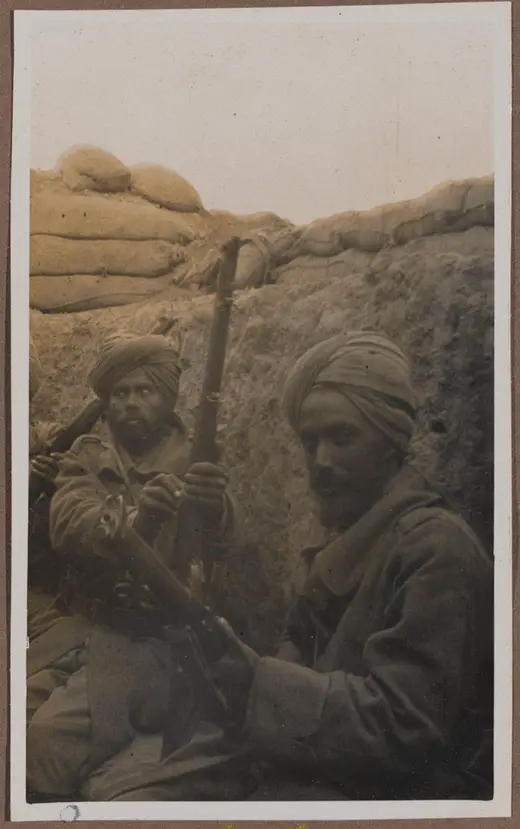
Sikh soldiers of the 29th Indian Infantry Brigade resting in a trench at Gallipoli, probably near Cape Helles, in May 1915.
Unknown photographer, 1915-05-09. National Army Museum.CC0. Source
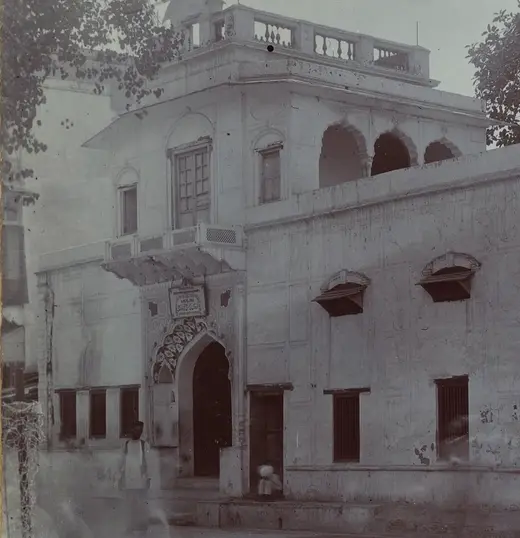
Gurdwara Sis Ganj Sahib on Delhi's Chandni Chowk about 1913-1916, with a tram line in front. The source is a social media post.
Unknown, c. 1913-1916. Public domain. Source
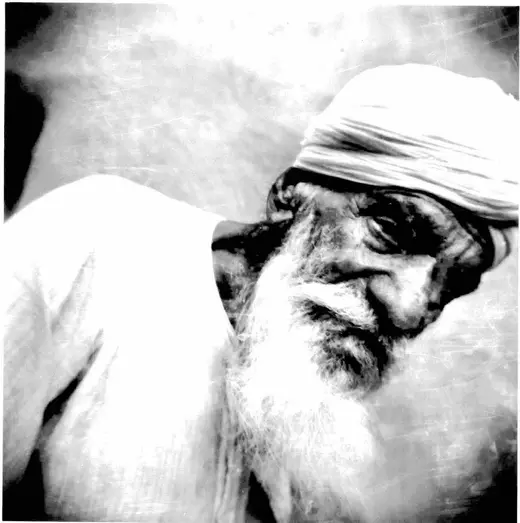
Sohan Singh Bhakna in 1967, photographed by Amarjit Chandan the year before he passed away.
Amarjit Chandan, 1967.CC BY-SA 4.0. Source
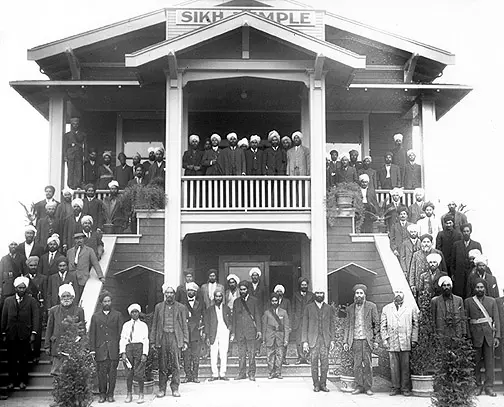
The original wooden gurdwara on South Grant Street, Stockton, photographed by V. Covert Martin in 1915. It was replaced in 1929 on an enlarged foundation.
V. Covert Martin, 1915. Holt-Atherton Department, University of the Pacific Library (as credited by UC Berkeley). Public domain. Source
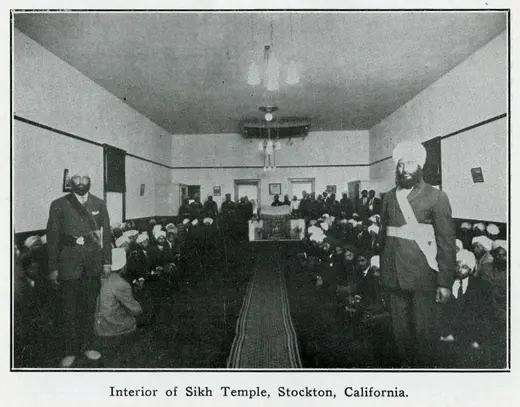
The interior of the Stockton gurdwara, as printed in The Hindusthanee Student in January 1916.
The Hindusthanee Student (publication), 1916. Public domain. Source
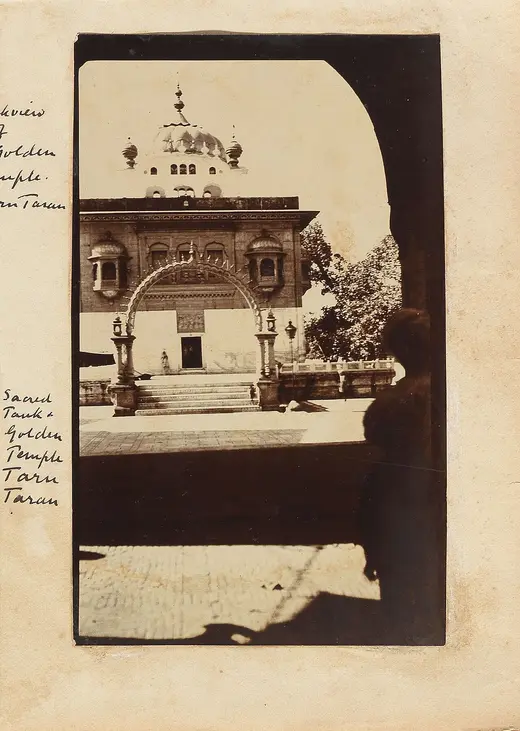
Gurdwara Sri Darbar Sahib, Tarn Taran. Commons dates the image to the later 1800s by its appearance only.
Unknown, Probably c. 1850-1900. Public domain. Source
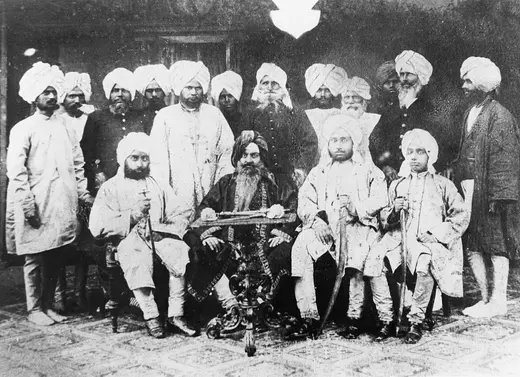
Thakur Singh Sandhanwalia, centre, with his sons Gurbachan Singh, Narinder Singh and Gurdit Singh, and attendants standing. The description on Commons, quoting a family member, places it before he left for England in 1884 to meet Maharaja Duleep Singh.
Unknown photographer, About 1884. Public domain. Source
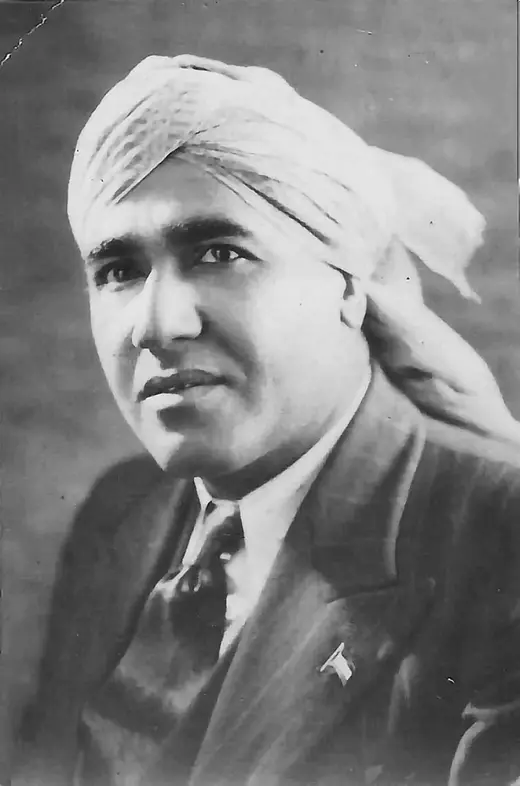
Portrait of Udham Singh, credited on Commons to the Punjab State Archives. Its exact date has not been confirmed.
Unknown, Before 1940 if from life; not confirmed. Punjab State Archives (as credited on Commons). Public domain. Source
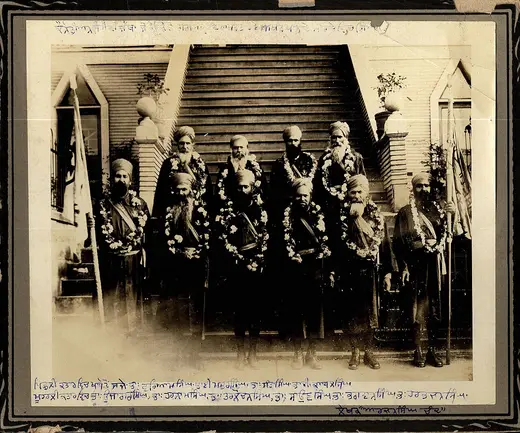
A Shahidi Jatha outside the Second Avenue Gurdwara in Vancouver, about 1924-1925, showing support abroad for the Jaito Morcha.
Unknown, c. 1924-1925. Public domain. Source
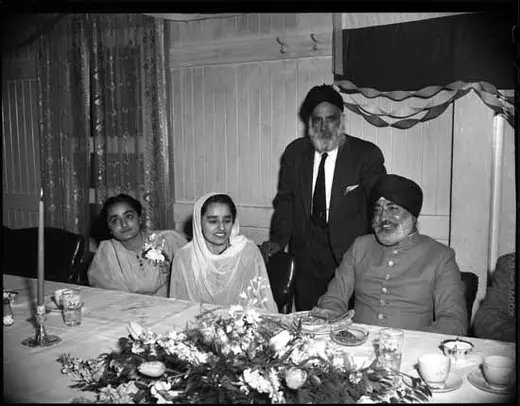
A group of Sikhs at dinner in Vancouver. Undated, and Commons suggests the mid 20th century from its look alone.
Province Newspaper Collection, Undated, perhaps 1940s-1960s. Vancouver Public Library (as credited on Commons). Public domain. Source
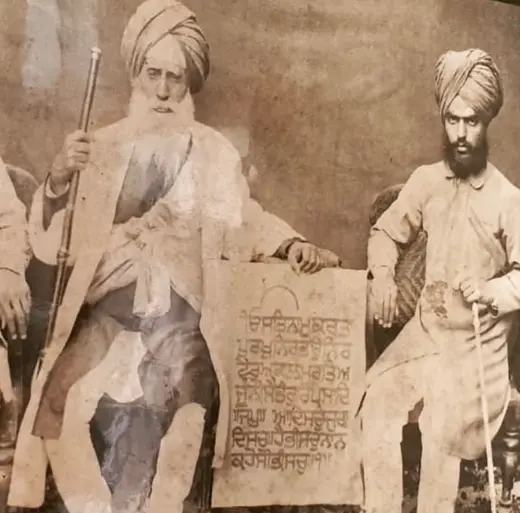
Detail of a 1908 photograph showing Bhai Vir Singh with his grandfather, Giani Hazara Singh of the Gianian Bunga at Amritsar.
Unknown photographer, 1908. Public domain. Source
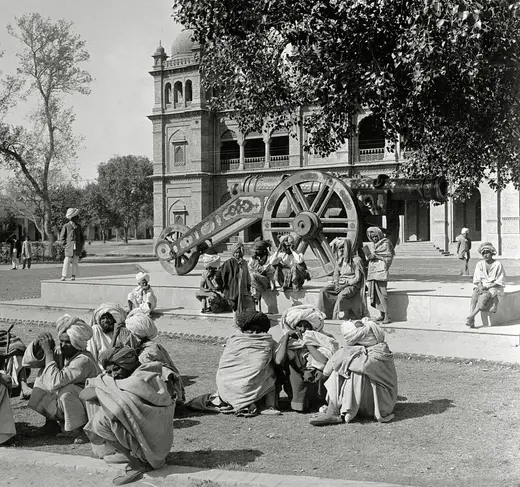
The Zamzama gun at Lahore in the later 1800s. The Encyclopaedia of Sikhism calls it Bhangian di Top after the Bhangi Sikhs who took it in 1762.
Unknown photographer, Late 19th century. Public domain. Source


Objects
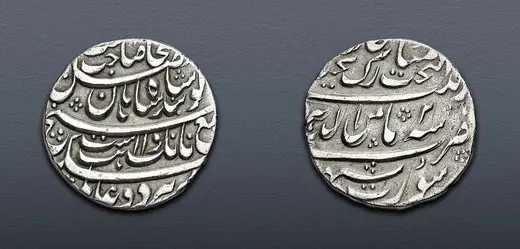
A silver rupee struck under Banda Singh Bahadur at Amritsar, dated Year 2 (1711) according to the auction house that sold it. This is a different coin from the one at the American Numismatic Society.
Mint of Banda Singh Bahadur. Image: Classical Numismatic Group, 1711, as catalogued. Sold at auction by Classical Numismatic Group (present owner unknown).CC BY-SA 2.5. Source
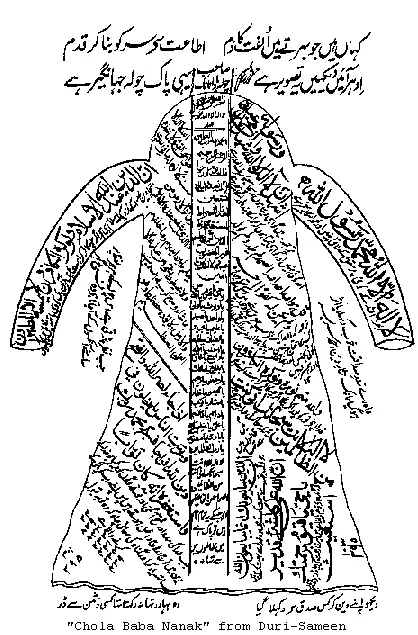
A sketch of the writing on the robe at Dera Baba Nanak said to have belonged to Sri Guru Nanak Dev Ji. The date is uncertain and the source is a web article.
Unknown, Early to mid 20th century, uncertain. Public domain. Source
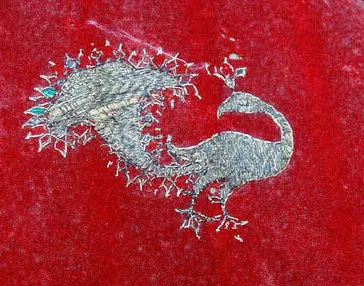
Embroidery from the palanquin that, by tradition, carried the Goindwal Pothis to Amritsar and back. Kept at Gurdwara Chaubara Sahib, Goindwal. The date on Commons is a suggestion.
Unknown, Late 16th or early 17th century, by tradition. Gurdwara Chaubara Sahib, Goindwal. Public domain. Source
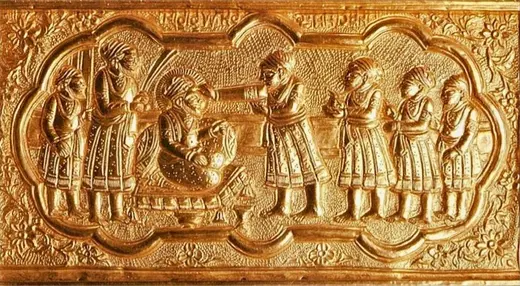
A gilded panel from doors given to the Harmandir Sahib by Maharaja Ranjit Singh, now in the treasury according to Commons. It imagines Baba Buddha anointing Sri Guru Amar Das Ji under Sri Guru Angad Dev Ji's command.
Unknown, c. 1801-1839. Toshakhana, Harmandir Sahib (as stated on Commons). Public domain. Source
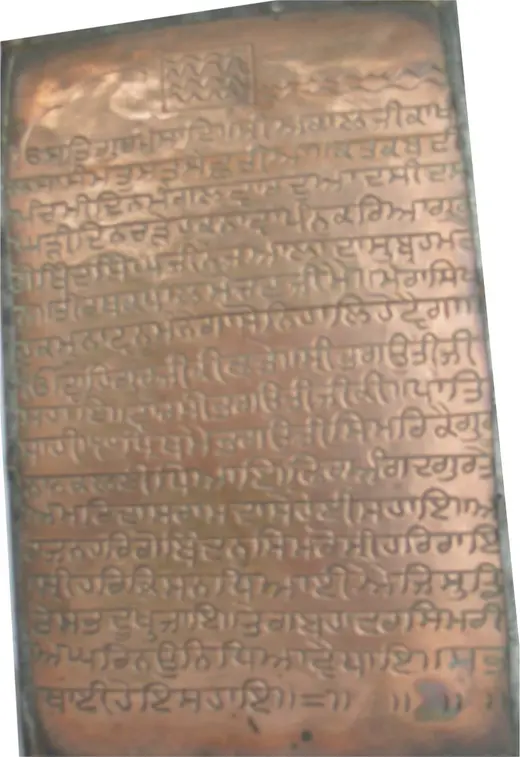
The copper plate at Kapal Mochan, inscribed with a date in 1679 and naming Sri Guru Gobind Singh Ji. Its use of 'Singh' and 'Khalsa' before 1699 raises questions that Mann discusses.
Unknown maker (attributed to Sri Guru Gobind Singh Ji), 1679, as inscribed. Shiva temple, Kapal Mochan (per Mann, 2008). Public domain. Source
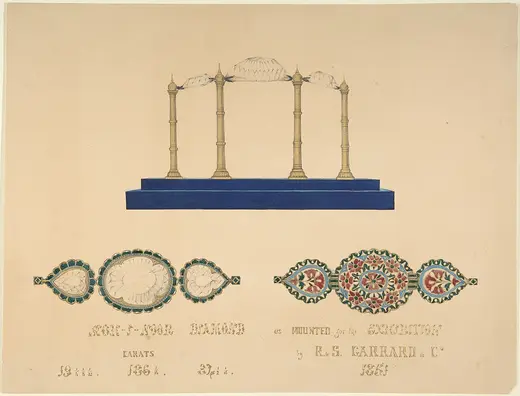
A drawing of the Koh-i-Noor by R.S. Garrard & Co., 1851, the year it was shown in London. It is from the Metropolitan Museum of Art's open access collection.
R.S. Garrard & Co., 1851. Metropolitan Museum of Art.CC0. Source
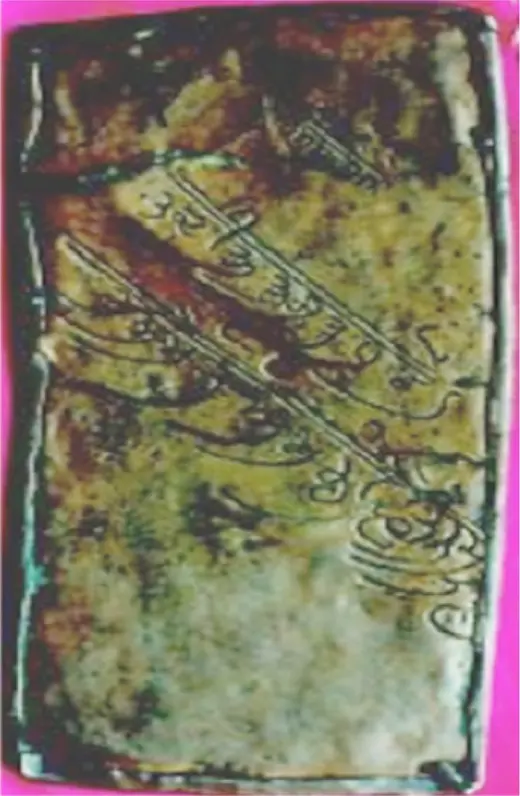
The copper plate shown at Naina Devi to Gurinder Singh Mann in 2000 and attributed to Sri Guru Gobind Singh Ji. It is undated, and Mann places it around 1700 by genealogy.
Unknown maker (attributed to Sri Guru Gobind Singh Ji), Undated. c. 1700. Priests of Naina Devi temple (per Mann, 2008). Public domain. Source
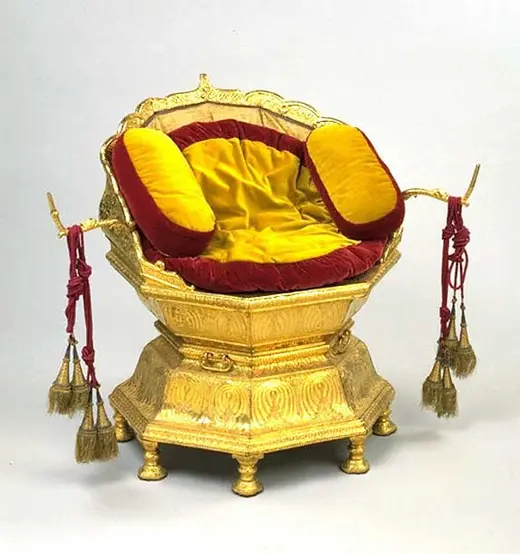
Maharaja Ranjit Singh's throne by Hafez Muhammad Multani, V&A 2518(IS). This older Commons file says about 1820-1830, but the V&A now gives probably 1805-1810.
Hafez Muhammad Multani. Image: VAwebteam, Probably 1805-1810. Victoria and Albert Museum, 2518(IS).CC BY-SA 3.0. Source
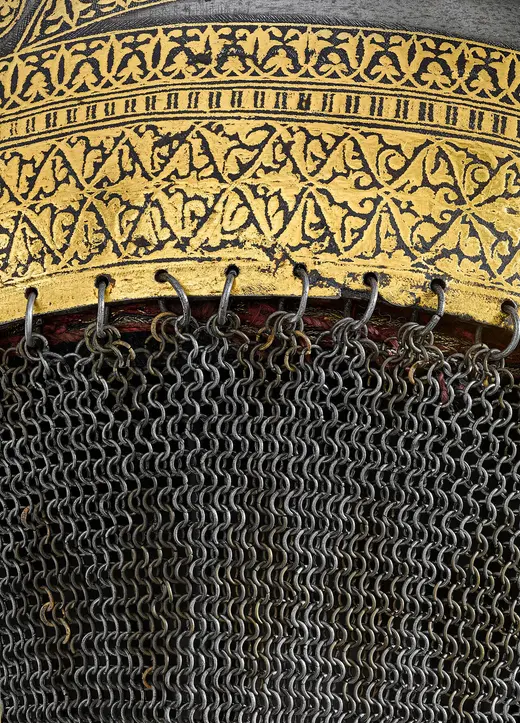
Detail of a Sikh helmet of the early 1800s, shaped to take a turban and topknot, with gold overlay and patterned mail. Royal Armouries XXVIA.138.
Royal Armouries, Early 19th century. Royal Armouries, XXVIA.138.CC BY 2.0. Source
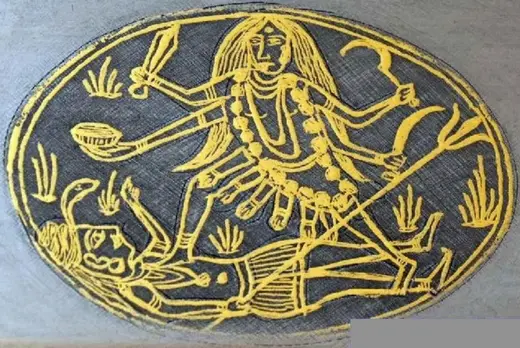
A figure on the blade of a sword attributed to Sri Guru Hargobind Ji, held according to Commons by the Bhai Bidhi Chand Nihang Dal. The attribution is reported, not established.
Unknown, 17th century, as attributed. Bhai Bidhi Chand Nihang Dal (as stated on Commons). Public domain. Source


Modern photographs
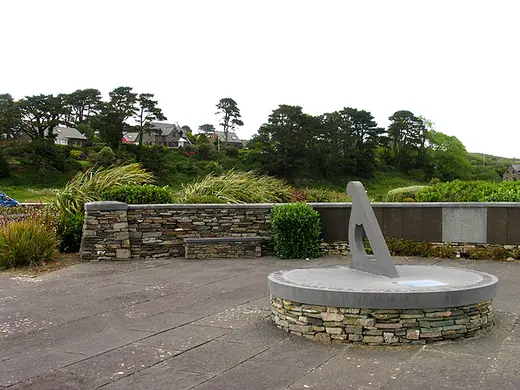
The memorial at Ahakista, County Cork, Ireland, to those killed on Air India Flight 182. Photographed in 2005.
Pam Brophy, 2005-05-28.CC BY-SA 2.0. Source
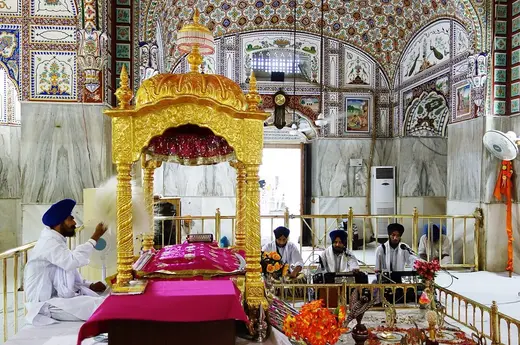
Inside the Darbar Sahib, Baba Bakala, in a modern photograph from 2017.
Dalip Singh, 2017.CC BY-SA 4.0. Source
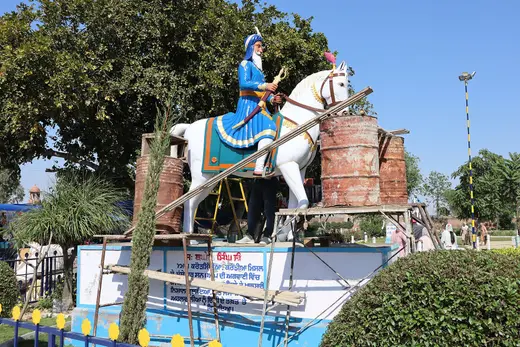
A modern statue of Baghel Singh on horseback at Gurdwara Mehdiana Sahib, Ludhiana district. It is a recent work of art and not a likeness from his lifetime.
MaplesyrupSushi, Photographed 9 April 2023.CC BY-SA 4.0. Source
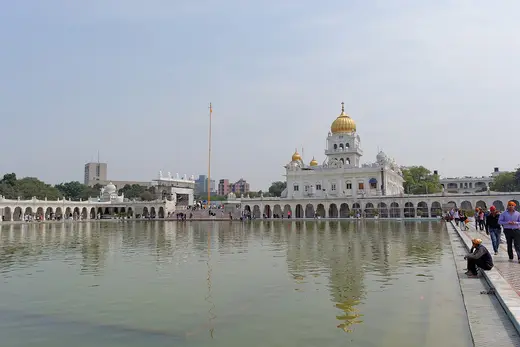
Gurdwara Bangla Sahib, New Delhi, a modern photograph from 2014. No historic image was found in the Commons set.
Slyronit, 2014.CC BY-SA 4.0. Source
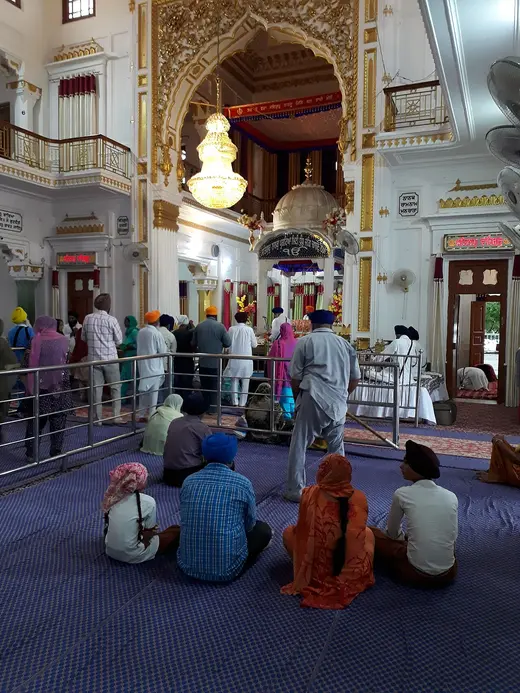
Gurdwara Ber Sahib at Sultanpur Lodhi, a modern photograph from 2019. No historic image was found in the Commons set.
Guglani, 2019.CC BY-SA 4.0. Source
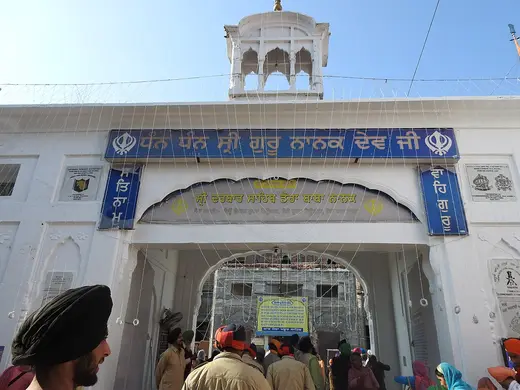
Gurdwara Sri Chola Sahib at Dera Baba Nanak, a modern photograph from 2019. The Chola itself is kept in a nearby family home, according to the Encyclopaedia of Sikhism.
Harvinder Chandigarh, 2019.CC BY-SA 4.0. Source
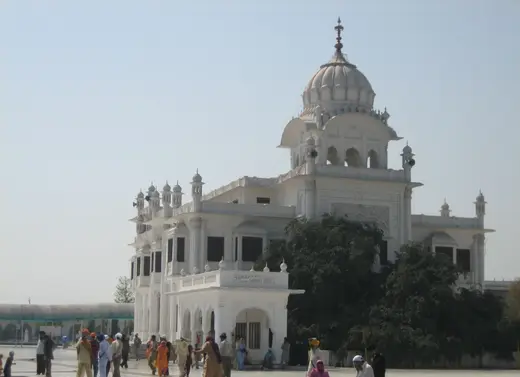
Gurdwara Ber Sahib, Sultanpur Lodhi, photographed in 2010.
Jiwanjot (Commons user Jjsingh1981), 2010. Public domain. Source
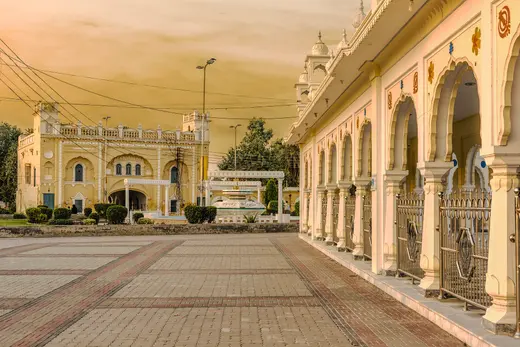
The main entrance of Gurdwara Janam Asthan, Nankana Sahib, photographed in 2016.
Shaguftakarim, 2016.CC BY-SA 4.0. Source
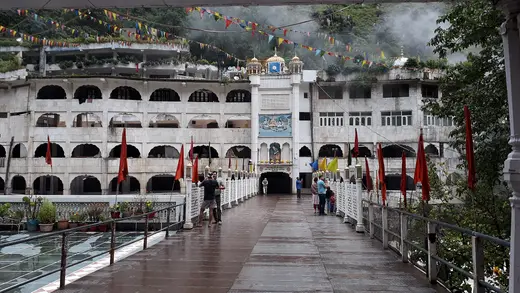
The gurdwara at Manikaran, Himachal Pradesh, photographed in 2022.
Pinakpani, 2022.CC BY-SA 4.0. Source
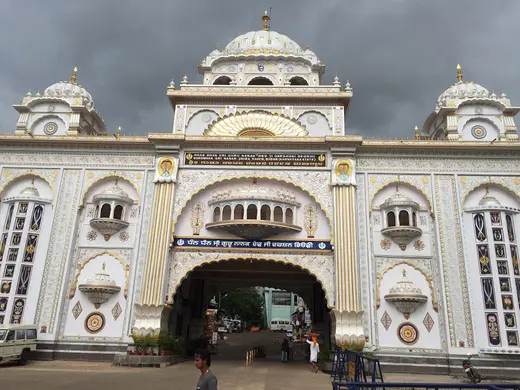
The entrance gate of Gurdwara Sri Nanak Jhira Sahib, Bidar, photographed in July 2017.
Sunnya343, 2017.CC BY-SA 4.0. Source
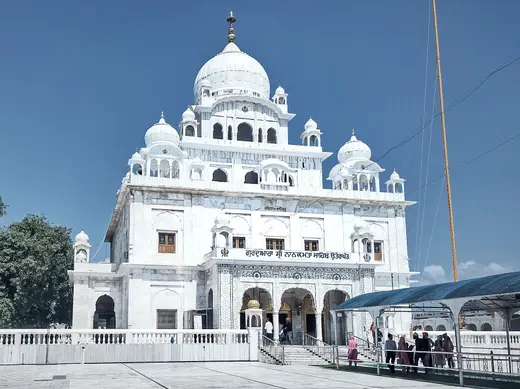
Gurdwara Nanak Mata Sahib, photographed in 2021.
ArmouredCyborg, 2021.CC BY-SA 4.0. Source
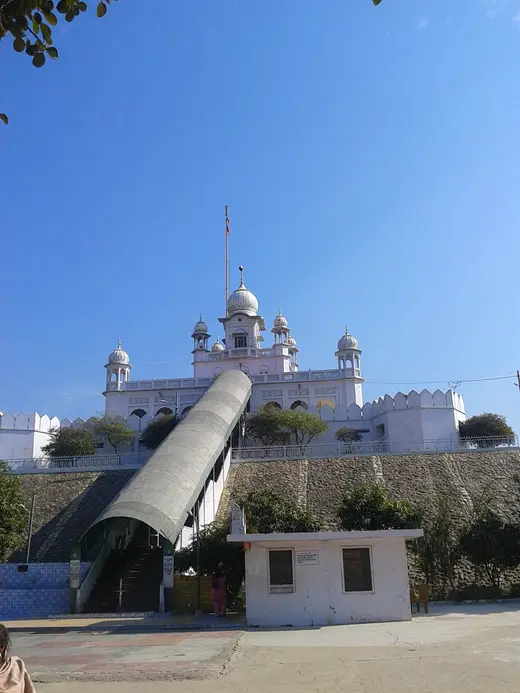
Gurdwara Parivar Vichhora Sahib, Rupnagar district, photographed in 2012.
Shemaroo (Sivender Singh), 2012.CC BY-SA 3.0. Source
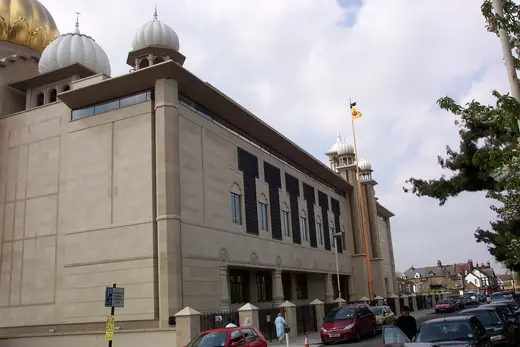
Gurdwara Sri Guru Singh Sabha, Southall, as uploaded to Commons in August 2005 by the photographer.
Sukh (Commons user), by 2005. Public domain. Source
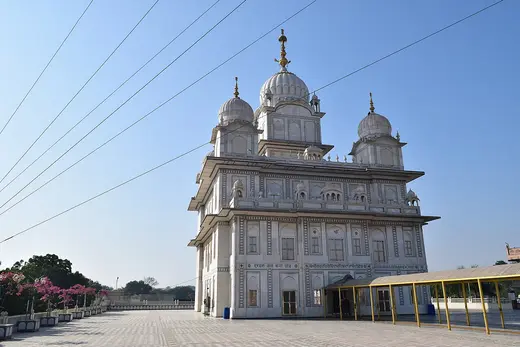
Gurdwara Data Bandi Chhor Sahib at Gwalior Fort, a modern photograph from 2017. It marks the tradition of the release of Sri Guru Hargobind Ji and 52 princes.
Kshitiz Sikka, 2017.CC BY-SA 4.0. Source
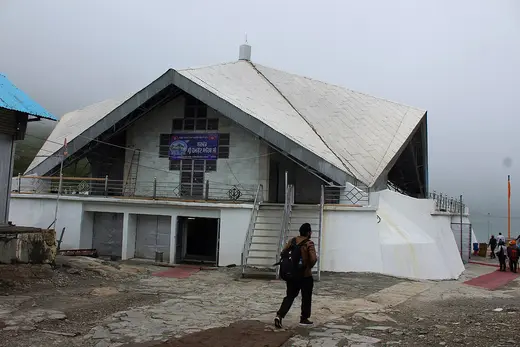
Hemkunt Sahib, a modern photograph from 2018. No historic image was found in the Commons set.
Belur Ashok from Secunderabad, India, 2018.CC BY 2.0. Source
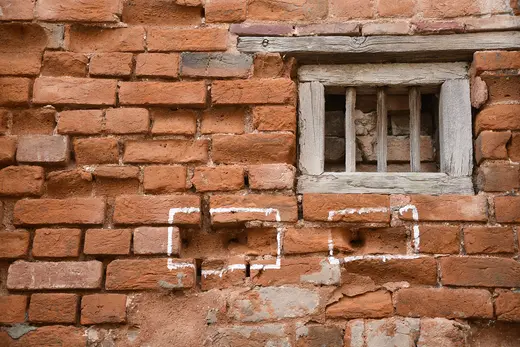
Marks in a wall at Jallianwala Bagh, preserved as bullet holes from the firing of 13 April 1919. Photographed in 2019.
Shagil Kannur, 2019-10-05.CC BY-SA 4.0. Source
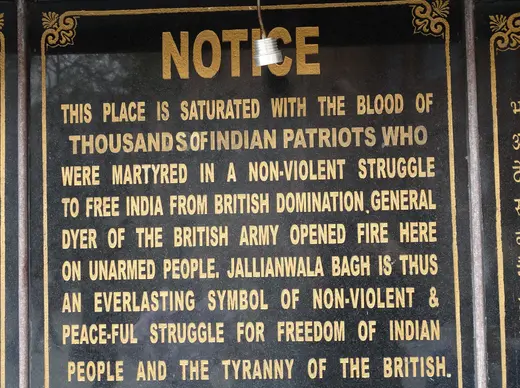
A plaque at Jallianwala Bagh commemorating the massacre of 1919. Photographed in 2014.
Adam Jones, 2014-02-21.CC BY-SA 2.0. Source
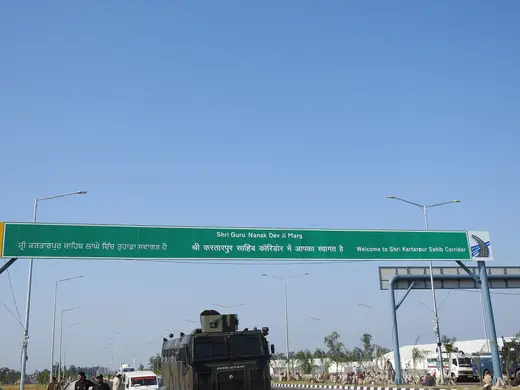
The Kartarpur corridor seen from the Indian side at Dera Baba Nanak on 8 November 2019, the day before it opened.
Harvinder Chandigarh, 2019-11-08.CC BY-SA 4.0. Source
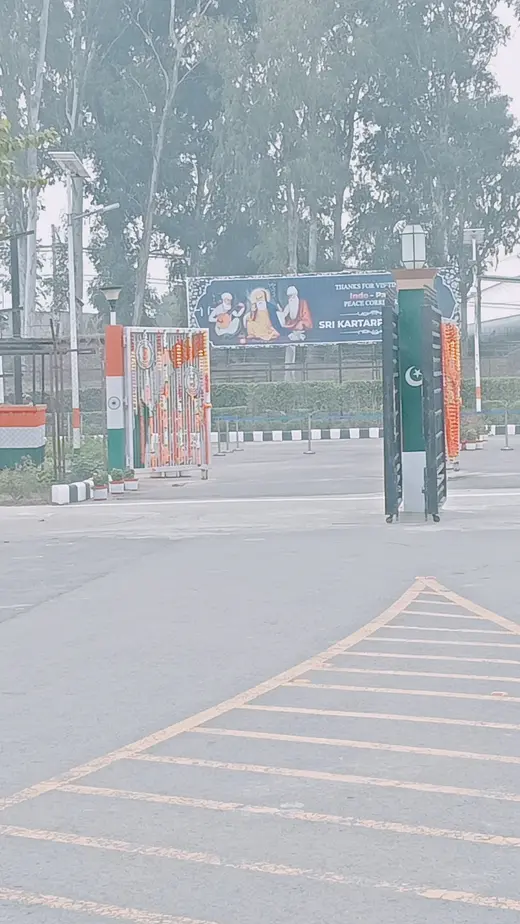
The zero line of the Kartarpur corridor, photographed from the Pakistani side in 2023, before the suspension of 2025.
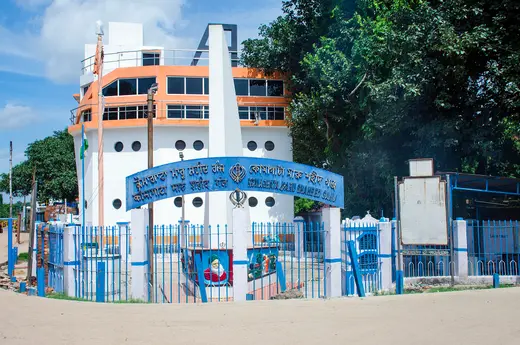
The Komagata Maru memorial at Budge Budge, West Bengal, with its museum behind. Photographed in 2020.
Rangan Datta Wiki, 2020-09-16.CC BY-SA 4.0. Source
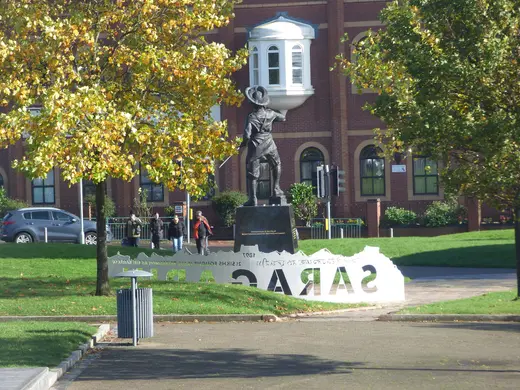
The Saragarhi Memorial at Wednesfield, Wolverhampton, unveiled in September 2021. The statue is by Luke Perry. Photographed in 2023.
Elliott Brown, 2023-10-14.CC BY-SA 2.0. Source
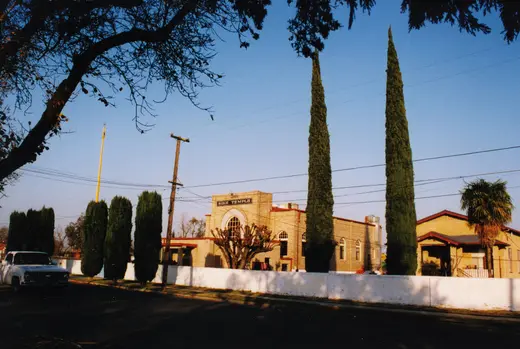
The Stockton gurdwara, photographed in 2006.
Ipsingh (Commons user), 2006. Public domain. Source


Cite this page
"Gallery of Sikh history". Sikh History: lives of the Gurus. https://sikh-history.co.uk/gallery/