People
The ten Gurus, and the companions, poets, mothers, soldiers and rulers whose lives shaped the faith.
The Gurus
- First Guru, founder of the Sikh faith1469–1539Sri Guru Nanak Dev Jiਸ੍ਰੀ ਗੁਰੂ ਨਾਨਕ ਦੇਵ ਜੀ
Born in 1469 near Lahore, Sri Guru Nanak Dev Ji taught that there is one creator open to every person regardless of caste, sex or creed, travelled widely for two decades, then settled at Kartarpur to show what a community built on honest work, sharing and remembrance of the divine looks like. His 974 compositions open Sri Guru Granth Sahib Ji.
- Second Guru1504–1552Sri Guru Angad Dev Jiਸ੍ਰੀ ਗੁਰੂ ਅੰਗਦ ਦੇਵ ਜੀ
A trader's son and devotee of the goddess Durga who became Sri Guru Nanak Dev Ji's most devoted follower and his chosen successor. In thirteen years at Khadur he gave the community a script of its own, a centre, a working kitchen and a collection of Sri Guru Nanak Dev Ji's hymns.
- Third Guru1479–1574Sri Guru Amar Das Jiਸ੍ਰੀ ਗੁਰੂ ਅਮਰ ਦਾਸ ਜੀ
A Vaishnava pilgrim who found the Sikh path in his sixties and became Guru at seventy-three. Over twenty-two years at Goindwal he organised the growing community into districts, made the shared meal a condition of meeting him, campaigned against sati and the veil, and compiled the first collected scripture.
- Fourth Guru, founder of Amritsar1534–1581Sri Guru Ram Das Jiਸ੍ਰੀ ਗੁਰੂ ਰਾਮ ਦਾਸ ਜੀ
An orphan from Lahore who sold boiled grain in the streets, served Sri Guru Amar Das Ji for years and married his daughter. In seven years as Guru he founded the city that became Amritsar, composed the wedding hymn still used by Sikhs, and began the hereditary Sodhi line of Gurus.
- Fifth Guru, compiler of the Adi Granth, first martyr1563–1606Sri Guru Arjun Dev Jiਸ੍ਰੀ ਗੁਰੂ ਅਰਜਨ ਦੇਵ ਜੀ
Guru for twenty-five years, Sri Guru Arjun Dev Ji built the Harmandir at Amritsar, founded Tarn Taran and Kartarpur, compiled the Sikh scripture in 1604 and wrote more of it than anyone else. His martyrdom in Mughal custody at Lahore in 1606 is the first martyrdom in Sikh history and changed the community's relationship with the state.
- Sixth Guru, founder of the Akal Takht1595–1644Sri Guru Hargobind Jiਸ੍ਰੀ ਗੁਰੂ ਹਰਿਗੋਬਿੰਦ ਜੀ
Installed at eleven after his father's martyrdom in Mughal custody, Sri Guru Hargobind Ji put on two swords, one for spiritual and one for worldly authority, raised a bodyguard, built the Akal Takht facing the Harmandir, spent a period imprisoned at Gwalior, and fought several engagements with Mughal detachments before withdrawing to Kiratpur in the hills.
- Seventh Guru1630–1661Sri Guru Har Rai Jiਸ੍ਰੀ ਗੁਰੂ ਹਰਿ ਰਾਇ ਜੀ
Grandson of Sri Guru Hargobind Ji, Guru from fourteen to thirty-one. He kept the armed retinue but avoided fighting, sent preachers east and into the hills, and was drawn into the Mughal war of succession when he sheltered Dara Shukoh. He disowned his elder son for compromising with Aurangzeb and chose his five-year-old younger son instead.
- Eighth Guru1656–1664Sri Guru Har Krishan Jiਸ੍ਰੀ ਗੁਰੂ ਹਰਿ ਕ੍ਰਿਸ਼ਨ ਜੀ
Guru at five, passed away from smallpox at seven. Summoned to Delhi by Aurangzeb at his disowned brother's instigation, he stayed in the house of the Raja of Jaipur, tended the sick during an epidemic, and with his last words pointed to his successor at Bakala.
- Ninth Guru, executed at Delhi1621–1675Sri Guru Tegh Bahadur Jiਸ੍ਰੀ ਗੁਰੂ ਤੇਗ਼ ਬਹਾਦਰ ਜੀ
Youngest son of Sri Guru Hargobind Ji, a soldier in youth and then a near-recluse for twenty years, he became Guru in 1664, founded Anandpur, travelled through the east as far as Assam, and was martyred in Delhi in 1675 after refusing conversion, in a case that Sikh memory ties to the persecution of Kashmiri Brahmins. His 116 hymns on detachment and death were added to the scripture by his son.
- Tenth Guru, founder of the Khalsa1666–1708Sri Guru Gobind Singh Jiਸ੍ਰੀ ਗੁਰੂ ਗੋਬਿੰਦ ਸਿੰਘ ਜੀ
Guru at nine after his father's martyrdom, he turned the Sikhs into the Khalsa in 1699, a self-governing order with a shared name, dress and code; fought the hill chiefs and the Mughals; lost all four sons and his mother in the winter of 1705; wrote to Aurangzeb in Persian verse; and in 1708, passing away at Nanded, ended the line of human Gurus by vesting the office in the scripture and the community.
Other influential figures
Family of the Gurus
- Elder sister of Sri Guru Nanak Dev Ji1464–1518Bebe Nanaki
Bebe Nanaki was the elder sister of Sri Guru Nanak Dev Ji. Sikh tradition remembers her as the first person to recognise his spiritual standing. Her home at Sultanpur Lodhi gave him his start there, though her dates and most details of her life come from later sources.
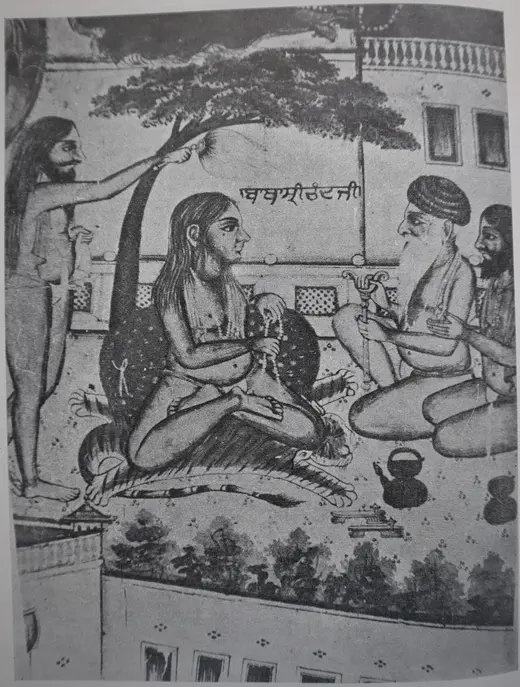 Elder son of Sri Guru Nanak Dev Ji, founder of the Udasis1494–1629Baba Sri Chand
Sri Guru Nanak Dev Ji's elder son, who chose an ascetic life, founded the Udasi order, and stayed on good terms with the Gurus who succeeded his father.
- Daughter of Sri Guru Amar Das Ji, wife of Sri Guru Ram Das Ji, mother of Sri Guru Arjun Dev Ji1535–1598Bibi Bhani
Bibi Bhani was the daughter of one Guru, the wife of another and the mother of a third. Through her, the office of Guru passed into the Sodhi family, where it stayed. Sikh chronicles remember her above all for her service to her father at Goindwal.
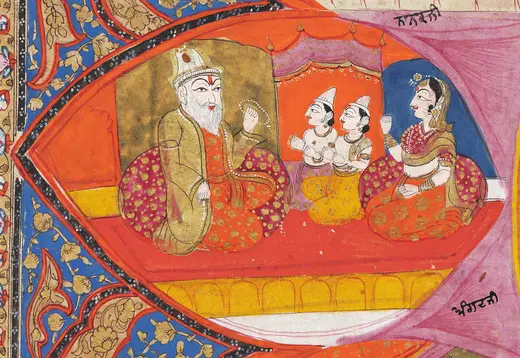 Wife of Sri Guru Angad Dev Ji; organiser of the langaruntil 1582Mata Khivi
Married to Lehna before he met Sri Guru Nanak Dev Ji, she ran the community kitchen at Khadur through her husband's Guruship and for thirty years afterwards, and is the only woman praised by name in Sri Guru Granth Sahib Ji for her work.
- Wife of Sri Guru Arjun Dev Ji, mother of Sri Guru Hargobind Jiuntil 1621Mata Ganga
Mata Ganga was the wife of Sri Guru Arjun Dev Ji and the mother of Sri Guru Hargobind Ji. She lived through her husband's martyrdom in 1606 and her son's early years as Guru. By her own wish, her body was given to the Beas when she passed away at Bakala.
 Wife of Sri Guru Tegh Bahadur Ji, mother of Sri Guru Gobind Singh Ji1624–1705Mata Gujri
Married to Sri Guru Tegh Bahadur Ji on 4 February 1633, she shared his twenty years of retirement at Bakala, raised their son alone at Patna for five years, managed the household at Anandpur through the sieges, and passed away in the governor's custody at Sirhind on the day her two young grandsons were martyred.
- Eldest son of Sri Guru Gobind Singh Ji; martyred at Chamkaur1687–1705Sahibzada Ajit Singh
Sahibzada Ajit Singh was the eldest son of Sri Guru Gobind Singh Ji. He led Sikh parties from the age of twelve, commanded the rearguard when Anandpur was evacuated and was martyred at Chamkaur at about eighteen. A Mughal letter of the time confirms that two of Guru Ji's sons fell there.
- Son of Sri Guru Gobind Singh Ji; martyred at Chamkaur1691–1705Sahibzada Jujhar Singh
Sahibzada Jujhar Singh was a son of Sri Guru Gobind Singh Ji and Mata Jito. The Encyclopaedia of Sikhism and Gupta have him martyred at Chamkaur at fourteen, beside his elder brother. Other accounts swap his fate with that of his brother Zorawar Singh.
- Son of Sri Guru Gobind Singh Ji; martyred at Sirhind1696–1705Sahibzada Zorawar Singh
Sahibzada Zorawar Singh was a son of Sri Guru Gobind Singh Ji and Mata Jito. Captured with his younger brother and grandmother after the Sarsa crossing, he refused conversion at Sirhind and was martyred there in December 1705, aged about nine. Sources differ on his age and on the date.
- Youngest son of Sri Guru Gobind Singh Ji; martyred at Sirhind1699–1705Sahibzada Fateh Singh
Sahibzada Fateh Singh was the youngest son of Sri Guru Gobind Singh Ji and Mata Jito. He was raised by his grandmother Mata Gujri after his mother passed away. He was martyred at Sirhind in December 1705 with his brother, aged about six by his recorded birth date.
- Wife of Sri Guru Gobind Singh Ji; guide of the Khalsa after 1708until 1747Mata Sundari
Mata Sundari was a wife of Sri Guru Gobind Singh Ji and the mother of Sahibzada Ajit Singh. After Guru Ji passed away in 1708 she lived at Delhi for nearly four decades. From there she guided the Sikhs, sent Bhai Mani Singh to Amritsar and issued letters under her own seal.
- Wife of Sri Guru Gobind Singh Ji; by tradition mother of the KhalsaMata Sahib Devan
Mata Sahib Devan is honoured in Sikh tradition as the mother of the Khalsa. At initiation, Sikhs declare themselves her children and those of Sri Guru Gobind Singh Ji. After 1708 she lived at Delhi and issued letters to the Sikh sangats with Mata Sundari.
- Wife of Sri Guru Nanak Dev JiMata Sulakhni
Mata Sulakhni was the wife of Sri Guru Nanak Dev Ji and the mother of Baba Sri Chand and Baba Lakhmi Das. She kept the family through his long absences, and she lived her last years at Kartarpur on the Ravi. The sources record little of her in her own right.
- Mother of Sri Guru Nanak Dev JiMata Tripta
Mata Tripta was the mother of Sri Guru Nanak Dev Ji and Bebe Nanaki. Very little is recorded about her beyond her family and her place in the Janamsakhis, which remember her for her devotion to her son. No source read gives her dates of birth or passing.
Companions and martyrs
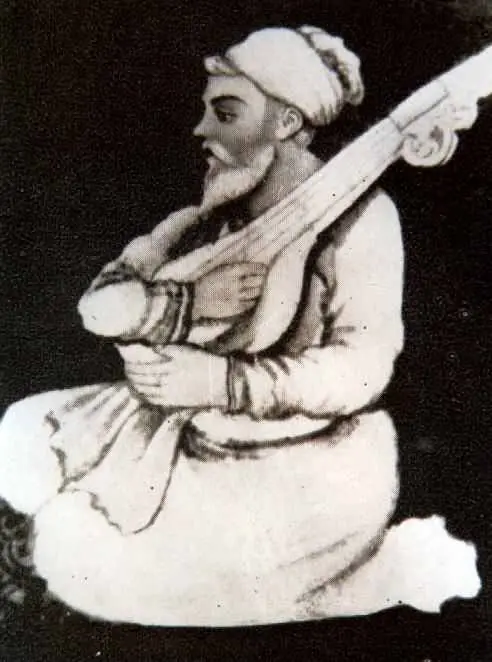 Musician and lifelong companion of Sri Guru Nanak Dev Ji1459–1534Bhai Mardana
A Muslim musician of the Mirasi caste from Sri Guru Nanak Dev Ji's own village, ten years his elder, who played the rabab while Guru Ji sang and walked with him through two decades of travel. The pairing of a Hindu-born teacher and a Muslim accompanist is the first image of what the new community was.
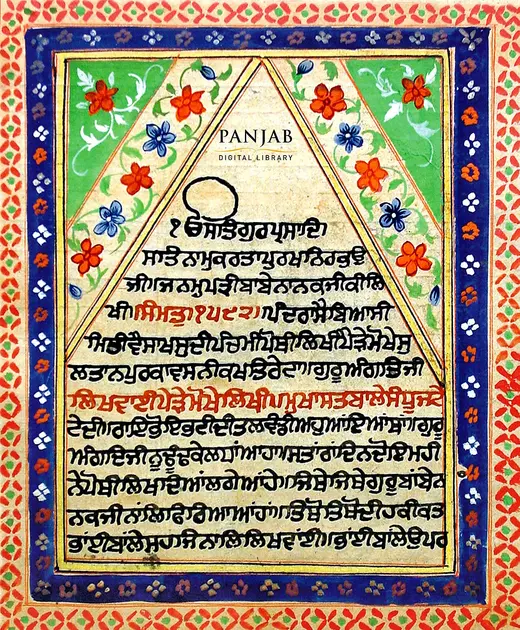 Traditional companion of Sri Guru Nanak Dev Ji; historicity disputed1466–1544Bhai Bala
A Hindu Jat of Talwandi who, in the Bala Janamsakhi and in most popular retellings, accompanied Sri Guru Nanak Dev Ji on his travels alongside Mardana and later dictated Guru Ji's life to Sri Guru Angad Dev Ji. The oldest sources do not mention him, and most historians treat him as a figure created by the Janamsakhi that bears his name.
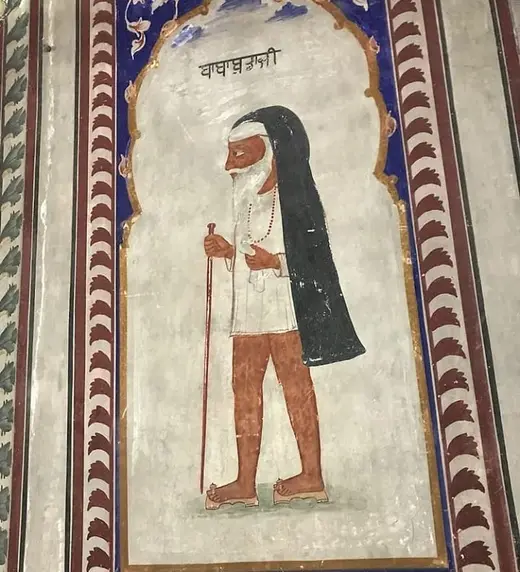 Elder of the community under six Gurus; first custodian of the Adi Granth1506–1631Baba Buddha
A Jat boy named Bura who met Sri Guru Nanak Dev Ji while herding cattle and earned the name Buddha, the old one, for his gravity. He lived to 125 by the tradition, anointed five successive Gurus, was the first reader of the scripture in the Harmandir, and taught Sri Guru Hargobind Ji to fight.
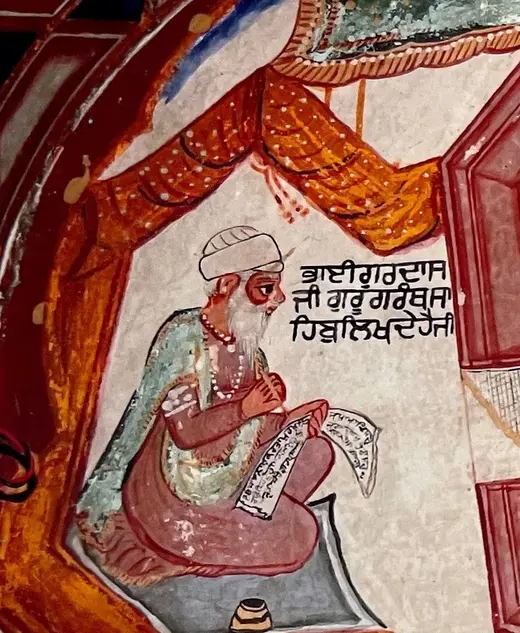 Scribe of the Adi Granth; poet and first theologian of the Sikhs1551–1636Bhai Gurdas
The son of a cousin of Sri Guru Amar Das Ji, he served four Gurus as preacher, envoy and scribe, wrote out the 1604 Adi Granth at Sri Guru Arjun Dev Ji's dictation, and composed the forty Vars and the Kabitts that Sikhs treat as the key to the scripture. His first Var is among the earliest surviving accounts of Sri Guru Nanak Dev Ji.
- Persian poet in the circle of Sri Guru Gobind Singh Jic. 1633–1713Bhai Nand Lal
Bhai Nand Lal, who wrote under the name Goya, was a scholar in Mughal service who became a devoted Sikh and the leading Persian poet of Sri Guru Gobind Singh Ji's circle. His poems may be recited in Sikh gatherings alongside scripture. His later years were spent at Multan, where he ran a school.
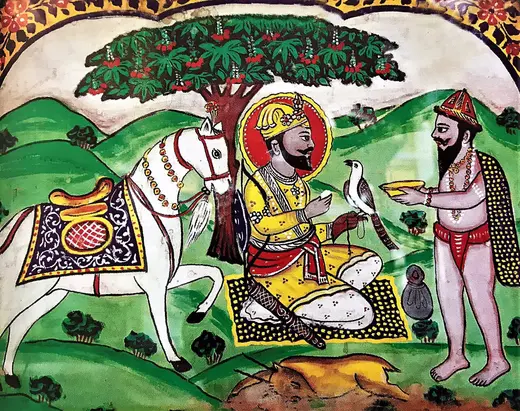 Gave water to the wounded of both sides at Anandpur; founder of the Sevapanthi order1648–1718Bhai Kanhaiya
A Sikh of Sri Guru Tegh Bahadur Ji's time who, during the siege of Anandpur, carried water to wounded Mughal soldiers as readily as to Sikhs, and when accused told Sri Guru Gobind Singh Ji that he saw no Mughal or Sikh, only Guru Ji's face. Guru Ji gave him ointment as well. The order he founded devoted itself to service.
- Sikh who carried the sacred head of Sri Guru Tegh Bahadur Ji to the young Sri Guru Gobind Singh Ji; later Bhai Jiwan Singh1649–1705Bhai Jaita
Bhai Jaita carried the sacred head of Sri Guru Tegh Bahadur Ji out of Delhi in November 1675. Sri Guru Gobind Singh Ji honoured him as Guru Ji's own son. He took the name Bhai Jiwan Singh when he received the rites of the Khalsa, and he is said to have been martyred in December 1705.
- Companion of Sri Guru Tegh Bahadur Ji; martyred at Delhiuntil 1675Bhai Dayala
Bhai Dayala, also called Dial Das, was a senior Sikh trusted by Sri Guru Tegh Bahadur Ji. He looked after Guru Ji's family and the eastern sangats, and he went with Guru Ji in 1675. The Encyclopaedia of Sikhism and Gupta say he was martyred at Delhi on 11 November 1675, though one narrative differs.
- Companion of Sri Guru Tegh Bahadur Ji; martyred at Delhiuntil 1675Bhai Mati Das
Bhai Mati Das served Sri Guru Tegh Bahadur Ji as diwan, or manager of the household. He travelled with Guru Ji in the east, was arrested with him in 1675 and was martyred at Delhi on 11 November 1675, on the same day as Guru Ji.
- Companion of Sri Guru Tegh Bahadur Ji; martyred at Delhiuntil 1675Bhai Sati Das
Bhai Sati Das was the younger brother of Bhai Mati Das and a companion of Sri Guru Tegh Bahadur Ji. He was arrested with Guru Ji in 1675 and martyred at Delhi on 11 November 1675. Far less is recorded about him than about his brother, and the accounts of his martyrdom differ.
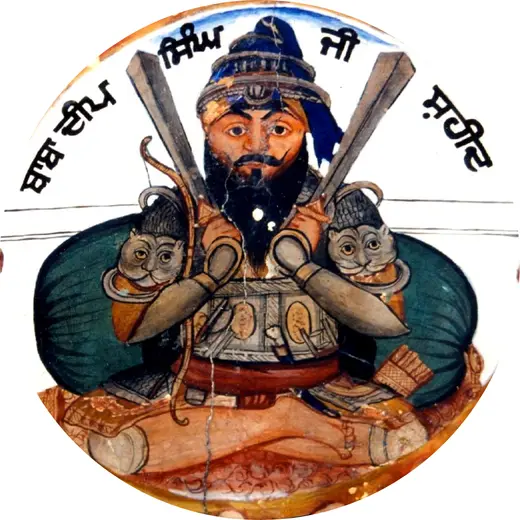 Founder of the Shahid misl and martyr at Amritsar; 1682-17571682–1757Baba Deep Singh
Baba Deep Singh studied under Bhai Mani Singh, served at Damdama Sahib, and led one of the Sikh bands that became the Shahid misl. He was killed near the Harmandir Sahib in November 1757 while marching to free Amritsar from the Afghans.
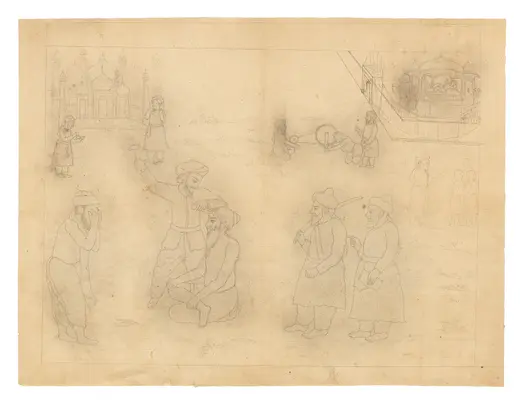 Farmer martyred at Lahore in 1745c. 1720–1745Bhai Taru Singh
A Sandhu farmer of Puhla who sent his savings to Sikhs in hiding, Bhai Taru Singh was betrayed to Zakariya Khan and was martyred at Lahore in 1745 when he refused to accept Islam.
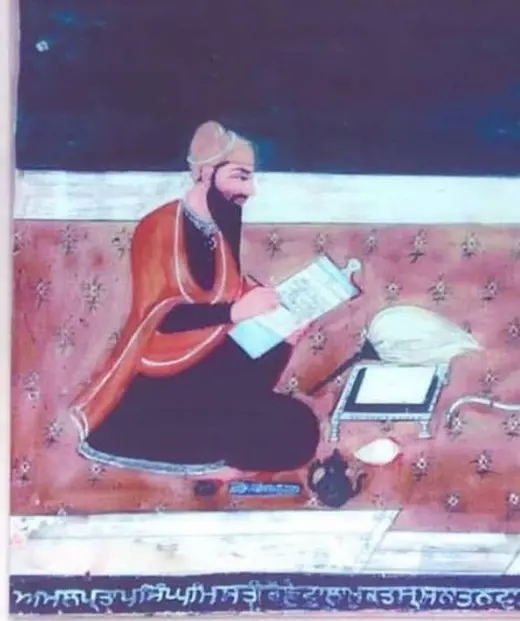 Scholar, custodian of the Harmandir Sahib and martyr; d. 1737until 1737Bhai Mani Singh
A companion of Sri Guru Gobind Singh Ji from boyhood, Bhai Mani Singh took charge of the Harmandir Sahib at Amritsar and made peace between the Tatt Khalsa and the Bandais in 1721. He was martyred at Lahore in 1737 after a dispute over a tax for holding Diwali at Amritsar.
- Carpenter of Saidpur remembered in the traditions of Sri Guru Nanak Dev JiBhai Lalo
Bhai Lalo is remembered as a carpenter of Saidpur, now Eminabad, who welcomed Sri Guru Nanak Dev Ji into his home. He is known largely through later tradition. No record from his lifetime has been confirmed, and scholars disagree on whether he was a historical person.
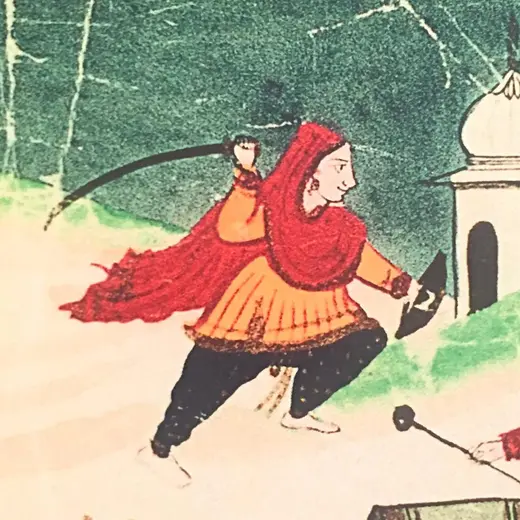 Led the forty at Muktsar in 1705; later a bodyguard of Sri Guru Gobind Singh JiMai Bhago
A Jat woman from Jhabal near Amritsar who shamed forty Sikhs of the Majha who had deserted the besieged Guru at Anandpur into returning, led them into the fight at Khidrana in December 1705, and was the only one of the party to survive. She stayed with Guru Ji as a guard until his passing and lived out her life in the Deccan.
- Trader who proclaimed Sri Guru Tegh Bahadur Ji as Guru at BakalaMakkhan Shah Lubana
Makkhan Shah was a wealthy trader and devout Sikh. Tradition remembers him for finding Sri Guru Tegh Bahadur Ji among many rival claimants at Bakala in 1664, and for announcing the discovery from a rooftop. His story comes from later Sikh narrative and differs in detail between sources.
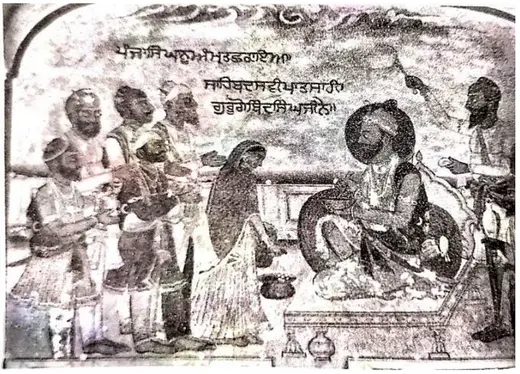 The first five initiated into the Khalsa, 1699The Panj Piare
Five men from five regions and five castes, a Khatri, a Jat, a water-carrier, a washerman and a barber, who answered Sri Guru Gobind Singh Ji's call for a head at Vaisakhi 1699, became the first members of the Khalsa, and then initiated Guru Ji himself. Any five initiated Sikhs acting together have carried their authority since.
Bhagats and Bhatts
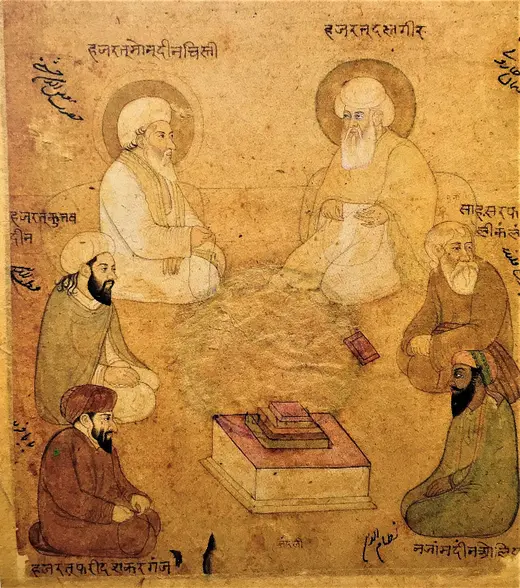 Chishti Sufi of Pakpattan; among the earliest voices in Sri Guru Granth Sahib Ji1173–1265Shaikh Farid
A Chishti saint of the thirteenth century whose Punjabi couplets on death, humility and the brevity of life are the oldest texts in Sri Guru Granth Sahib Ji, included by Sri Guru Arjun Dev Ji three centuries after they were composed. The first poet of the Punjabi language whose work survives.
- Learned Vaishnava devotee; four hymns in Sri Guru Granth Sahib Jib. 1267Bhagat Trilochan
A learned Vaishnava devotee, usually linked with Maharashtra and remembered as a companion of Bhagat Namdev. Four of his hymns are in Sri Guru Granth Sahib Ji. Very little about his life can be confirmed, and even his birthplace is disputed.
- Devotional poet of Maharashtra; about sixty hymns in Sri Guru Granth Sahib Ji1270–1350Bhagat Namdev
A devotional poet of Maharashtra who wrote in Marathi and Hindi and moved from worship of an image to devotion to the formless God. Tradition makes him the son of a tailor, and Sri Guru Arjun Dev Ji's verse names him as a cloth printer. Sri Guru Granth Sahib Ji holds about sixty of his hymns, spread across eighteen raags. His life story rests mostly on later tradition.
- Vaishnava teacher of Varanasi; one hymn in Sri Guru Granth Sahib Jic. 1300–c. 1410Bhagat Ramanand
A Vaishnava teacher based at Varanasi who founded the Ramavat or Ramanandi order and taught devotion to Rama. Later tradition names many famous devotees of humble trades as his disciples, though his dates make some of those links hard to accept. One hymn of his is in Sri Guru Granth Sahib Ji, in Raag Basant at ang 1195.
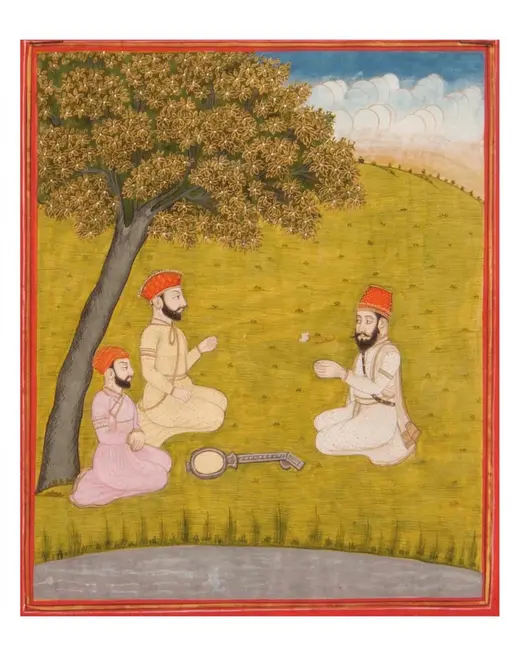 Weaver-poet of Varanasi; most represented bhagat in Sri Guru Granth Sahib Jic. 1398–c. 1448Bhagat Kabir
A Muslim weaver of Varanasi who attacked the pretensions of Brahmins and mullahs alike in blunt vernacular verse and taught devotion to a formless God. Five hundred and forty-one of his compositions are in Sri Guru Granth Sahib Ji, far more than any author outside the Gurus, and his influence on Sri Guru Nanak Dev Ji's generation was large.
- Farmer and devotee of Rajasthan; three hymns in Sri Guru Granth Sahib Jib. c. 1415Bhagat Dhanna
A farmer from Dhuan in the Tonk district of Rajasthan, remembered as a devotee who began by copying his neighbour's image worship and came to devotion to the formless God. Three of his hymns are in Sri Guru Granth Sahib Ji. The stories told of him come from tradition, and his dates are uncertain.
- Ruler of Gagaraun who gave up his throne; one hymn in Sri Guru Granth Sahib Jib. c. 1425Bhagat Pipa
A ruler of Gagaraun in Rajasthan who, in the accounts that survive, left his throne for a life of devotion. His one hymn in Sri Guru Granth Sahib Ji, in Raag Dhanasari at ang 695, teaches that the body itself is God's temple. The details of his life come from tradition.
- Devotee of the sixteenth century; two hymns in Sri Guru Granth Sahib Jic. 1480–c. 1573Bhagat Bhikhan
The author of two hymns in Raag Sorath at ang 659 of Sri Guru Granth Sahib Ji, which call the Name the remedy for the ills of the world. His identity is not settled. The sources disagree over which of two men of this name wrote the hymns, and neither one's life is well recorded.
- Devotee of Barsi in Maharashtra; one hymn in Sri Guru Granth Sahib Jib. c. 1483Bhagat Parmanand
A devotee linked with Barsi in Maharashtra, known in Sikh history for a single hymn in Raag Sarang at ang 1253 of Sri Guru Granth Sahib Ji. The hymn says that hearing sacred texts is worth nothing if it does not change how a person lives. Details of his life come from tradition, and they are few.
- Poet and official of Akbar's reign; one line in Sri Guru Granth Sahib Jib. 1529Bhagat Surdas
A poet and musician, originally named Madan Mohan, who is said to have served as an official under the emperor Akbar before giving up office for devotion. He is represented in Sri Guru Granth Sahib Ji by one line in Raag Sarang at ang 1253. He is not the blind poet who composed the Sur Sagar, though the two share a name.
- Devotee of unknown date and place; three hymns in Sri Guru Granth Sahib JiBhagat Beni
A devotee about whom almost nothing is known, beyond a reputation for long solitary meditation. His three hymns in Sri Guru Granth Sahib Ji show a person who knew yogic practice well and set it aside for devotion to the Name. No source read gives his dates, birthplace or trade.
- Sanskrit poet of the Gita Govinda; two hymns in Sri Guru Granth Sahib JiBhagat Jaidev
The Sanskrit poet who wrote the Gita Govinda, placed by the sources in eastern India in the twelfth century. Two of his hymns are in Sri Guru Granth Sahib Ji, one in Raag Gujri and one in Raag Maru. His period rests on the kings he is linked with, and no source read gives a firm birth or passing date.
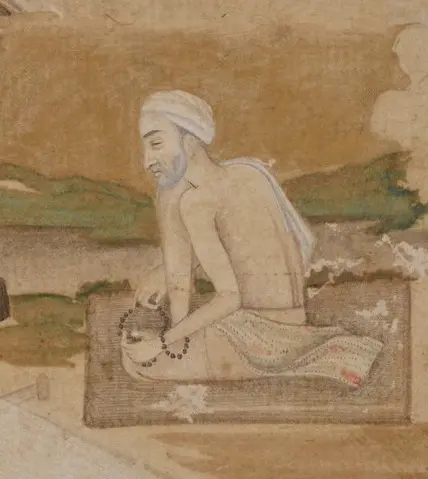 Leather-worker and poet of Varanasi; bhagat of Sri Guru Granth Sahib JiBhagat Ravidas
A worker in hides from Varanasi whose forty hymns in Sri Guru Granth Sahib Ji speak of a God who lifts the lowest and of a city without sorrow where no one is taxed or ranked. The most revered figure for Dalit communities in Punjab, and a direct precedent for Sri Guru Nanak Dev Ji's rejection of caste.
- Meat seller of Sehwan in Sindh; one hymn in Sri Guru Granth Sahib JiBhagat Sadhna
A devotee who is said to have made his living selling meat at Sehwan in Sindh. His one hymn in Sri Guru Granth Sahib Ji, in Raag Bilaval at ang 858, appeals to God to protect a servant who has no merit of his own. No other work of his survives, and his life is known only through tradition.
- Court barber and devotee; one hymn in Sri Guru Granth Sahib JiBhagat Sain
A barber by trade who became known across northern India as a devotee. His one hymn in Sri Guru Granth Sahib Ji, in Raag Dhanasari at ang 695, says that singing God's praise is the true form of worship. All accounts agree about his trade, but they differ on where he worked and who taught him.
- Bards whose savaiye in praise of the Gurus are in Sri Guru Granth Sahib JiThe Bhatts
The Bhatts were hereditary bards and genealogists, and some of them came into the Sikh fold in the time of Sri Guru Amar Das Ji and Sri Guru Arjun Dev Ji. Their verses of praise for the first five Gurus, known as the Bhatt Bani, stand at angs 1389 to 1409 of Sri Guru Granth Sahib Ji. Sources count between eleven and nineteen poets. Their families also kept the scrolls called Bhatt Vahis, which later became a source for Sikh history.
Sikh rulers and commanders
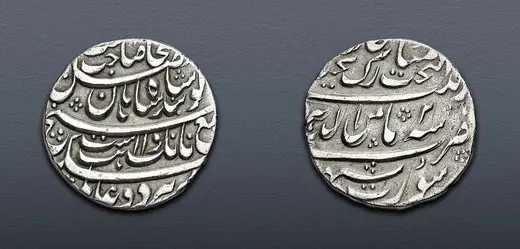 First Sikh military commander after the Gurus; executed 17161670–1716Banda Singh Bahadur
A Rajput hunter turned ascetic whom Sri Guru Gobind Singh Ji initiated at Nanded in 1708 and sent north with five arrows, a drum and a banner. Within two years he had taken Sirhind, abolished the zamindari system in the territory he held, and struck coins in the Gurus' names. Captured after an eight-month siege in 1715, he was executed in Delhi with hundreds of followers.
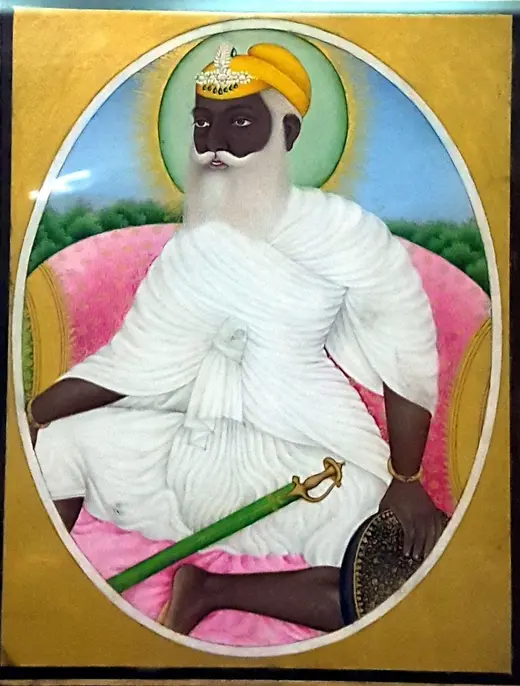 Phulkian chief and first ruler of Patiala; 1691-17651691–1765Baba Ala Singh
Baba Ala Singh built a territory in the Malwa from a band of young men at Phul, founded Patiala, and dealt with Mughals, Marathas and Afghans in turn. Ahmad Shah Durrani recognised him as Raja in 1765.
- Sikh leader who organised the Buddha Dal and Taruna Dal; 1697-17531697–1753Nawab Kapur Singh
A Virk farmer's son from Kaloke, Kapur Singh accepted the title of Nawab from the Mughals in 1733, divided the Sikh forces into two bodies, and in 1748 urged the union of the bands into the Dal Khalsa under Jassa Singh Ahluwalia.
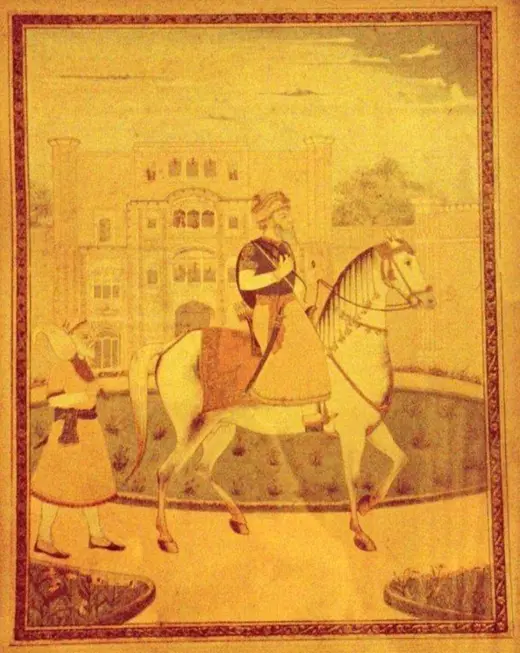 Commander of the Dal Khalsa, proclaimed Sultan ul-Qaum in 1761; 1718-17831718–1783Jassa Singh Ahluwalia
Raised at Delhi by Mata Sundari, Jassa Singh Ahluwalia led the Dal Khalsa through the Afghan invasions. Proclaimed Sultan ul-Qaum at Lahore in 1761, he survived the carnage at Kup with twenty-two wounds and founded the house that became the state of Kapurthala.
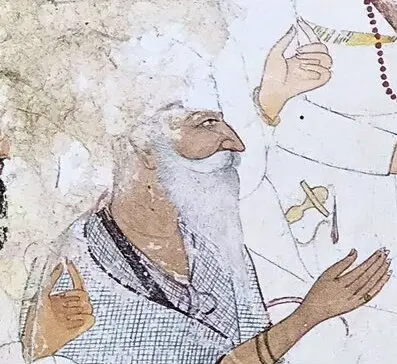 Founder of the Ramgarhia misl; 1723-18031723–1803Jassa Singh Ramgarhia
A carpenter's son from Ichogill, Jassa Singh rebuilt the Ram Rauni fort at Amritsar as Ramgarh and took his name from it. He became a leading misl chief, fell out with his namesake Jassa Singh Ahluwalia, lived for years as a soldier of fortune, and came back to rule from Batala.
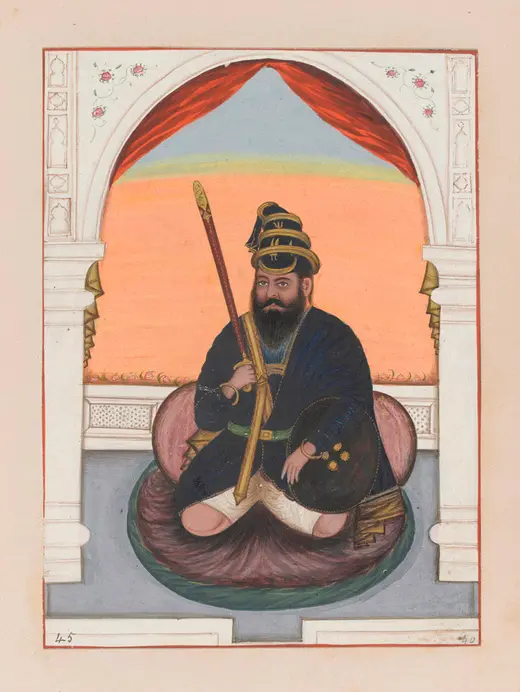 Nihang commander under Maharaja Ranjit Singh and head of the Akal Bunga; 1761-18231761–1823Akali Phula Singh
Raised by Baba Narain Singh of the Shahid misl, Akali Phula Singh ran the Amritsar gurdwaras, led the Akali troops in Maharaja Ranjit Singh's wars, and once punished the Maharaja for breaking the Sikh code. He was killed at Naushehra in 1823.
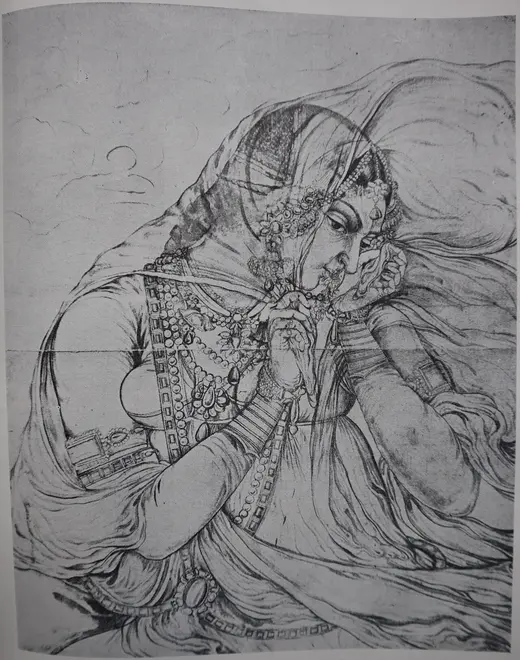 Head of the Kanhaiya misl and ally of Maharaja Ranjit Singh; 1762-18321762–1832Sada Kaur
Widowed in 1785, Sada Kaur married her daughter to the young Ranjit Singh, led the Kanhaiya misl and fought beside him at Lahore and elsewhere. They later fell out, and he took her lands and kept her in confinement until she passed away.
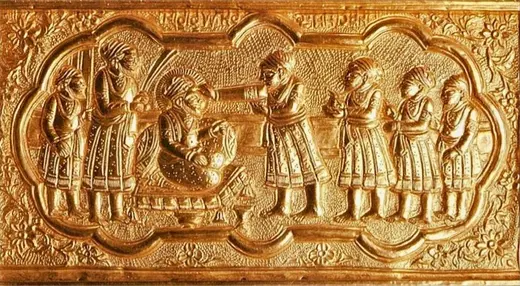 Ruler of the Sikh kingdom of Lahore, 1799-18391780–1839Maharaja Ranjit Singh
Heir to the Sukerchakia misl as a boy, he took Lahore at eighteen, absorbed the other Sikh confederacies, and over forty years built a kingdom from the Khyber to the Sutlej with a European-drilled army, a cabinet of Sikhs, Muslims and Hindus, and a treasury that paid for the gilding of the Harmandir. The state did not survive him by ten years.
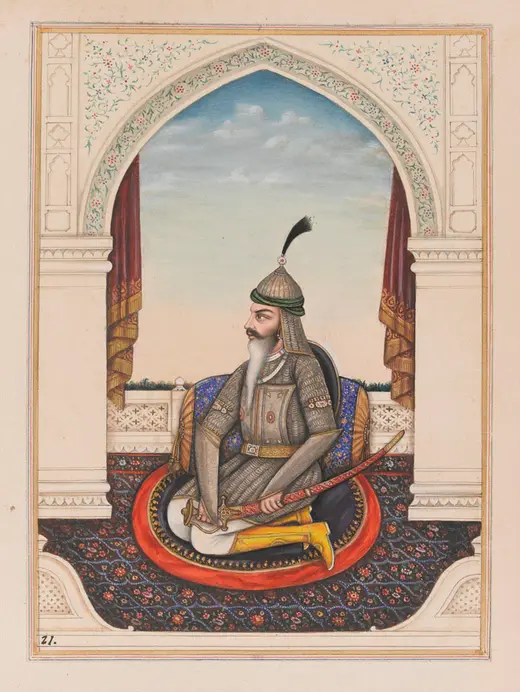 General of Maharaja Ranjit Singh and governor of Kashmir and Hazara; 1791-18371791–1837Hari Singh Nalwa
Hari Singh Nalwa rose from a recruitment test in 1805 to become Maharaja Ranjit Singh's most celebrated general. He governed Kashmir, settled Hazara, took Peshawar in 1834, built the fort at Jamrud, and was killed fighting the Afghans in 1837.
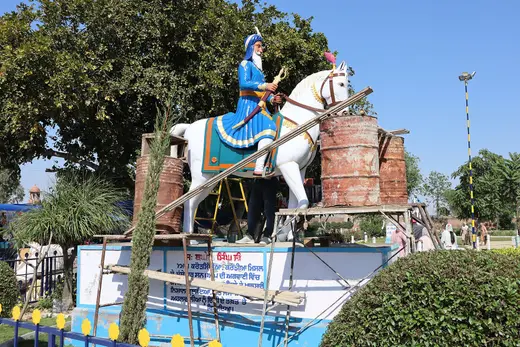 Karorsinghia chief who built the Delhi gurdwaras in 1783; d. 1802until c. 1802Baghel Singh
Leader of the Karorsinghia misl from 1765, Baghel Singh raided the Gangetic plain, entered Delhi with other chiefs in 1783, and won leave from Shah Alam II to build gurdwaras on Sikh historic sites in the city.
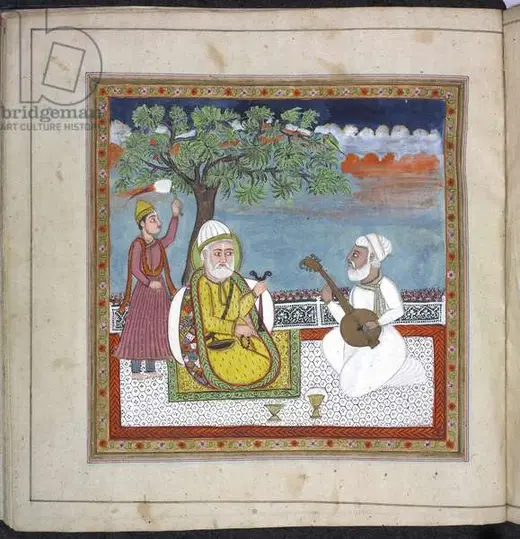 Wife of Maharaja Ranjit Singh, regent for Maharaja Duleep Singh; 1817-18631817–1863Maharani Jindan Kaur
The daughter of a keeper of the royal kennels, Maharani Jindan Kaur became regent for her son Maharaja Duleep Singh, took off her veil to rule in public, and led the Lahore Darbar into the first Anglo-Sikh war. The British removed her from power, interned her, and she escaped to Nepal, passing away in England in 1863.
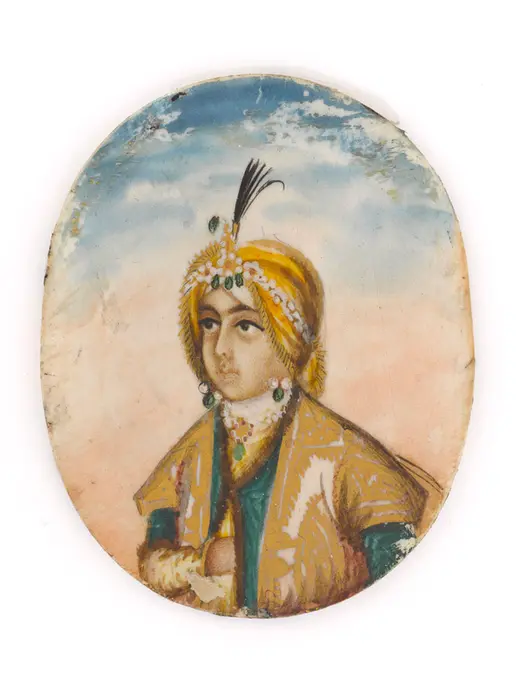 Last Sikh sovereign of the Punjab; 1838-18931838–1893Maharaja Duleep Singh
The youngest son of Maharaja Ranjit Singh, Duleep Singh became Maharaja at five and lost his kingdom at ten. He was brought up a Christian in English society, returned to the Sikh faith in 1886, tried to regain his throne, and passed away in Paris in 1893.
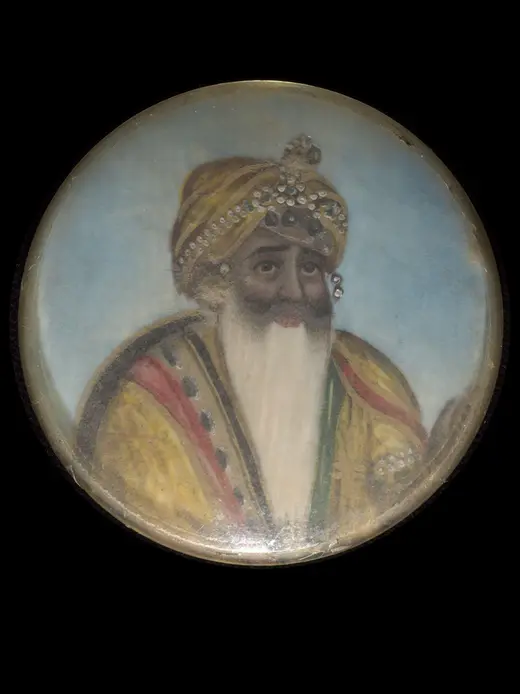 General of the Lahore Darbar, killed at Sobraon in 1846until 1846Sham Singh Atariwala
Sham Singh of Atari served Maharaja Ranjit Singh in the field and at court, and sat on the regency council of Maharani Jindan Kaur. He swore not to return from the battle of Sobraon and was killed there on 10 February 1846.
Mughal rulers and officials
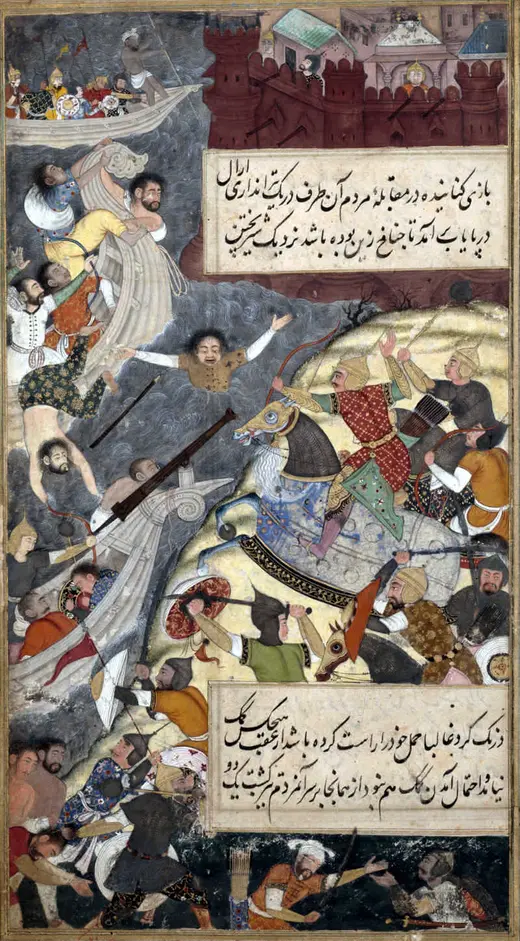 Mughal emperor, 1526 to 15301483–1530Babur
Founder of the Mughal dynasty in India. His invasions of the Punjab are the subject of Sri Guru Nanak Dev Ji's Babarvani hymns. Sikh tradition also tells of a meeting between the two, which Babur's surviving memoirs do not mention.
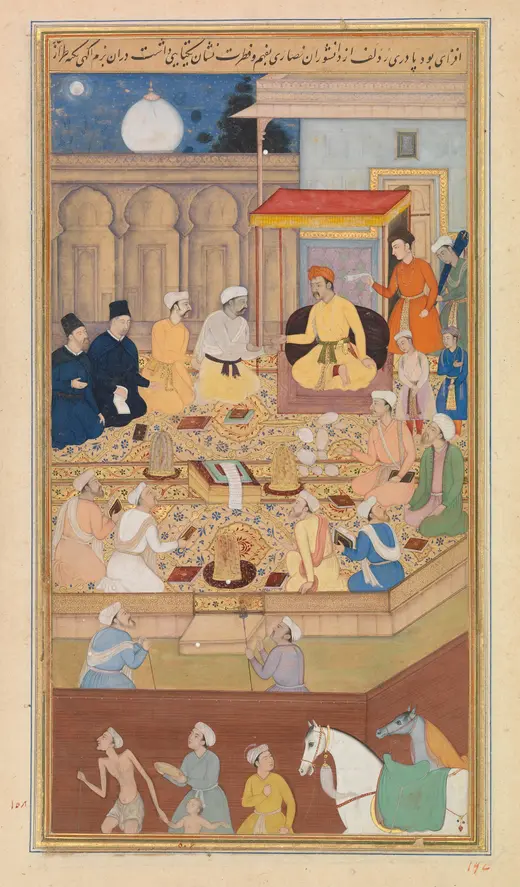 Mughal emperor, 1556 to 16051542–1605Akbar
The third Mughal emperor, who reigned during the time of the third, fourth and fifth Gurus. Sikh sources remember him as a friendly ruler. His call on Sri Guru Arjun Dev Ji in 1598 is the first event in Sikh history recorded in a Mughal chronicle.
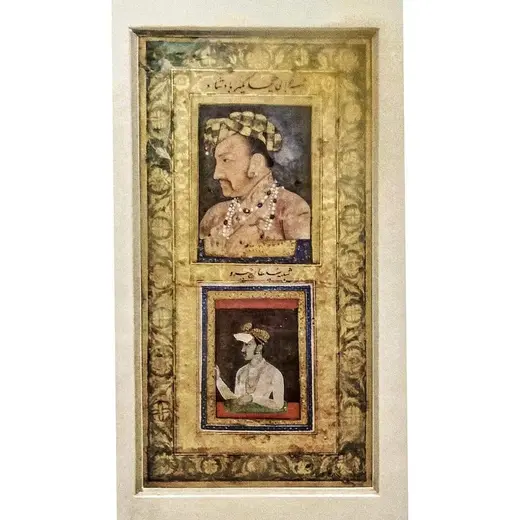 Mughal emperor, 1605 to 16271569–1627Jahangir
The fourth Mughal emperor. His own memoirs record his order against Sri Guru Arjun Dev Ji, who attained martyrdom at Lahore in 1606. He also held Sri Guru Hargobind Ji at Gwalior, and is later described as being on friendly terms with Guru Ji.
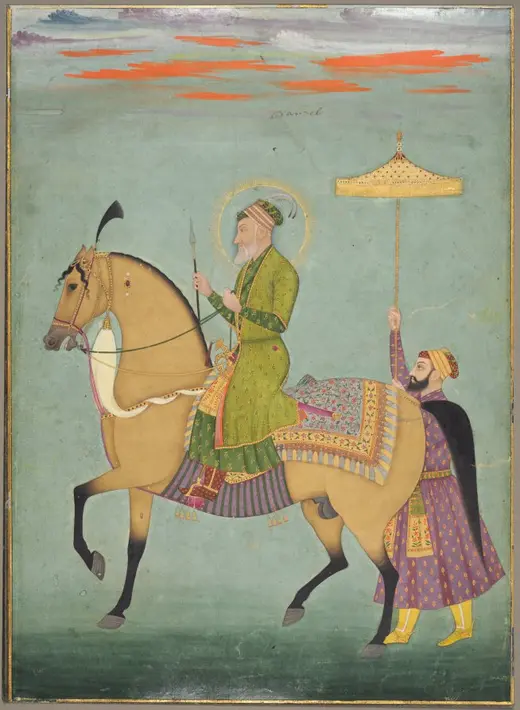 Mughal emperor, 1658 to 17071618–1707Aurangzeb
The Mughal emperor in the time of the last four Gurus. Sri Guru Tegh Bahadur Ji attained martyrdom at Delhi in his reign, and his forces and hill allies fought Sri Guru Gobind Singh Ji, who wrote him the Zafarnamah. Sikh and Persian sources give different reasons for these conflicts.
- Mughal faujdar of Sirhind, died 1710until 1710Wazir Khan
The Mughal commandant at Sirhind who fought Sri Guru Gobind Singh Ji at Anandpur and Chamkaur and ordered the martyrdom of the two younger Sahibzade. He was killed by Banda Singh Bahadur's force at Chappar Chiri in 1710.
Modern Sikhs
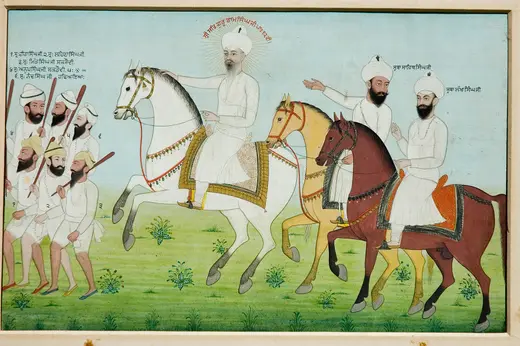 Leader of the Namdhari or Kuka movement; 1816-18851816–1885Baba Ram Singh Namdhari
A soldier turned preacher, Baba Ram Singh organised the Namdharis at Bhaini from 1857, taught a strict code and boycott of British institutions, and was exiled to Burma after his followers attacked Malerkotla in 1872.
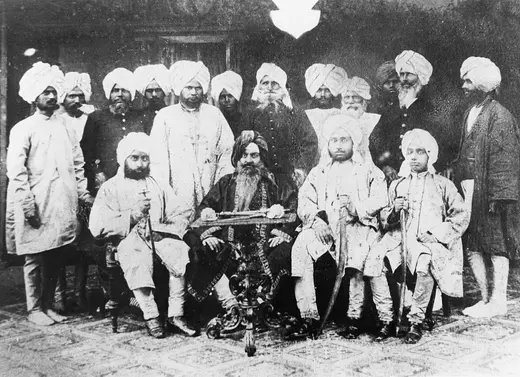 Founding president of the Singh Sabha and agent of Maharaja Duleep Singh; 1837-18871837–1887Thakur Singh Sandhanwalia
A relative of the Lahore royal family, Thakur Singh Sandhanwalia became the first president of the Sri Guru Singh Sabha in 1873. He later led the campaign to restore Maharaja Duleep Singh and passed away in 1887.
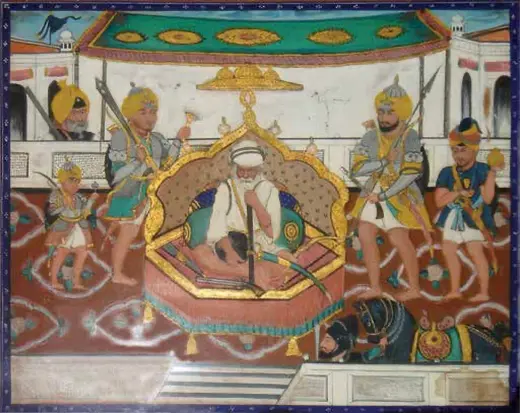 Religious leader who fought the British after 1846; d. 1856until 1856Bhai Maharaj Singh
Head of the Naurangabad dera, Bhai Maharaj Singh was implicated in a plot against Henry Lawrence, fought in the second Anglo-Sikh war, and kept resisting after the surrender. The British deported him to Singapore, where he passed away in solitary confinement.
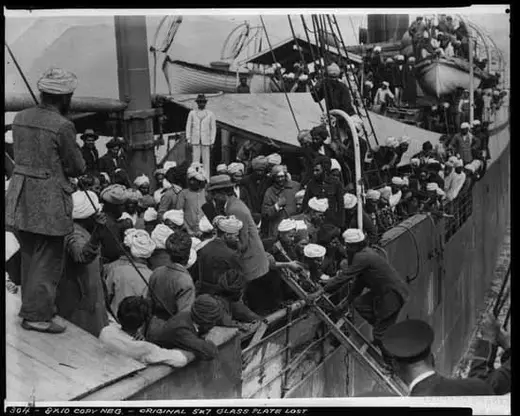 Organiser of the Komagata Maru voyage of 1914; 1861-19541861–1954Baba Gurdit Singh
A businessman in Malaya, Baba Gurdit Singh chartered the Komagata Maru in 1914 to challenge Canada's ban on Indian immigrants. He escaped after the clash at Budge Budge, lived in hiding for seven years, and later served in Akali and Congress politics.
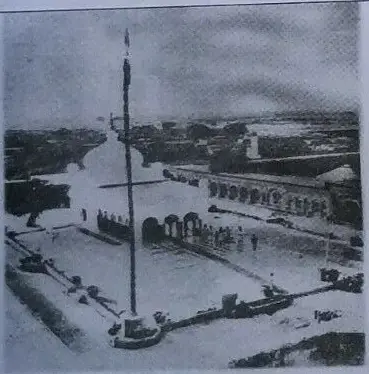 Scholar and author of the Mahan Kosh; 1861-19381861–1938Bhai Kahn Singh Nabha
A largely self-taught scholar, Bhai Kahn Singh of Nabha wrote the tract Ham Hindu Nahin, advised Max Arthur Macauliffe on The Sikh Religion, and compiled the Mahan Kosh, an encyclopaedic dictionary of Sikh literature published in 1930.
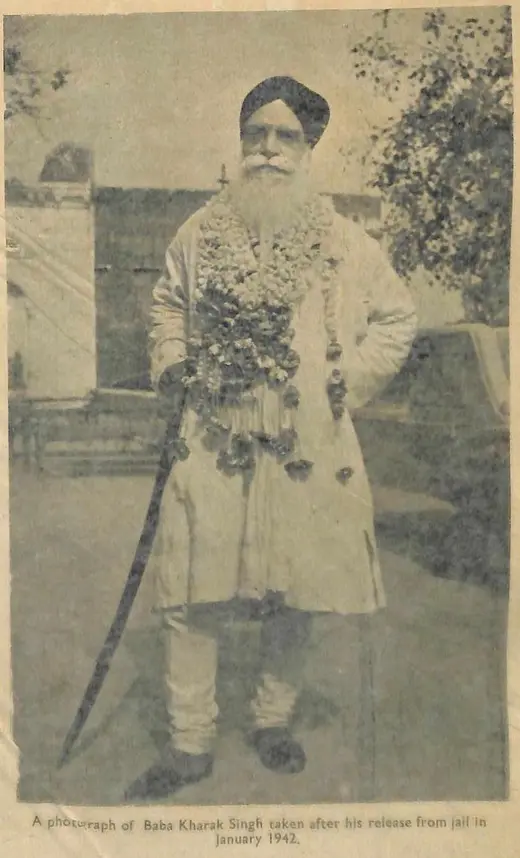 President of the SGPC in the keys agitation; 1868-19631868–1963Baba Kharak Singh
Baba Kharak Singh, a Sialkot graduate, became SGPC president in 1921 and led the campaign to recover the keys of the Golden Temple treasury. He spent years in jail and remained a strong voice for Indian unity, opposing both Pakistan and the Azad Punjab scheme.
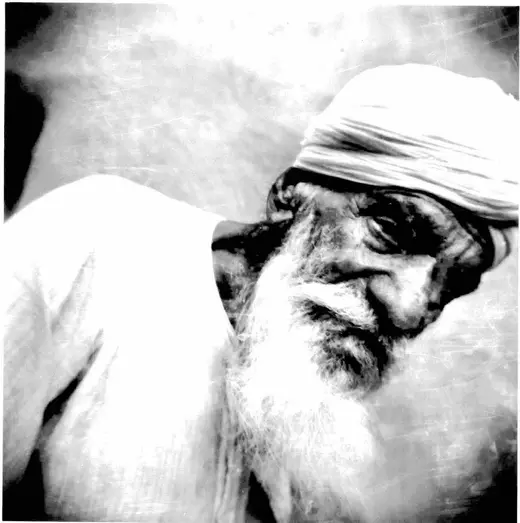 First president of the Ghadar party; 1870-19681870–1968Sohan Singh Bhakna
Sohan Singh Bhakna went to the United States as a labourer in 1909, became president of the Ghadar party, and spent sixteen years in British jails. He later worked with peasant movements and the Communist Party of India.
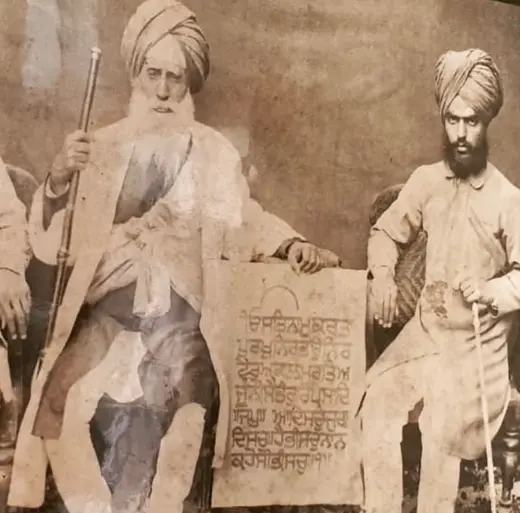 Poet, scholar and exegete of the Singh Sabha movement; 1872-19571872–1957Bhai Vir Singh
Bhai Vir Singh wrote the first modern Punjabi novels and the epic Rana Surat Singh, founded the Khalsa Tract Society and the Khalsa Samachar, and helped build the institutions of the Singh Sabha movement. The Encyclopaedia calls him the creator of modern Punjabi literature.
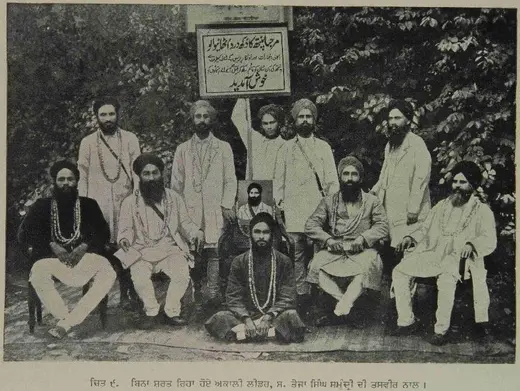 Akali leader who passed away in custody in 1926; 1882-19261882–1926Teja Singh Samundri
A former cavalryman turned Sikh educator, Teja Singh Samundri helped found the SGPC and the newspaper Akali. He was arrested over the Jaito morcha in 1923 and passed away in custody, refusing to buy his release by promising to work the 1925 Act.
- Sikh educator; pioneer of girls' schooling at Ferozepur1882–1906Bibi Harnam Kaur
Bibi Harnam Kaur was a pioneer of girls' education in the Singh Sabha period. With her husband, Bhai Takht Singh, she built up the girls' school at Ferozepur that became the Sikh Kanya Mahavidyala. She passed away at twenty-four, in 1906.
- Dominant Sikh political leader from the 1930s to 1962; 1885-19671885–1967Master Tara Singh
Born a Hindu and initiated as a schoolboy, Tara Singh rose through the gurdwara reform movement to lead the SGPC and the Akali Dal for three decades. He spoke for Sikhs at partition and led the campaign for a Punjabi-speaking state until Sant Fateh Singh displaced him.
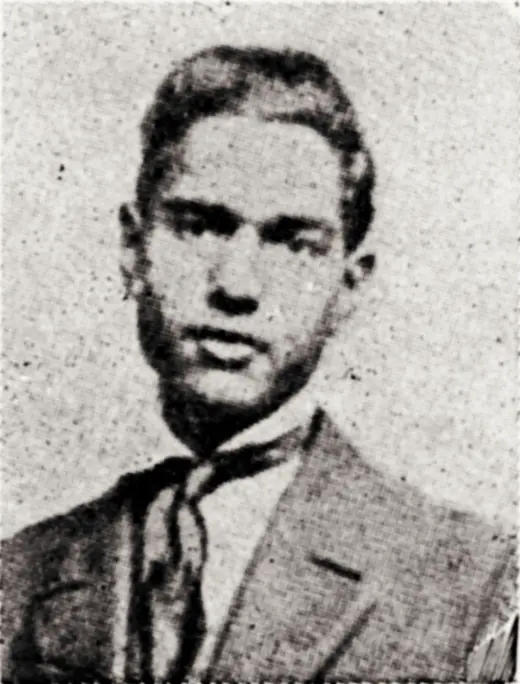 Ghadar revolutionary hanged at Lahore in 19151896–1915Kartar Singh Sarabha
A student at Berkeley, Kartar Singh Sarabha joined the Ghadar party at sixteen or seventeen, printed its Gurmukhi paper, and came home in 1914 to organise a rising among soldiers. He was hanged at Lahore on 16 November 1915.
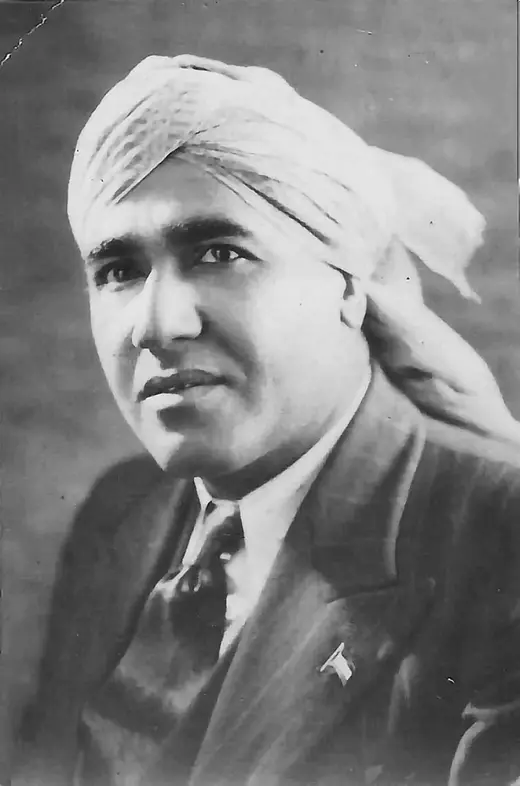 Nationalist who shot Sir Michael O'Dwyer in 1940; 1899-19401899–1940Udham Singh
An orphan raised at the Central Khalsa Orphanage in Amritsar, Udham Singh was at Jallianwala Bagh on 13 April 1919. In 1940 he shot Sir Michael O'Dwyer, governor of the Punjab at the time of the massacre, in London, and was hanged at Pentonville.
- Founder of Pingalwara, Amritsar1904–1992Bhagat Puran Singh
Bhagat Puran Singh founded Pingalwara, a home in Amritsar for people with disabilities, destitute people and others who had nowhere to go. Born Ramji Das in 1904, he began his service at Lahore in the 1920s and came to Amritsar at Partition. He passed away in 1992.
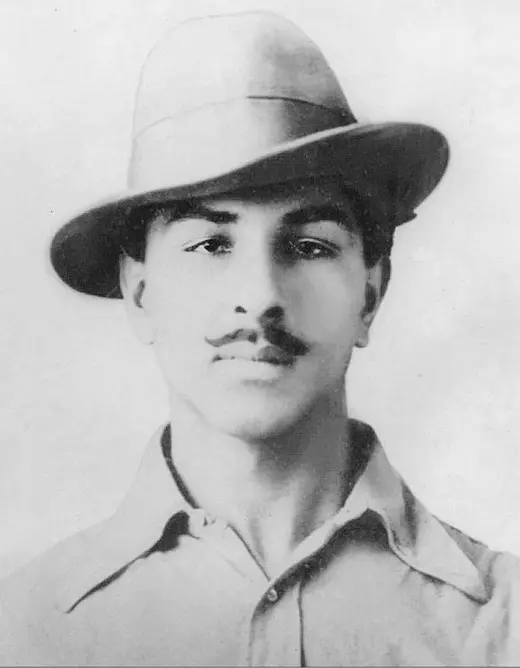 Revolutionary hanged at Lahore in 1931; 1907-19311907–1931Bhagat Singh
Bhagat Singh came from a family of nationalists and joined a socialist revolutionary group. He took part in the killing of J. P. Saunders in 1928, threw a bomb in the Central Assembly and was hanged at Lahore on 23 March 1931. He is honoured as Shahid-i-Azam.
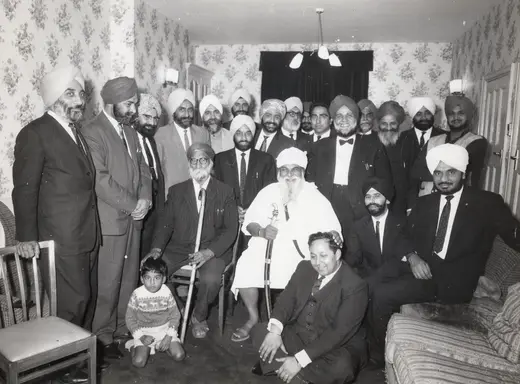 Akali leader who won the Punjabi-speaking state in 1966; 1911-19721911–1972Sant Fateh Singh
A preacher from the Bikaner canal colonies, Sant Fateh Singh entered politics in the 1950s, fasted for the Punjabi Suba in 1960-61, and took the Akali leadership from Master Tara Singh. The state of Punjab was formed under his leadership on 1 November 1966.
- Akali Dal president who signed the 1985 accord; 1932-19851932–1985Harchand Singh Longowal
President of the Shiromani Akali Dal from 1980, Sant Harchand Singh Longowal led the Dharam Yudh, was held after Operation Blue Star, and in July 1985 signed an accord with Rajiv Gandhi. He was shot dead at Sherpur that August.
- Head of the Damdami Taksal, killed in Operation Blue Star; 1947-19841947–1984Jarnail Singh Bhindranwale
Head of the Damdami Taksal from 1977, Jarnail Singh Bhindranwale rose to national attention after the Nirankari clash of 1978. He moved to the Darbar Sahib complex in 1982 and into the Akal Takht in December 1983, and was killed when the army attacked in June 1984. Accounts of him differ sharply.
- Human rights activist killed by Punjab police in 1995until 1995Jaswant Singh Khalra
Jaswant Singh Khalra used municipal cremation records to expose thousands of secret police cremations in Punjab. Police abducted him in September 1995 and killed him that October. Six officers were convicted in 2005.
Cite this page
"Gurus and figures of Sikh history". Sikh History: lives of the Gurus. https://sikh-history.co.uk/people/