Fourth Guru, founder of Amritsar
Sri Guru Ram Das Ji
An orphan from Lahore who sold boiled grain in the streets, served Sri Guru Amar Das Ji for years and married his daughter. In seven years as Guru he founded the city that became Amritsar, composed the wedding hymn still used by Sikhs, and began the hereditary Sodhi line of Gurus.
Read the full life and times →Early life
Jetha, the first-born, was born in 1534 in the Chuna Mandi quarter of Lahore to Hari Das, a Sodhi Khatri, and his wife Daya Kaur. Both parents passed away when he was about seven and he was raised by his grandmother in the village of Basarke, the birthplace of Sri Guru Amar Das Ji. He earned his keep selling boiled chickpeas.
He joined a party going to Goindwal, stayed to work on the construction of the town and the stepped well, and became one of Sri Guru Amar Das Ji's most trusted helpers. Around 1553 Guru Ji married him to his younger daughter Bhani. Their three sons were Prithi Chand, Mahadev and Sri Guru Arjun Dev Ji.[EoS][Macauliffe]
Founding Amritsar
Sri Guru Amar Das Ji sent Jetha to establish a new centre on land about 40 km west of Goindwal, acquired by tradition from the villagers of Tung or granted by the emperor Akbar. Work on a pool began there in the early 1570s. The settlement that grew around it was first called Guru ka Chak and then Ramdaspur. It became Amritsar, the pool of nectar, after the tank Sri Guru Ram Das Ji had dug.
He invited traders and craftsmen of fifty-two trades to settle, laying out the market that is still called Guru ka Bazar. A town founded by Guru Ji and populated by his followers, independent of any existing ruler's capital, was a different kind of base from Goindwal.[EoS][EoS]
Guruship
Installed in September 1574, Sri Guru Ram Das Ji kept the organisation of manjis and added the masand system, authorised deputies who collected offerings from the sangats and brought them to Guru Ji, a necessity for funding the building of Amritsar. The system served the community well for a century before it decayed.
He composed 679 hymns, including the four stanzas of the Lavan, sung as the couple walks around Sri Guru Granth Sahib Ji at a Sikh wedding, and many hymns of longing for God. The Lavan presents marriage as a stage-by-stage journey towards union with the divine rather than a contract between families.[EoS][Grewal]
Passing and succession
Sri Guru Ram Das Ji chose his youngest son Sri Guru Arjun Dev Ji, passing over the eldest, Prithi Chand, whose resentment turned into a long-running rival claim. The office of Guru now stayed within the Sodhi family until 1708. Sri Guru Ram Das Ji passed away at Goindwal in September 1581, aged forty-six.[EoS][EoS]
What the sources disagree on
Images
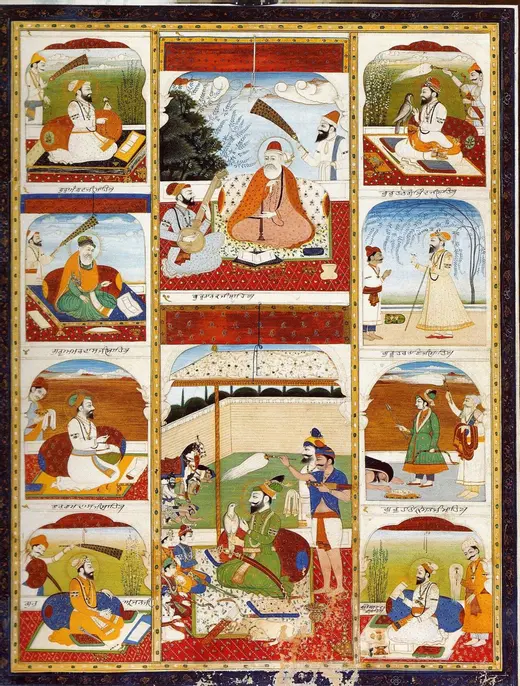
A later artist's imagining of the ten Gurus, from Sri Guru Nanak Dev Ji to Sri Guru Gobind Singh Ji, from the workshop of Purkhu of Kangra. No portrait from any Guru's lifetime is established.
Purkhu of Kangra, Early 19th century. Kapany Collection (as credited on Commons). Public domain. Source
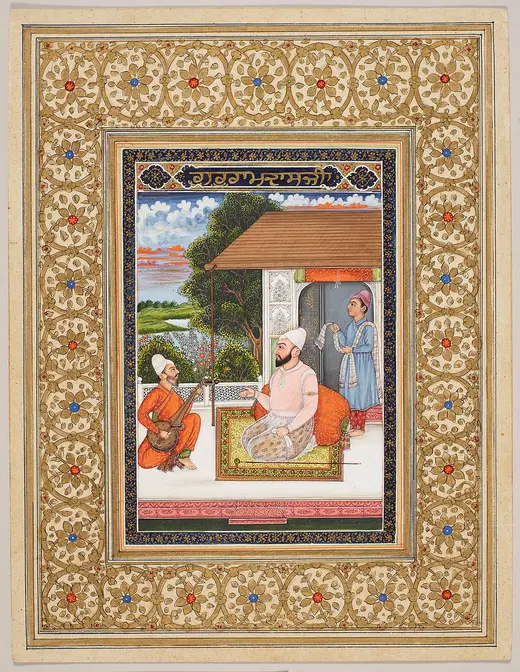
A later artist's imagining of Sri Guru Ram Das Ji, from a set of the first nine Gurus painted about 1800-1840. No portrait from Guru Ji's lifetime is established.
Unknown, c. 1800-1840. Royal Collection Trust, RCIN 925205 (as credited on Commons). Public domain. Source


3 children in the full tree
Words
- Sri Guru Ram Das Ji: the day of a Guru's Sikhਗੁਰ ਸਤਿਗੁਰ ਕਾ ਜੋ ਸਿਖੁ ਅਖਾਏ ਸੁ ਭਲਕੇ ਉਠਿ ਹਰਿ ਨਾਮੁ ਧਿਆਵੈ ॥Anyone who wants to be called a Sikh of the true Guru gets up early and turns their mind to God's Name.Ang 305 · Gauri
- Lavan: the first and second rounds of the Sikh weddingਹਰਿ ਪਹਿਲੜੀ ਲਾਵ ਪਰਵਿਰਤੀ ਕਰਮ ਦ੍ਰਿੜਾਇਆ ਬਲਿ ਰਾਮ ਜੀਉ ॥In this first round the Lord settles you in the work of active life. I give myself to you, Lord.Ang 773 · Suhi