Historic gurdwara
Gurdwara Ber Sahib
The principal gurdwara of Sultanpur Lodhi, on the Kali Bein beside an old ber tree believed to be where Sri Guru Nanak Dev Ji sat in meditation during the Sultanpur years. The Janamsakhis place Guru Ji's call to his mission at this river.
History
- Before the travels
Guru Ji at Sultanpur
Sri Guru Nanak Dev Ji spent several years at Sultanpur Lodhi before beginning his travels. His sister Bibi Nanaki lived in the town with her husband, Jai Ram, an official serving Nawab Daulat Khan Lodhi. Jai Ram arranged for Guru Ji to work in the Nawab's provision stores.
A sangat formed around Guru Ji in the town. Bhai Gurdas lists Sikhs of Sultanpur by name in Var 11, pauri 21, and ends the pauri by calling the town a storehouse of devotion.[EoS][Src]
The river and the tree
The gurdwara stands on the bank of the Kali Bein, half a kilometre west of the old town. The Encyclopaedia of Sikhism says Guru Ji bathed in the stream each morning and then sat under a ber tree to meditate. The building is raised beside an old ber, the jujube, which people believe to be that same tree.[EoS]
The call at the Bein
The Janamsakhis place a decisive experience here. As they tell it, Guru Ji went into the stream one morning and stayed out of sight for two days. He came out at a spot about 2 km upstream, now called Sant Ghat, and his first words were that there is no Hindu and no Muslim. Guru Ji then made ready for the long journeys.
The older evidence is more spare. In Var 1, pauri 24, Bhai Gurdas says Guru Ji first received grace at the divine door and then undertook hard discipline, reaching Sach Khand before going out to teach. He names neither a river nor Sultanpur.
W. H. McLeod judges that the saying about Hindu and Muslim may well go back to Guru Ji, but holds that the Janamsakhis are too unreliable to confirm it. He adds that it plainly reflects a conviction held by the Sikhs of the early seventeenth century.[EoS][Src][McLeod]
- 18th century
An earlier building
A study of the architecture of Sikh gurdwaras in East Punjab, citing Gurmukh Singh's Historical Sikh Shrines of 1995, says Jassa Singh Ahluwalia built an earlier gurdwara on the site. The Encyclopaedia's entry does not mention this building, and its form and date have not been confirmed.[Singh]
- 1937 to 1941
The present building
Maharaja Jagatjit Singh of Kapurthala raised the present building. Its cornerstone was laid on 25 February 1937 by Bhai Arjan Singh of Bagarian, and it was dedicated on 26 January 1941 by Maharaja Yadavindra Singh of Patiala.
The gurdwara stands on a high plinth and is entered from the south through a portico on octagonal columns and a small gallery. The marble-floored hall leads to a sanctum framed by a tall archway with floral stucco, where Sri Guru Granth Sahib Ji is seated on a white marble palki. The architectural study records a four-storey cruciform plan and a main hall of about 19 by 19 metres.[EoS][Singh]
- Today
Sultanpur's other gurdwaras
The largest annual gathering falls in November, for the birth anniversary of Sri Guru Nanak Dev Ji. Gurdwara Ber Sahib is one of a group of sites in the town. Gurdwara Hatt Sahib marks the stores, and displays thirteen stones believed to be the weights Guru Ji used. Kothri Sahib is the cell where tradition says Guru Ji was held while his accounts were checked after a false complaint. Gurdwara Guru ka Bagh marks the family's home, and Gurdwara Antaryatma Sahib the site of the mosque in the Janamsakhi story of the prayers with the Nawab and the Qazi.
Gurdwara Sant Ghat marks the place of re-emergence on the Bein. Gurdwara Bebe Nanaki Ji, whose cornerstone was laid on 13 November 1970, honours Guru Ji's sister. Gurdwara Sehra Sahib recalls the wedding party of Sri Guru Hargobind Ji, which tradition says stopped here in 1604 with Sri Guru Arjun Dev Ji. A local committee of the Shiromani Gurdwara Parbandhak Committee runs all of them except Gurdwara Bebe Nanaki Ji, which has its own trust.[EoS]
What the sources disagree on
- The tree
The Encyclopaedia of Sikhism says the old ber is believed to be the tree under which Guru Ji meditated. Wikipedia and the architectural study add that Guru Ji planted it. No early source settles either claim, and the age of the tree has not been confirmed.[EoS][Web][Singh]
- How long Guru Ji was gone, and when
The Encyclopaedia's account of Gurdwara Ber Sahib says Guru Ji was not seen for two days, while its note on Sant Ghat speaks of the third day, and Wikipedia says three days. Wikipedia dates the event to 1499, at the age of 30. The Encyclopaedia's entry gives no year.[EoS][Web]
- Dates of the building
The Encyclopaedia gives exact dates of 25 February 1937 and 26 January 1941, and this page follows them. Wikipedia gives 1937 or 1938 for the cornerstone and 1941 or 1942 for completion.[EoS][Web]
Images
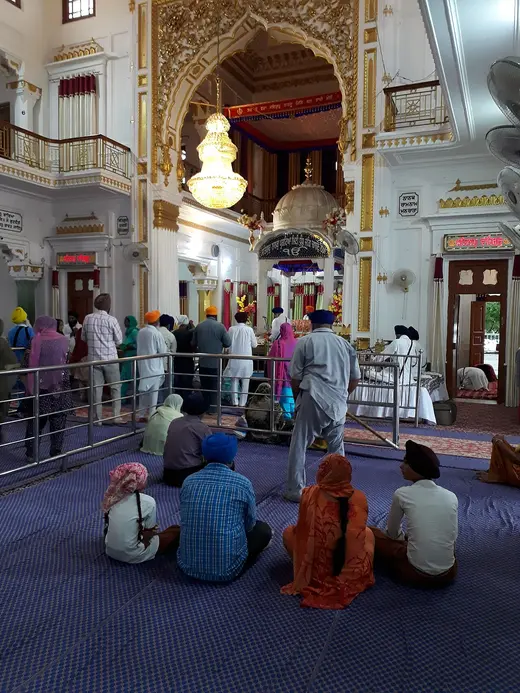
Gurdwara Ber Sahib at Sultanpur Lodhi, a modern photograph from 2019. No historic image was found in the Commons set.
Guglani, 2019.CC BY-SA 4.0. Source
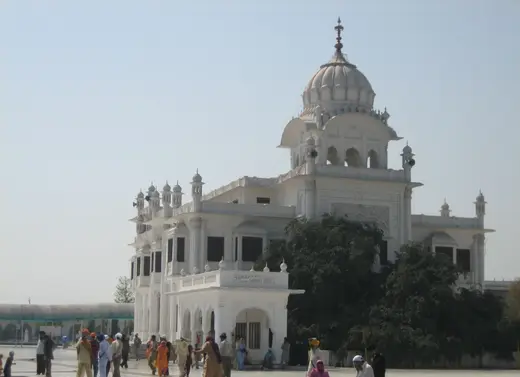
Gurdwara Ber Sahib, Sultanpur Lodhi, photographed in 2010.
Jiwanjot (Commons user Jjsingh1981), 2010. Public domain. Source
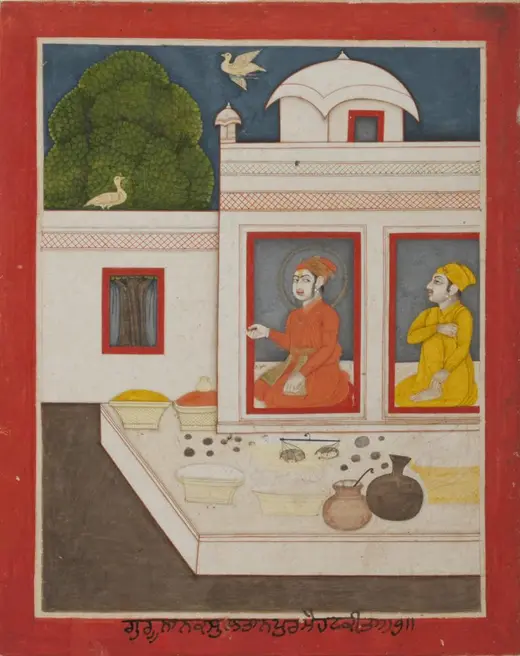
A later artist's imagining of Sri Guru Nanak Dev Ji in the provisions store at Sultanpur Lodhi, from a Janamsakhi set. Commons gives two dates, the later being 1800-1900.
Unknown, c. 1755-1800 or 19th century. Asian Art Museum, San Francisco, 1998.58.6 (as credited on Commons). Public domain. Source


