The Khalsa, 1699
Vaisakhi at Anandpur: the older and later accounts
Sainapati describes a great gathering and the creation of the Khalsa, without the call for heads, which first appears in detail in 1751.
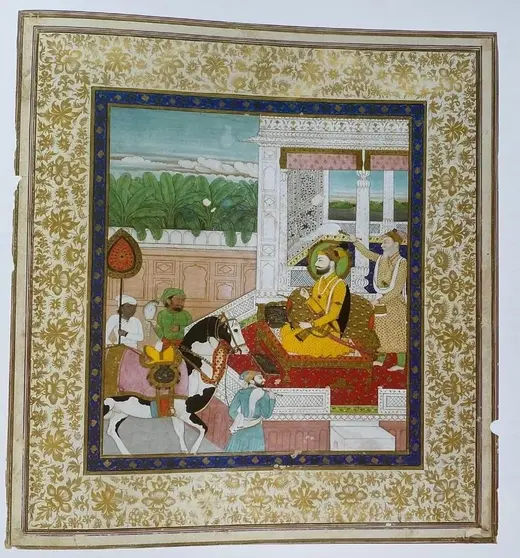
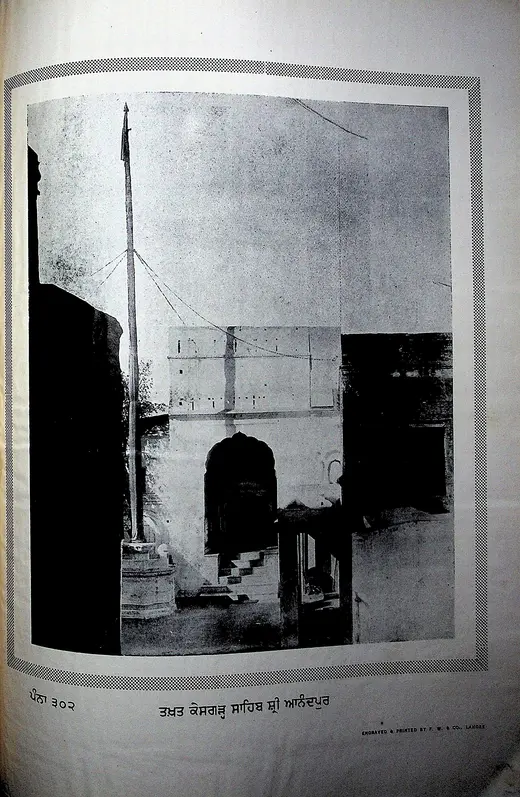
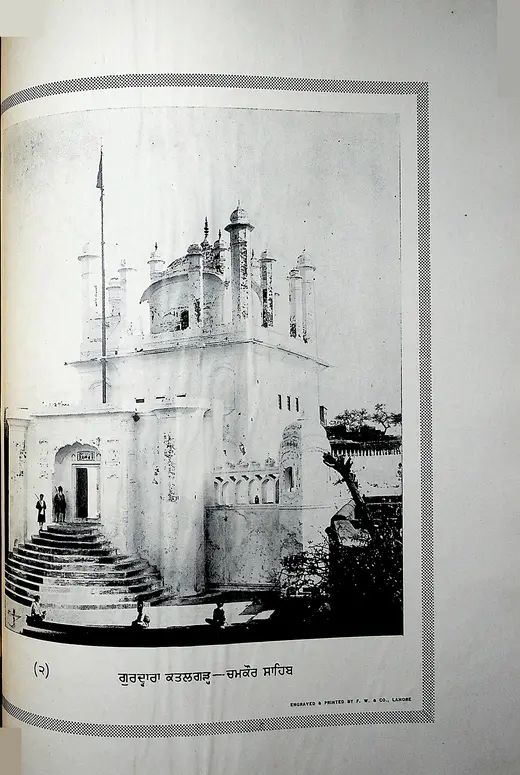
The story most Sikhs know comes from Kuir Singh's Gurbilas Patshahi 10 of 1751, followed by Sukkha Singh and Santokh Singh. On Vaisakhi morning, after the service, Sri Guru Gobind Singh Ji stood before the great gathering at Kesgarh with a drawn sword and asked for a Sikh who would give his head. The people fell silent. At the third call Daya Ram, a Khatri of Lahore, got up and followed Guru Ji into a tent.
Guru Ji came back with the sword dripping blood and asked again. Next to rise was Dharam Das, a Jat of Hastinapur, then Mohkam Chand of Dwarka, Himmat of Jagannath, and the barber Sahib Chand of Bidar. Macauliffe adds that people ran to complain to Guru Ji's mother that Guru Ji had lost his reason, and he says a goat was killed each time, a detail not in the Encyclopaedia's telling.
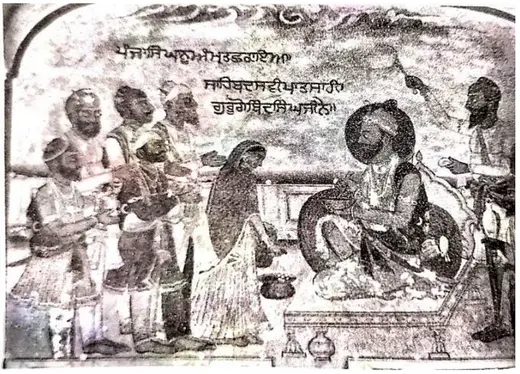
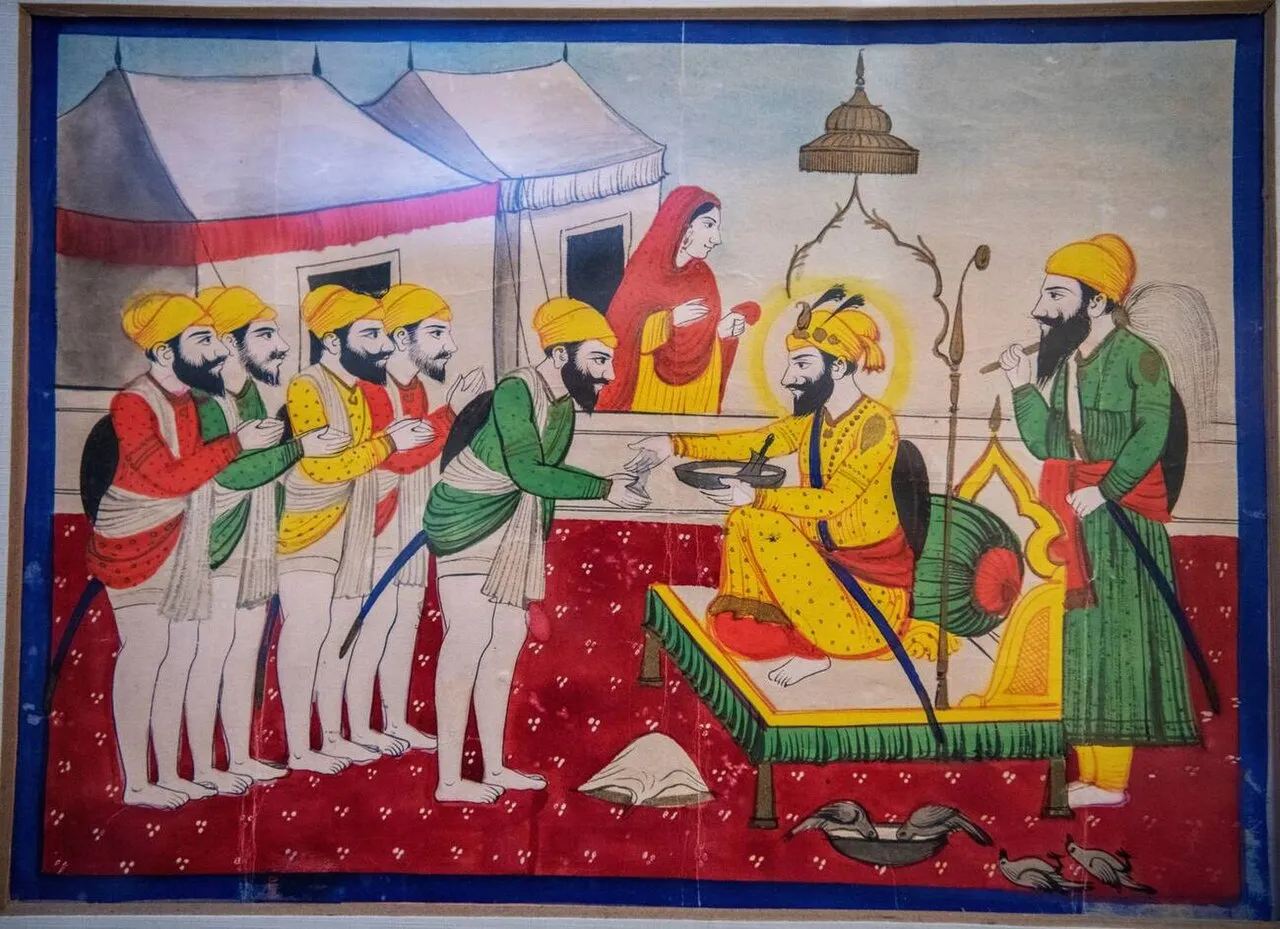
Then all five walked out alive, dressed alike in saffron robes, with swords at their sides. Guru Ji stirred water in an iron bowl with a double-edged sword while reciting scripture. Mata Jito added sugar crystals, and each man drank five palmfuls. These were the Panj Piare, the five beloved. Guru Ji then asked them to initiate Guru Ji in the same way, and took the name Singh.
Sainapati, who was close to Guru Ji, tells it far more simply. People gathered at Vaisakhi on the bank of the Sutlej. Guru Ji made the Khalsa known, and many joined while others grew anxious. He says nothing about heads or a tent, and gives his attention to what the Khalsa was to be.
How do we know?
The sources conflict on this story, or scholars doubt it.
The date also varies. The Encyclopaedia gives Vaisakhi 1756 Bikrami, 30 March 1699. The translator of Sri Gur Sobha gives March 20, 1699 in one note and heads the chapter with 1752 Bikrami, and notes that Kesar Singh Chhibber has 1755 and Bhangu 1752. Sainapati's silence does not prove the later story false, as he openly avoids events, but it shows the details cannot be traced to him. The tradition's account of the goats is not in the Encyclopaedia's version.
- From the timePlaces a great assembly at Anandpur at Vaisakhi, with many joining and others uneasy, and then the edict and initiation, without any call for heads or the five named Sikhs. (ch. V, couplets 1-6, 31-38)[Src]
- Later traditionCalls Kuir Singh's work of 1751 the first to give details of the offering of heads, and says it wrongly dates the event to 1689.[EoS]
- ScholarshipSays earlier chronicles do not narrate the episode in such detail and that Ratan Singh Bhangu says only that five were chosen from five castes.[EoS]
- Later traditionTells the five heads scene with goats killed behind the tent walls. (pp. 91-93)[Macauliffe]
- Later traditionTells the five heads story in its own account, dating it to 30 March 1699 and quoting Kuir Singh.[EoS]