The first journey: the east, as tradition tells it
Sajjan the thug
A pious-seeming host who murdered his guests was turned by a hymn, the stories say, and made his house the first dharamsala.
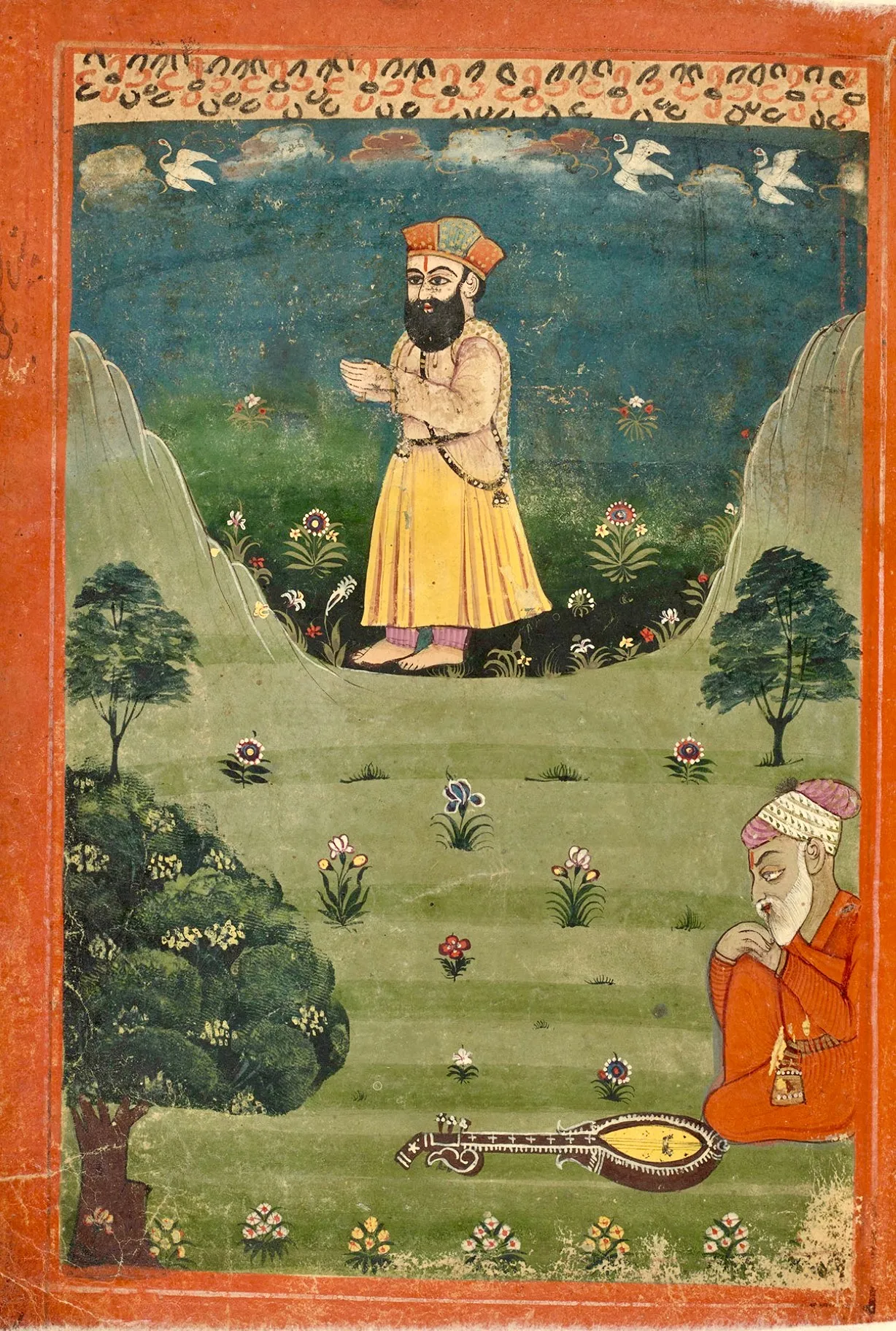
According to the Puratan Janamsakhi, Sajjan was a man of apparent piety who kept a mosque for Muslim travellers and a temple for Hindus, and made them all welcome. At night, when his guests slept, he killed them, dropped them down a well and took their goods. In the morning he was at his prayers again.
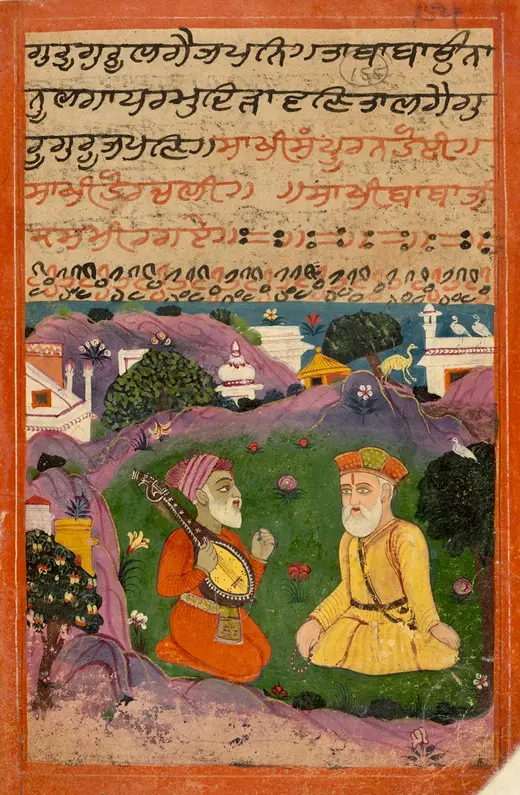
Sri Guru Nanak Dev Ji and Mardana stopped with him, and Sajjan, looking at the visitor's face, took him for a rich man. But Guru Ji stayed up late. When Sajjan finally came to the door to see why, Mardana was playing and Guru Ji was singing of bronze that gleams on the surface and leaves black on the hand that rubs it.
Sajjan understood he was being described. He fell at Guru Ji's feet and confessed. Guru Ji told him that pardon would come only through repentance and giving up what he had taken. The Puratan says he brought it all out and gave it away in God's name, and that his house became a dharamsala, the first such place in Sikh tradition.
How do we know?
The sources conflict on this story, or scholars doubt it.
Sajjan appears as a sheikh in the Puratan and as a Vaishnava who steals clothes in the Bala. The tomb is real but tells us only of a local memory.
- Later traditionGives the fuller story from the Puratan and others, placing Sajjan at Makhdumpur near Tulamba, and notes a mound and tomb there bearing his name.[EoS]
- ScholarshipShows that the versions disagree about location and detail, that Bhai Gurdas does not mention him, and that the word sajan, friend, in the hymn Suhi 3 may have generated the tale, and so classes it as improbable though not impossible. (pp. 117-119)[McLeod]
- ScriptureContains the Raag Suhi hymn about bronze that shines but blackens when rubbed, and about real friends who go along with you to the end, with no mention of any thug. (ang 729)[Src]
- Later traditionHas a separate tale of a robber named Bhola who is sent home to ask whether his family will share his punishment. (ff. 42-43)[(tr.)]
- Later traditionRetells the temple-and-mosque version for a modern audience.[Macauliffe]