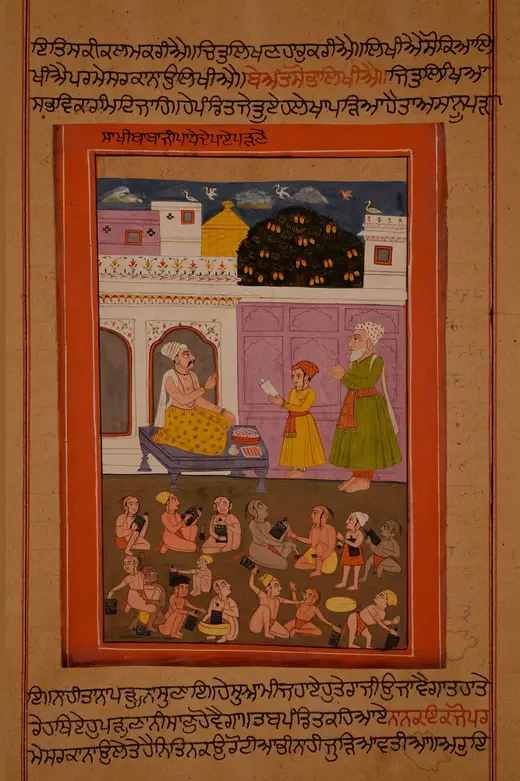
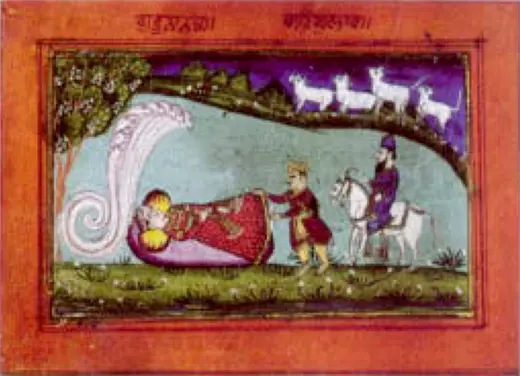
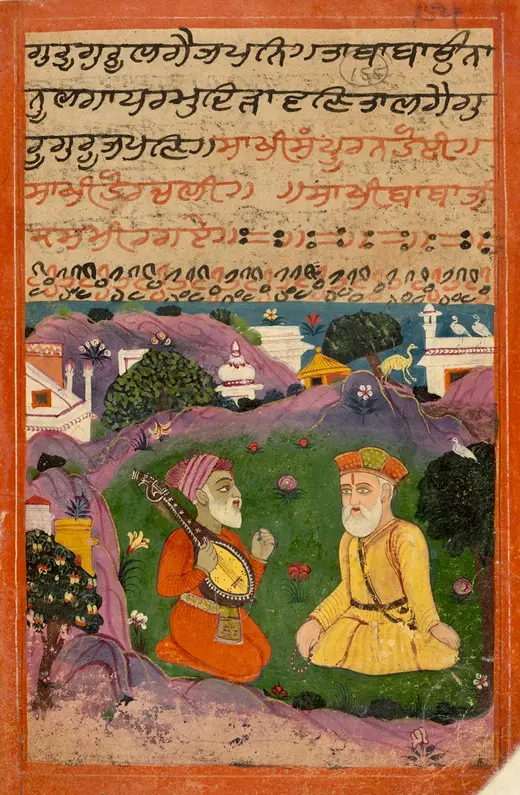
The first journey: the east, as tradition tells it
Bhai Lalo and Malik Bhago
Sri Guru Nanak Dev Ji stayed with a poor carpenter and refused a rich steward's feast; the two loaves, the story says, gave milk and blood.
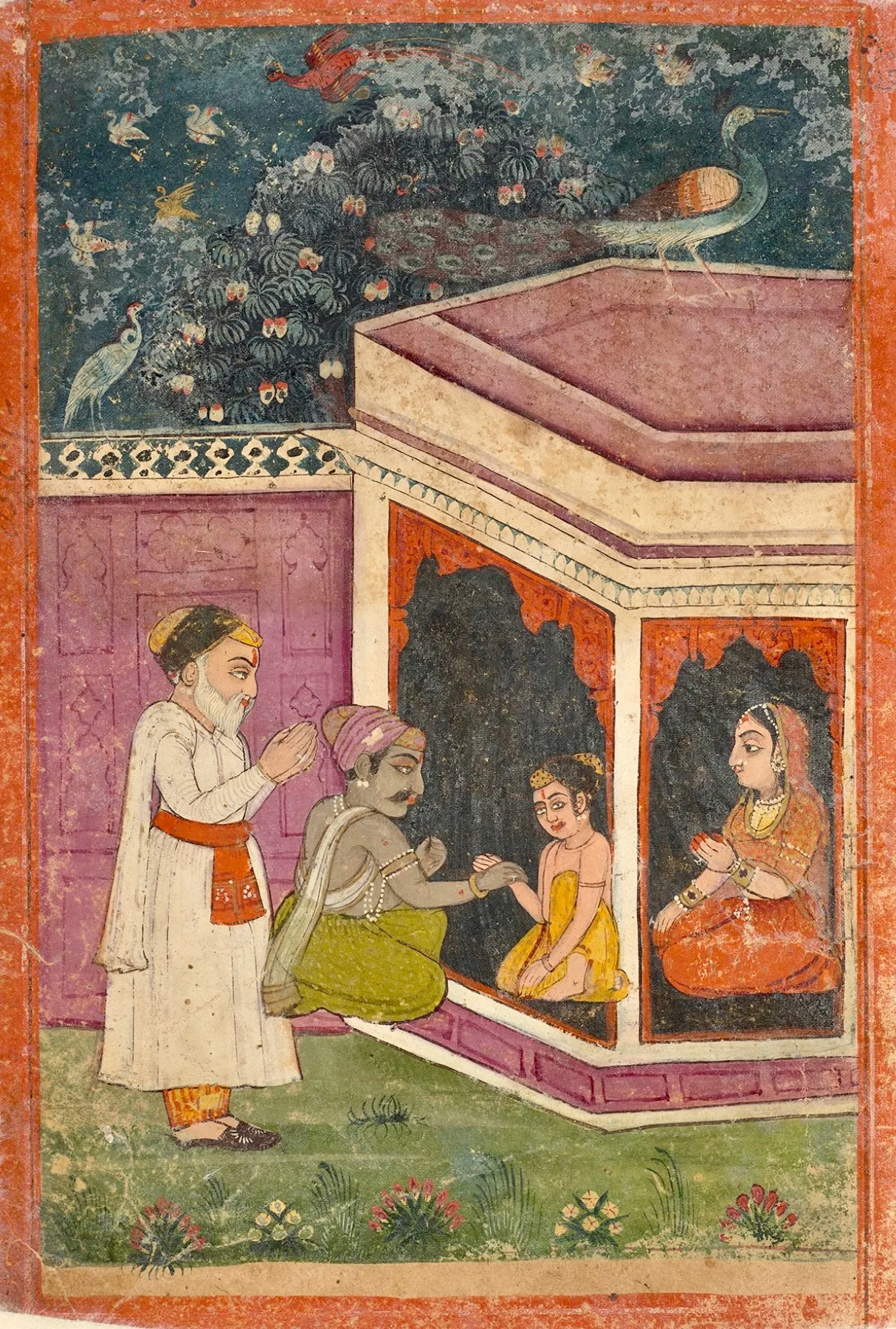
According to the Bala Janamsakhi, Sri Guru Nanak Dev Ji came to Saidpur and stayed for three days with Lalo, a carpenter of low caste. At the same time Malik Bhago, the steward of the town's Muslim chief, gave a great feast for holy men and high-caste Hindus, and he noticed afterwards that this one visitor had stayed away.
He sent for Guru Ji and asked why a man born a Khatri would prefer a poor man's food to his own. Guru Ji replied that he ate what God sent and that God saw no caste. Told to eat, then, he asked Lalo to bring some of his coarse bread.
He took Lalo's bread in his right hand and Bhago's delicacies in his left and pressed them. From Lalo's bread came milk, and from Bhago's food came blood. The Janamsakhi says the whole gathering was amazed. Retellers from Macauliffe onward draw the moral: one had been earned by labour and the other taken from the poor.
How do we know?
The sources conflict on this story, or scholars doubt it.
Var 11's lists of early Sikhs in pauris 13-14 do not name Lalo, which supports McLeod on this point. The Encyclopaedia of Sikhism and Harbans Singh read the hymn's refrain as a personal address to a real disciple.
- Later traditionGives the Bala Janamsakhi's account of Lalo's three-day hospitality, Malik Bhago's anger and the squeezing of the two foods, and notes the conjecture that the Tilang hymn addresses him.[EoS]
- Later traditionIdentifies Malik Bhago as the Hindu steward of Saidpur's Muslim chief.[EoS]
- ScriptureHas a hymn in Raag Tilang with the refrain ve Lalo, which does not describe any carpenter or feast. (ang 722)[Src]
- ScholarshipDismisses the story as a miracle, notes that Lalo is absent from the older Janamsakhis, and suggests the name may have grown out of a refrain meaning O beloved. (pp. 86-87)[McLeod]
- ScholarshipGives a chapter the title Lalo and treats him as a real early disciple at Saidpur. (ch. VII)[Singh]
- ScholarshipRecords Gurdwaras Rori Sahib and Khuhi Bhai Lalo, and the Bala placing of their first meeting before the long travels.[EoS]
- Later traditionRetells the story for modern readers, mainly from the Bala line.[Macauliffe]