Khusrau, Jahangir and the martyrdom
Why Guru Ji was condemned: Jahangir's own words
The emperor writes that he had long wanted to end Guru Ji's mission or convert him, and used the Khusrau incident.
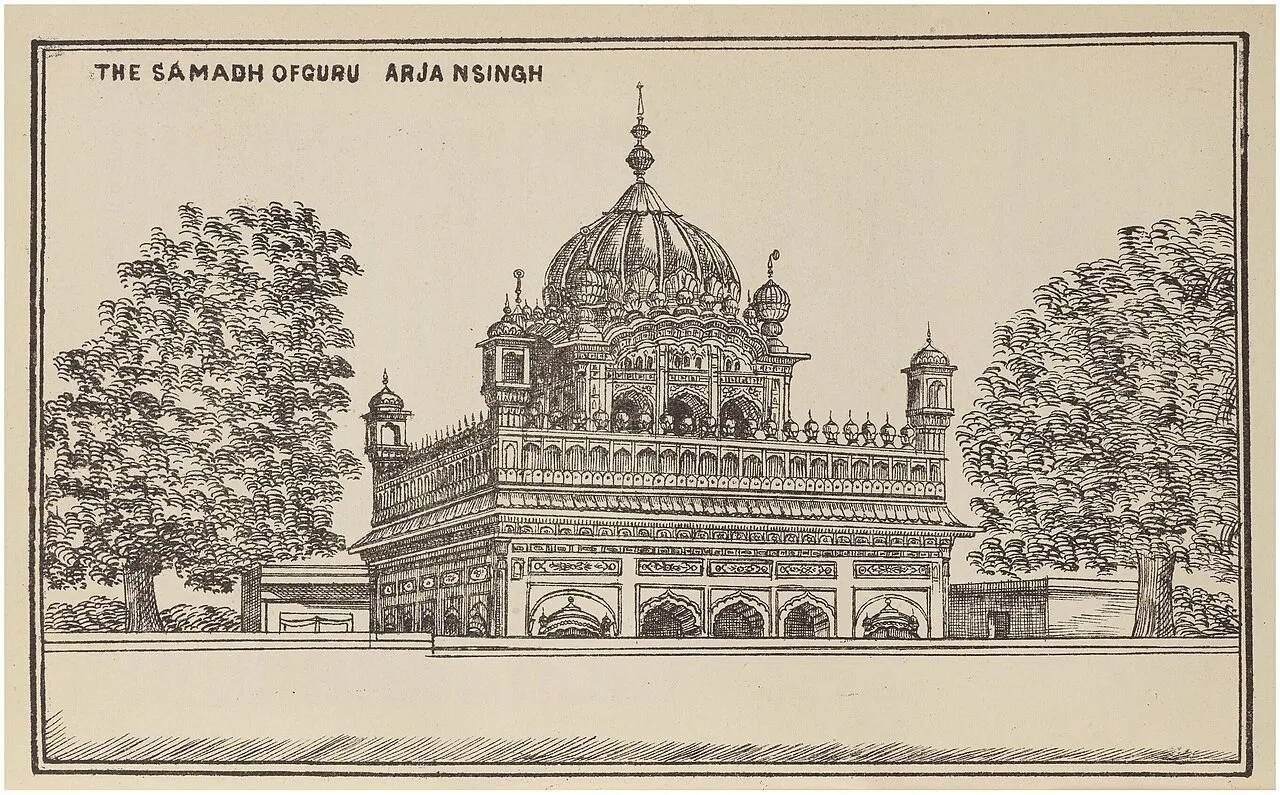
Jahangir writes of Sri Guru Arjun Dev Ji with open disrespect, as a Hindu at Goindwal dressed as a holy man, who had won over simple Hindus and even foolish Muslims. They called him Guru. For three or four generations, the emperor says, they had kept this shop going, and he had often thought of stopping it or of bringing Guru Ji into Islam.
When he heard of the Khusrau meeting, he ordered Guru Ji brought before him, gave his houses and children to Murtaza Khan and confiscated his property. Then comes the order of death.
How do we know?
A close source supports this story, and a second independent source agrees.
The phrase 'with tortures' is not found in Rogers and Beveridge and is an interpretation of the Persian term yasa. Grewal suggests the emperor may have meant a form of death that did not shed blood. The dating is also disputed: Moosvi notes that the passage comes right after a promotion dated 22 Muharram (30 May 1606), while the Encyclopaedia dates the entry to 19 June.
- From the timeGives the emperor's contempt, his long-standing wish and the order for confiscation and death. (pp. 72-73)[Src]
- From the timeMoosvi's translation renders the sentence as capital punishment and notes that the Persian terms could point to a bloodless Mongol-style killing. (Text 2, pp. 55-57)[(eds)]
- ScholarshipQuotes it as death with tortures and argues that this makes religious motive the real cause.[Src]
- ScholarshipDates the entry to 22 Safar 1015 AH, or 19 June 1606, and gives its own translation, execution by state policy and law.[EoS]